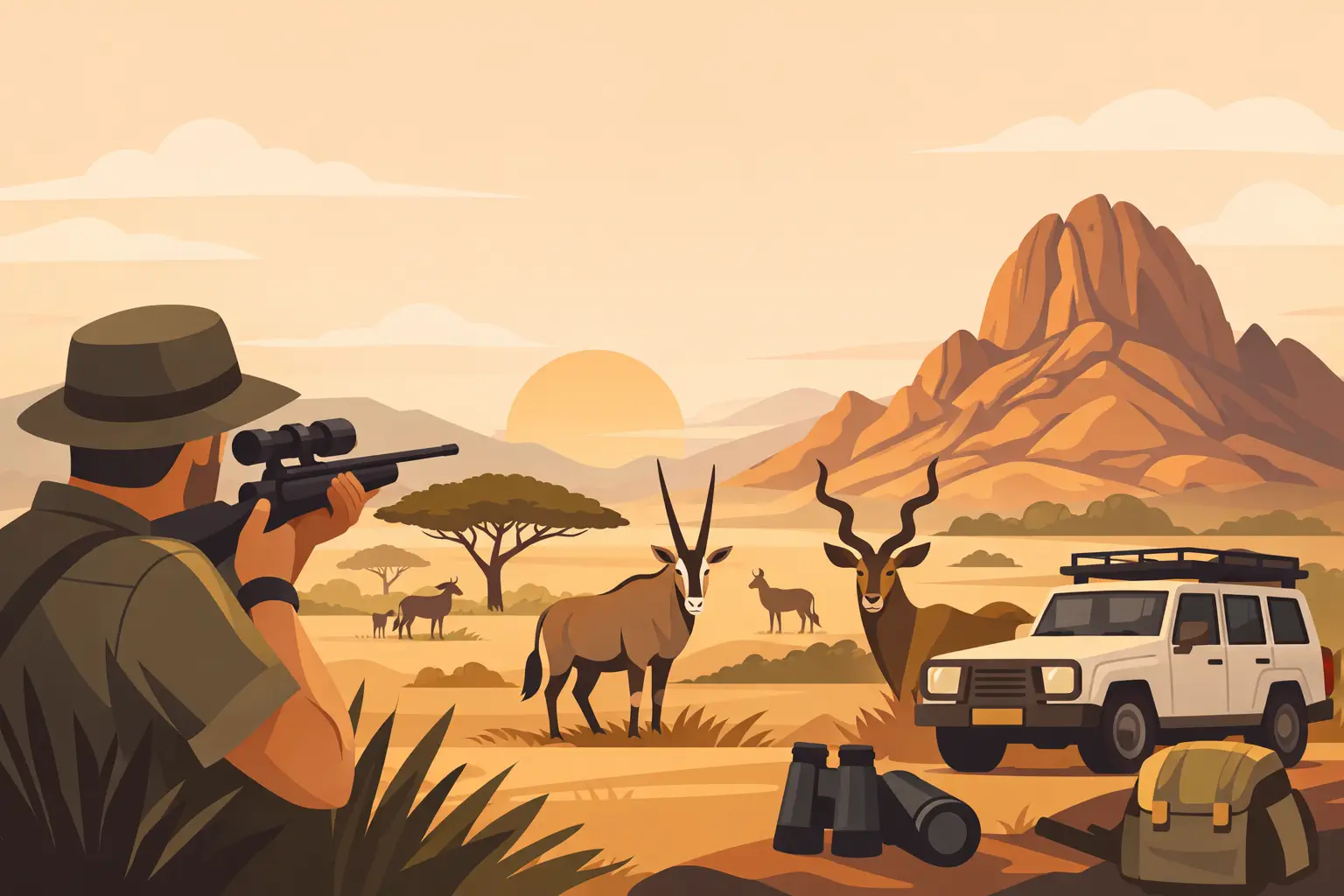
The first light comes quietly over the Namibian veldt. Before the sun has warmed the sand, your professional hunter and San trackers are already reading tracks in the dust, deciding whether a mature kudu bull crossed during the night or just before dawn. That is what good Namibia hunting packages should be built around: the hunt itself, not a rushed species list or a crowded camp schedule.
A safari is a major trip for any visiting hunter. You are traveling a long way, often bringing a spouse or family member, trusting an outfitter with your time, trophy plans, firearms logistics, and hard-earned expectations. The right package gives you enough days, the right country, experienced people on the ground, and room to hunt properly when the tracks point somewhere unexpected.
What Namibia Hunting Packages Should Include
A package price by itself does not tell the full story. Two safaris may look similar on paper but feel completely different once boots are on the ground. One may move hunters quickly through a high-volume operation. Another may be set up for one hunting party at a time, with a guide, trackers, skinners, and hosts focused entirely on your group.
For a fair-chase plains game safari, daily rates generally cover your professional hunter, tracker team, hunting vehicle, lodging, meals, local beverages, and field preparation of trophies. Trophy fees are commonly separate, allowing hunters to build a hunt around the species and trophy quality they want. This is often the better arrangement because a hunter can pass younger animals without feeling pressure to fill a fixed list.
Before booking, ask exactly what is included in the daily rate and what is not. International airfare, taxidermy, shipping, trophy export costs, permits, ammunition, alcoholic drinks, staff gratuities, and charter flights may be quoted separately. Clear answers early on prevent unpleasant surprises after the hunt.
At Eldoret Hunting Safaris, the camp is reserved for one group or one family at a time. That matters more than it may sound. There is no competition for vehicles, no strangers rotating through your hunting area, and no need to shape your day around another party’s plans. The morning hunt, the midday rest, the evening fire, and the next day’s strategy belong to your group.
Build the Package Around Time, Not Just Animals
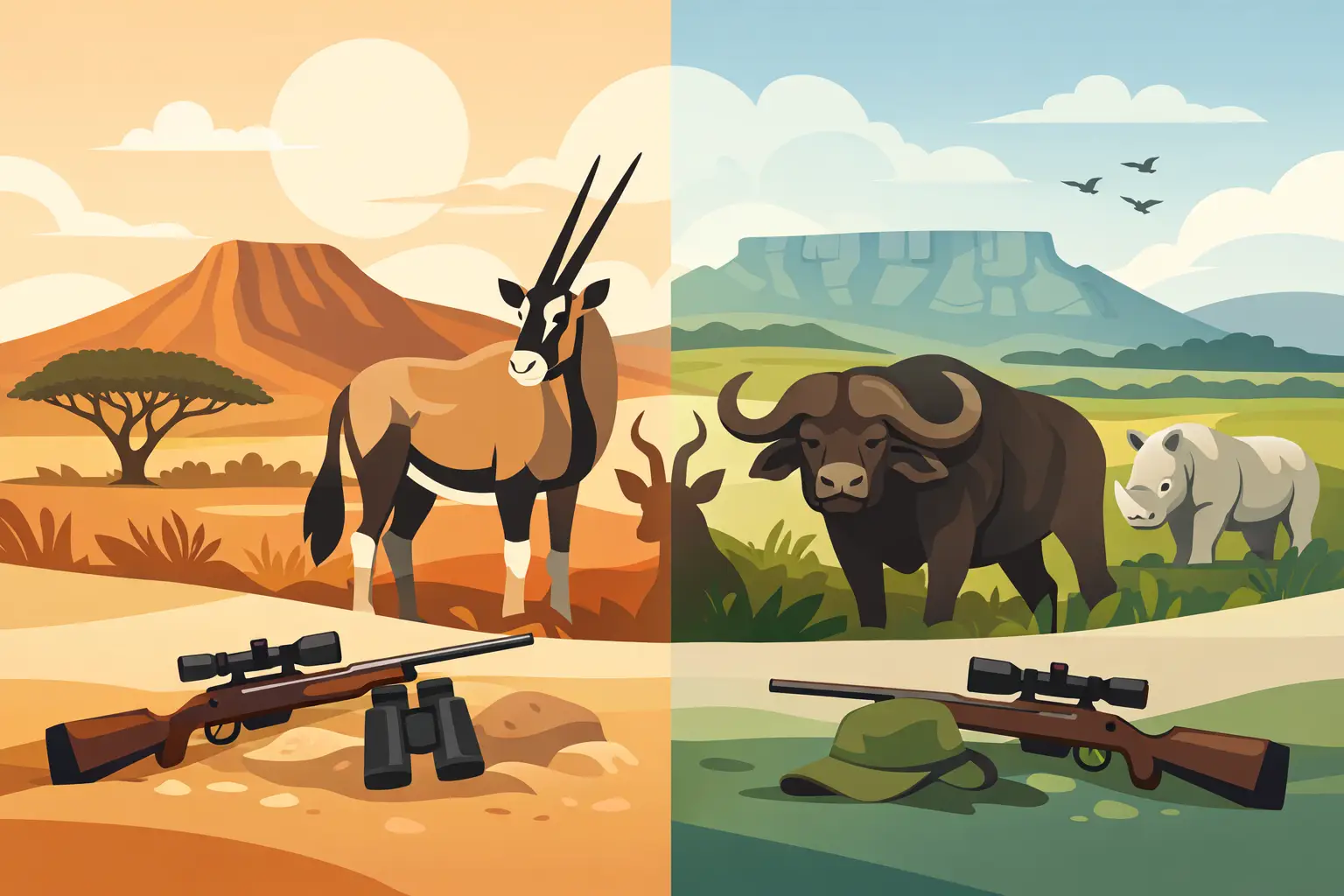
A common mistake is trying to hunt too many species in too few days. Namibia holds outstanding plains game, and it is tempting to put kudu, eland, gemsbok, zebra, blue wildebeest, red hartebeest, springbok, warthog, and giraffe on one wish list. But mature animals are earned individually, especially when hunting is done on foot after fresh tracks.
For a first safari, seven to 10 hunting days gives a much better foundation than a short five-day schedule. It allows time to settle in after international travel, learn the terrain, become comfortable shooting from sticks, and wait for the right opportunity. A hunter focused on a few key species may be successful sooner, while a hunter holding out for old, heavy-horned trophies should allow extra days.
Kudu are a fine example. A mature bull can disappear in thornbrush that seems too thin to hide a rabbit. Eland may require long tracking and patient glassing. Gemsbok are tough, alert animals built for open country, and a good bull can test your shooting discipline when the wind is moving. Zebra, wildebeest, and warthog each bring their own challenge. There is no honest way to guarantee a particular trophy, but time in the field gives the hunt its best chance.
A well-built package also leaves room for opportunity. You may arrive determined to take a large warthog and find yourself following eland tracks for miles. You may pass several good bulls early in the week, then see the one you came for on the final evening. A safari should have a plan, but it should not be so tightly packaged that there is no room for the country to speak.
Choosing the Right Season
Namibia can hunt well across much of the year, though the experience changes with the weather and vegetation. The cooler, drier months are comfortable for walking and often make game easier to locate around water and more open cover. Earlier in the season can bring greener conditions and excellent scenery, though animals may be more spread out and visibility can vary.
Your target species should guide the timing. So should your comfort with heat, your preferred hunting style, and whether you are adding fishing, sightseeing, or a coastal extension. A good outfitter will not simply sell the dates that are open. They will explain what those dates mean for your specific hunt.
Fair Chase Is More Than a Marketing Phrase
For many hunters, Namibia is appealing because it can still deliver the feeling of a real African hunt: long walks, dry grass underfoot, thorny brush on your sleeves, tracks in sand, and a guide who knows when to slow down. Ethical hunting means more than obeying regulations. It means pursuing mature animals with respect, making responsible shots, recovering every animal diligently, and using the meat and trophy properly.
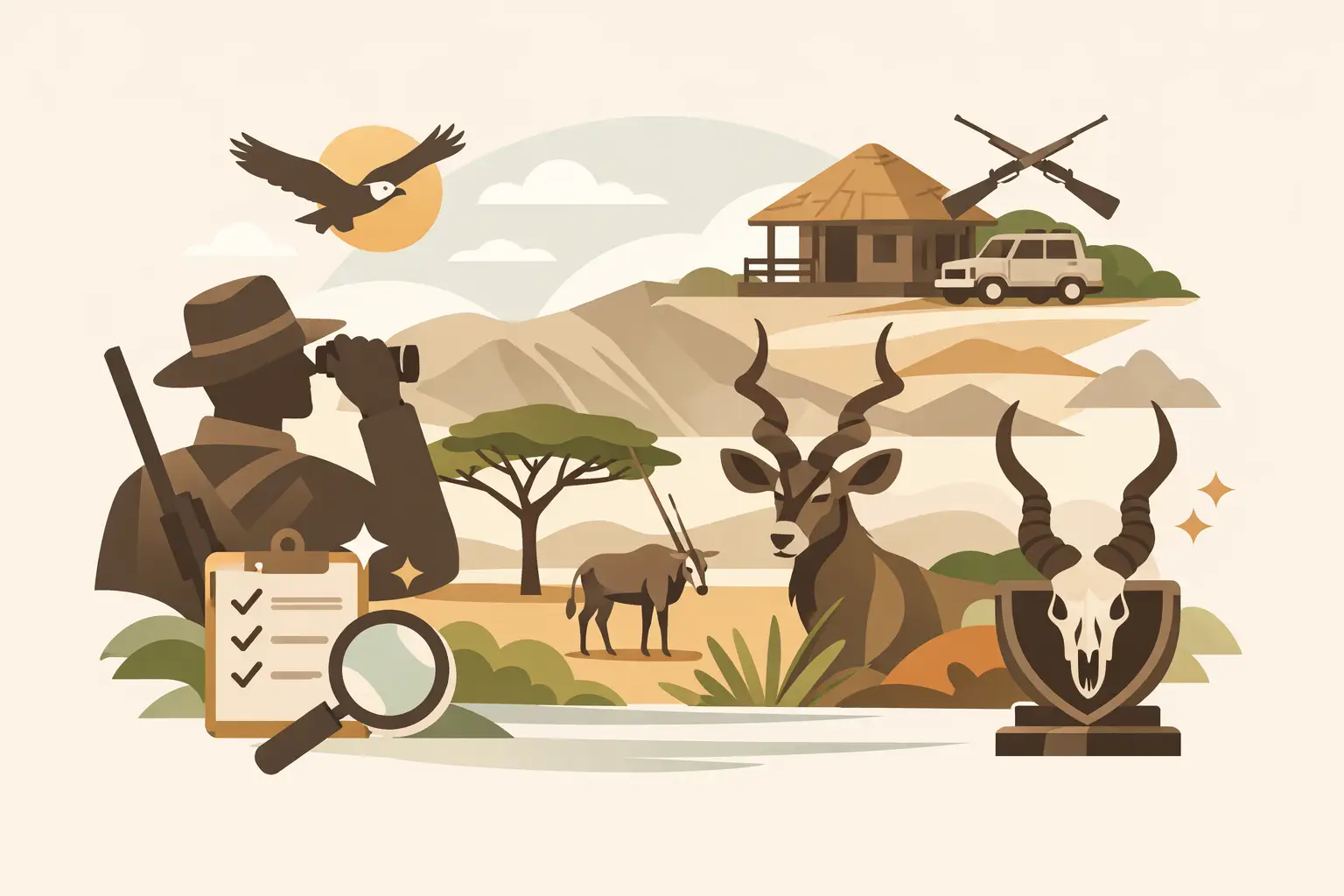
Traditional San tracking is a serious advantage in this kind of hunt. A skilled tracker can separate an old bull’s track from a younger animal’s, notice a broken twig that others walk past, and tell from a print’s edge whether the animal was there minutes or hours ago. Their knowledge does not replace good hunting judgment, but it is part of what makes walk-and-stalk hunting in Namibia so rewarding.
Ask an outfitter how animals are selected, how far hunts typically range from camp, whether vehicles are used only for transport or for shooting, and what happens after an animal is taken. Straight answers reveal a great deal about the operation. A quality safari should never be about collecting numbers as fast as possible.
Private Camp Changes the Entire Safari
After a full morning on the tracks, camp should feel like a place to recover, not a hotel lobby with a hunting theme. A private lodge allows couples and families to settle into their own rhythm. One guest can rest by the pool or read in the shade while another hunts. At dinner, the conversation can stay on the day’s tracks, missed chances, and plans for tomorrow.
This is especially valuable for first-time African hunters traveling with nonhunters. Namibia has plenty beyond the rifle. Game viewing, birdlife, photography, river fishing, and time around a good campfire give spouses and family members their own reasons to enjoy the trip. Extensions to the Okavango River can offer tigerfish and bream fishing, while Henties Bay on the Atlantic coast brings a sharp change of scenery with salt air, fishing, dunes, and wide open beaches.
The best hospitality is not fancy for its own sake. It is a hot meal after a dusty day, clean rooms, cold drinks, a reliable rifle check before the hunt, and hosts who pay attention without hovering. Those details matter when guests have crossed an ocean to be there.
Plains Game, Dangerous Game, and Specialized Hunts
Most Namibia hunting packages begin with plains game because the country offers such variety and because a plains game safari suits both experienced African hunters and first-time visitors. It is also an excellent way to learn the pace of the veldt, the shooting positions, and the value of patience.
Dangerous game and predator hunts require a different level of planning. Buffalo, elephant, hippo, crocodile, leopard, lion, cheetah, and hyena may be available through properly managed Caprivi concessions when the required tags are allocated. These hunts involve more paperwork, specialized areas, stricter quota considerations, and often more advance notice. They should be arranged with a clear understanding of legal requirements, trophy expectations, hunt duration, and the realities of allocation.
A hunter considering dangerous game should not choose solely on price. The professional hunter’s experience, the quality of the concession, the support team, the timing of permits, and the ability to hunt patiently all matter. This is where working with a local outfitter who can speak plainly about what is possible is worth far more than a glossy package description.
Questions Worth Asking Before You Commit
Ask whether you will be the only group in camp, how many hunting days are recommended for your target animals, and whether trophy fees are charged only after a successful harvest. Ask how trophies are handled from the field through export preparation, and what firearm import assistance is available before arrival.
Also ask how the outfitter defines fair chase. There is no need for vague language here. You want to know whether the hunt relies on tracking and walking, how shots are normally taken, how mature animals are judged, and how wounded game is followed. A serious outfitter will welcome those questions.
The right package is not necessarily the one with the longest species list or the lowest advertised rate. It is the one that gives you enough time to hunt honestly, people you trust beside you, and a camp where the entire trip feels personal. Leave room in the plan for an extra day, a long track, and the old bull that only steps out when the light is nearly gone.