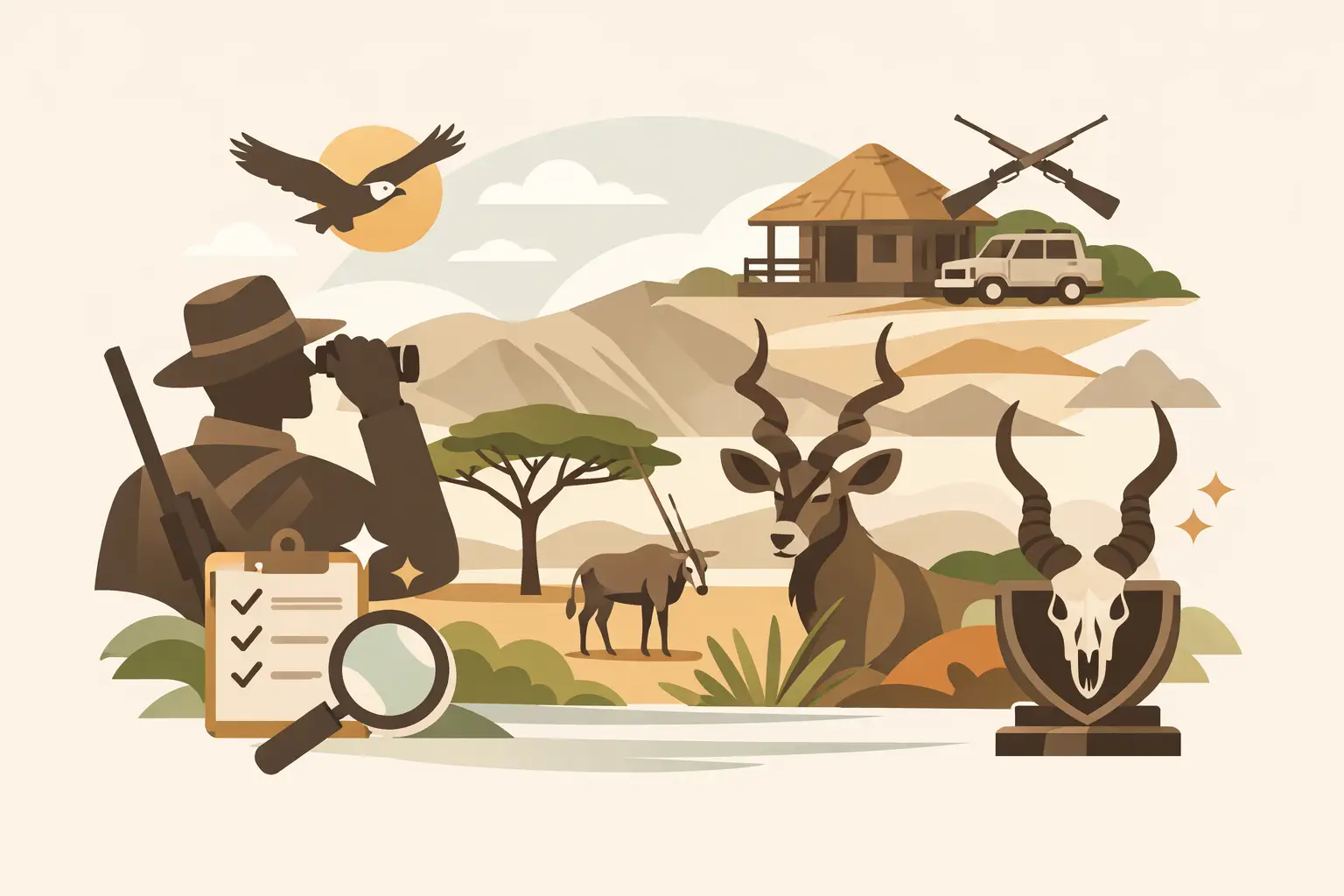
A mature kudu steps from thorn cover at the edge of last light, then disappears again before a rifle can come up. That single moment says a great deal about Namibia versus South Africa hunting. Both countries can produce excellent safaris and fine trophies, but the feel of the hunt, the country beneath your boots, and the kind of operation you book can be very different.
For an international hunter, the right choice is rarely about which country is simply “better.” It is about the animals on your list, the amount of ground you want to cover, your expectations for fair chase, and whether you want a busy hunting schedule or a quieter, more personal camp experience.
Namibia Versus South Africa Hunting: The Big Difference
South Africa has one of the largest and most developed hunting industries in Africa. It offers a tremendous variety of species, a wide range of properties, good road and air connections, and hunting options at many price levels. A hunter can build a very specific package there, from a short plains-game hunt to a multi-area safari for rare species and dangerous game.
Namibia generally feels more open, more remote, and less hurried. Its hunting areas range from thornveld and acacia savanna to vast cattle country, dry river systems, mountains, and the floodplain country of the Caprivi. Distances can be longer, and game may be spread across bigger country. For many hunters, that is exactly the attraction.
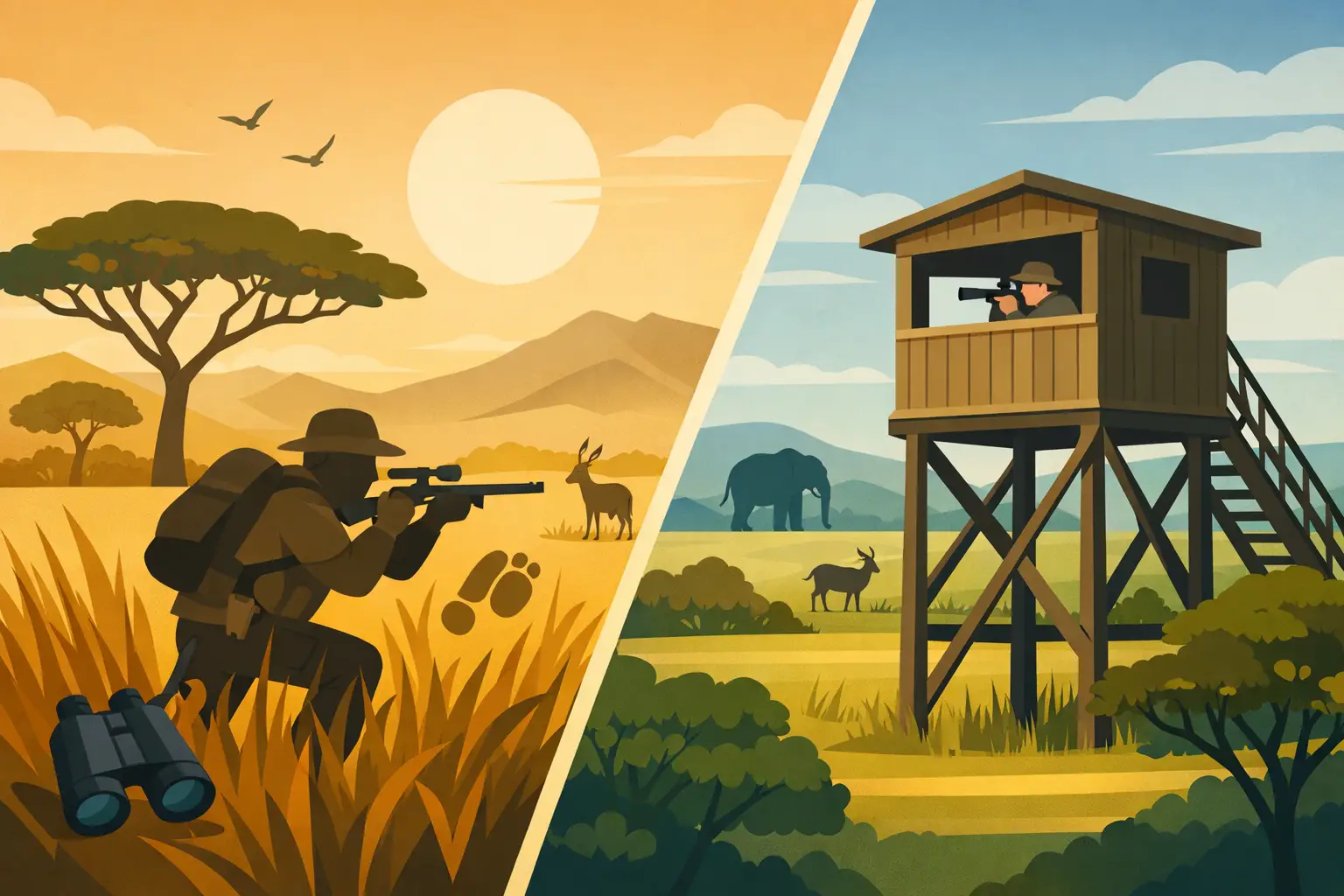
Neither country guarantees a certain style of hunt. A fair-chase hunt depends on the property, the game management, the professional hunter, and the standards of the outfitter. Still, Namibia is widely favored by hunters who want to spend long days tracking and stalking in natural country rather than moving quickly from one opportunity to the next.
Terrain Changes the Way You Hunt
In South Africa, many hunting properties are fenced, often because game ranching and wildlife management are well established there. A fence alone does not tell you whether a hunt is ethical or difficult. Some South African ranches are very large, rugged, and managed with real care. Others are smaller, more intensive operations where a hunter should ask direct questions about acreage, animal movement, release practices, and how often the property is hunted.
Namibia also has fenced farms, and international hunters should ask the same practical questions wherever they hunt. Yet much of Namibia’s appeal is the sense of space. On a large property, a kudu bull, old eland, or hard-earned gemsbok can use the country well. The hunt becomes a matter of reading tracks, checking water, glassing ridges, and staying with an animal when conditions allow.
At Eldoret Hunting Safaris, the main hunting area covers 25,000 acres in northeastern Namibia. The work is built around walk-and-stalk hunting with local San trackers, not a volume-driven approach. A fresh track in sandy soil, a broken thorn branch, or a faint mark in the grass can turn an ordinary morning into a full day behind one animal. That is the part many hunters remember long after the trophies are home.
Tracking Is Not Just a Romantic Idea
Tracking takes time, patience, and a willingness to accept that a good animal may beat you on a given day. Wind changes. A herd crosses a road. A bull moves into thicker cover. The hunter who wants a genuine field hunt needs to be comfortable with those realities.
The reward is that the trophy means something beyond a score sheet. You remember the tracker who found the line, the long stalk through thorn, the steady rest, and the moment the animal finally stood clear. Namibia is especially well suited to hunters who value that kind of earned result.
Plains Game: Strong Choices in Both Countries
South Africa has exceptional variety. It is a practical destination for hunters looking to collect several species in one trip, including animals from different parts of southern Africa. It can be particularly appealing for a first African hunt because many outfitters offer efficient packages and easy access to a broad species list.
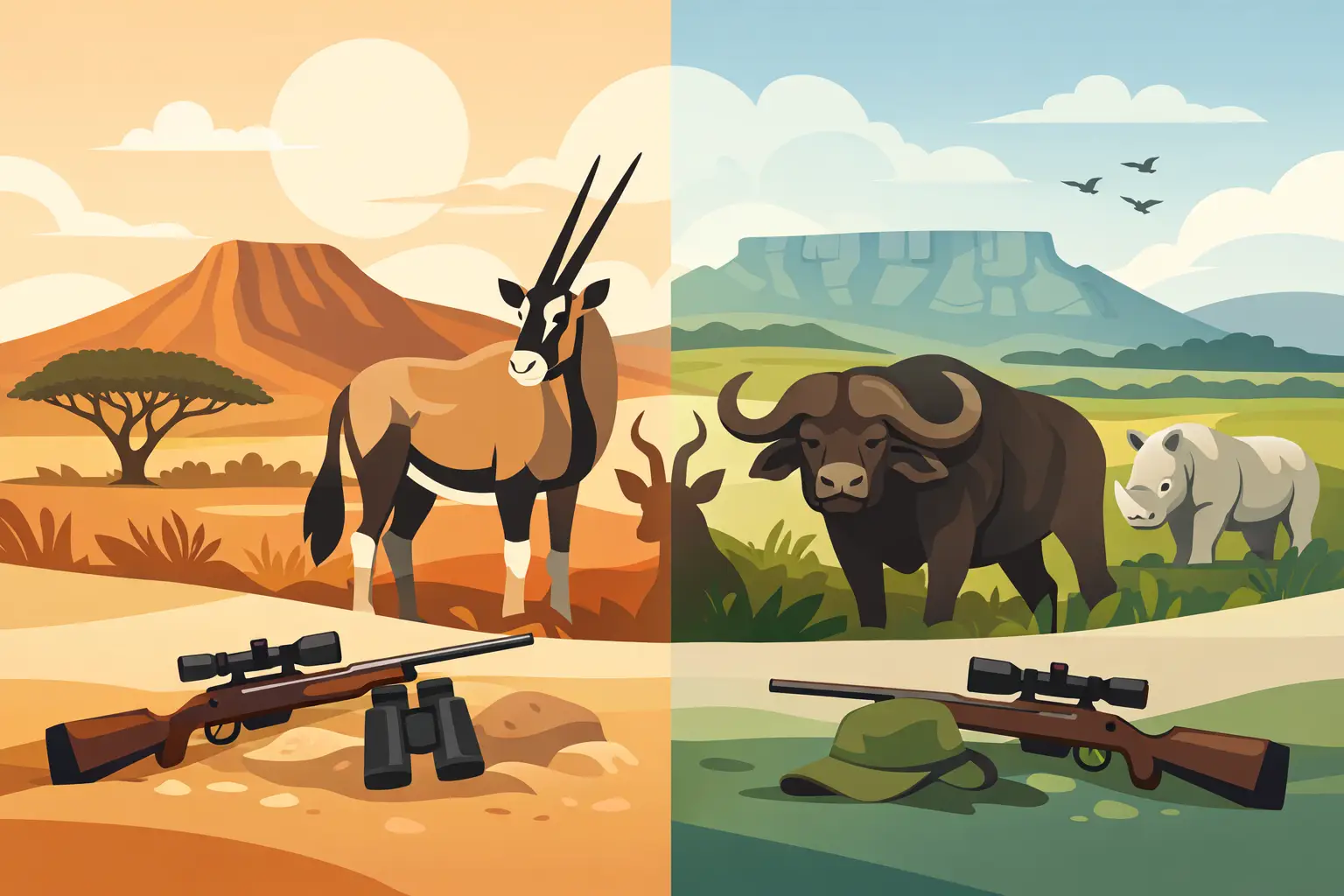
Namibia is a classic plains-game destination, especially for trophy-quality kudu, gemsbok, eland, zebra, blue wildebeest, springbok, warthog, and hartebeest. The animals belong in the country, and hunting them in their natural habitat is a major part of the experience. A gemsbok in the dry Namibian veldt or a big kudu slipping through acacia country simply feels right.
If your goal is the widest possible menu of species, South Africa may have the advantage. If your list centers on traditional Namibian plains game and you want to hunt them in a quieter, tracking-focused setting, Namibia deserves serious consideration.
Dangerous Game Requires a Different Conversation
A hunter pursuing buffalo, elephant, hippo, crocodile, leopard, lion, cheetah, or hyena should choose based on legal availability, current tag allocation, the specific concession, and the experience of the professional hunting team. These opportunities change from season to season. No reputable outfitter should promise a dangerous-game hunt before confirming permits, quotas, and the proper legal process.
South Africa provides some dangerous-game options, particularly buffalo, and has well-developed safari logistics. Namibia offers a different kind of dangerous-game setting in the Caprivi region, where rivers, floodplains, thick cover, and free-ranging wildlife create a wilder atmosphere. For hunters interested in a tailored Caprivi hunt, the location and tag availability matter more than a broad country comparison.
Ask how the hunt is conducted, where the animal lives, whether the area is a private property or concession, who will guide the hunt, and what is included if an animal is wounded. Those are better questions than choosing by a brochure photograph.
Camp Life and Privacy Matter More Than Many Hunters Expect
A safari is not only the hours spent behind the rifle. It is also early coffee before daylight, stories around the fire, a well-prepared dinner after a long day, and having people in camp who know your name, your priorities, and whether your spouse would rather fish, photograph wildlife, or rest with a book.
South Africa offers everything from simple hunting camps to polished lodges. Because the industry is large, the guest experience varies widely. Some camps host several groups at once and run on a full schedule. That can be enjoyable for social hunters, but it is not right for everyone.
In Namibia, a smaller family-run operation can offer a more private rhythm. A one-group-or-one-family-at-a-time camp policy means the schedule belongs to the guests in camp. You can stay out later on a promising track, take a quiet afternoon after a successful hunt, or make room for a nonhunting day without feeling like you are holding up the next group.
For couples and families, Namibia can also be easy to shape into a broader trip. Time on the Okavango River, birding, fishing for tigerfish or bream where available, game viewing, and a few days on the Atlantic coast around Henties Bay give nonhunters a real reason to look forward to the journey.
Travel, Timing, and Practical Planning
Both Namibia and South Africa are accessible to North American and European hunters, usually through major international gateways followed by a connecting flight or road transfer. South Africa often has more flight options and can be simpler for hunters combining several regions. Namibia may require a little more planning, but that effort often pays off in a less crowded experience once you are in the field.
The main hunting months generally run through the cooler, drier part of the year. Dry conditions make game easier to locate around water and improve visibility in some areas, while early-season conditions can still be beautiful and productive. Your target species, tolerance for heat, and preferred hunting method should guide the exact dates.
Before booking, confirm firearm-import procedures, trophy-export requirements, travel insurance, medical advice, and the outfitter’s process for handling trophies after the hunt. Regulations can change, especially around predator and dangerous-game species. A good outfitter gives clear answers and does not treat these details as an afterthought.
How to Choose the Right Safari
Choose South Africa if you want maximum species variety, convenient travel options, or a tightly planned hunt that may cover several hunting areas. It is a strong choice when you have a specific list that includes species not commonly found together in Namibia.
Choose Namibia if you are drawn to open country, traditional tracking, classic desert and savanna plains game, and a camp where the hunt is allowed to unfold at its own pace. It is particularly rewarding for hunters who would rather take one excellent mature animal after a hard day than fill a list quickly.
The best safari is not the one with the longest species list or the lowest daily rate. It is the one where the ground, the people, and the hunting method match the reason you came to Africa. Ask hard questions, choose an outfitter whose standards sound like your own, and leave enough room in the plan for the unexpected track that carries you into a very good day.