The walk stalk versus blinds question matters because it changes the entire feel of an African hunt. One method asks you to settle in, watch, and let the game make the next move. The other puts boots in the red Kalahari sand, wind on your face, and a tracker’s eyes on the ground ahead. Both can be ethical, effective ways to hunt. The right choice depends on the species, the season, the property, your physical ability, and the kind of safari you came to Namibia to experience.
For many visiting hunters, the dream is not simply taking an animal. It is earning a mature trophy through good fieldcraft, sound judgment, and a clean shot. That is why the method deserves an honest look before you arrive.
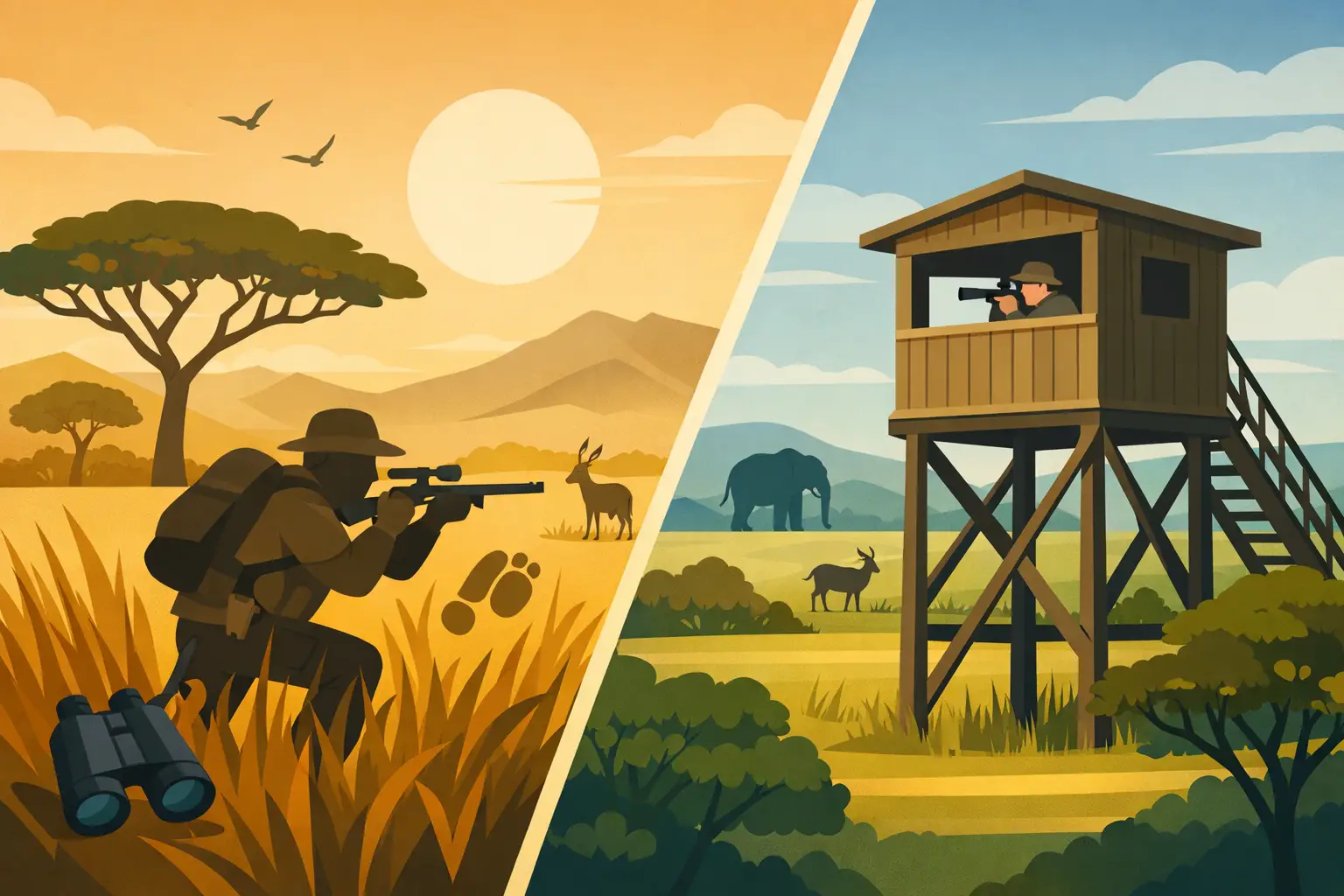
Walk Stalk Versus Blinds: The Real Difference
A blind hunt is built around patience and a known source of attraction, usually water. In dry country, animals must drink. A well-placed blind near a waterhole can offer excellent observation, steady shooting rests, and close encounters with game that may otherwise be difficult to approach.
Walk-and-stalk hunting is active. Your professional hunter and trackers locate fresh sign, glass likely country, study the wind, and close the distance on foot. Sometimes the stalk develops from tracks laid down minutes before. Other times, it begins with a bull spotted feeding through thick bush a long way off. The final approach may take an hour, or it may end in seconds when the wind shifts.
Neither method is automatically easier or more sporting simply because of its name. A blind can require long, silent hours and discipline when several animals visit but none is the right trophy. A stalk can be physically demanding and can end repeatedly without a shot. Fair chase is found in the way the hunt is conducted, the respect shown to the animal, and the willingness to pass an opportunity that does not meet the plan.
Why Walk-and-Stalk Fits the Namibian Veld
Northeastern Namibia offers country made for tracking. Sand holds the story of the morning: the sharp edge of a kudu bull’s track, a fresh warthog print crossing a road, drag marks where an eland brushed through grass, or the scattered spoor of a small bachelor herd. Reading that story well is a skill learned over years, not from a screen in the truck.
On a 25,000-acre property, there is room to let a hunt unfold properly. You may leave camp after coffee, cut a fresh track after first light, and spend the morning working through thornveld and open patches of grass. San trackers bring remarkable patience and close attention to details many hunters never see. They notice a broken twig, a turned leaf, a hoof mark in hard ground, then help determine whether the animal is worth pursuing.
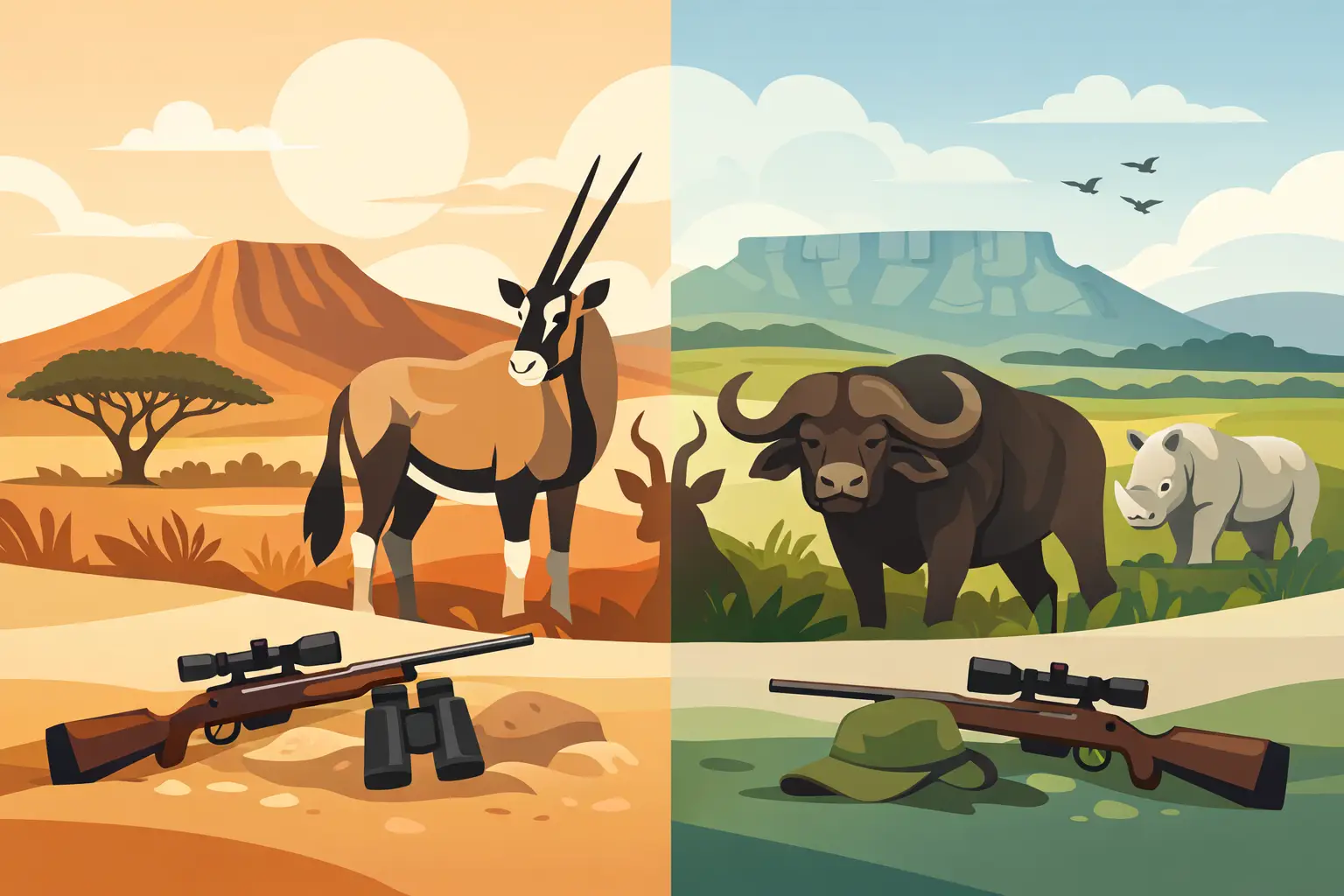
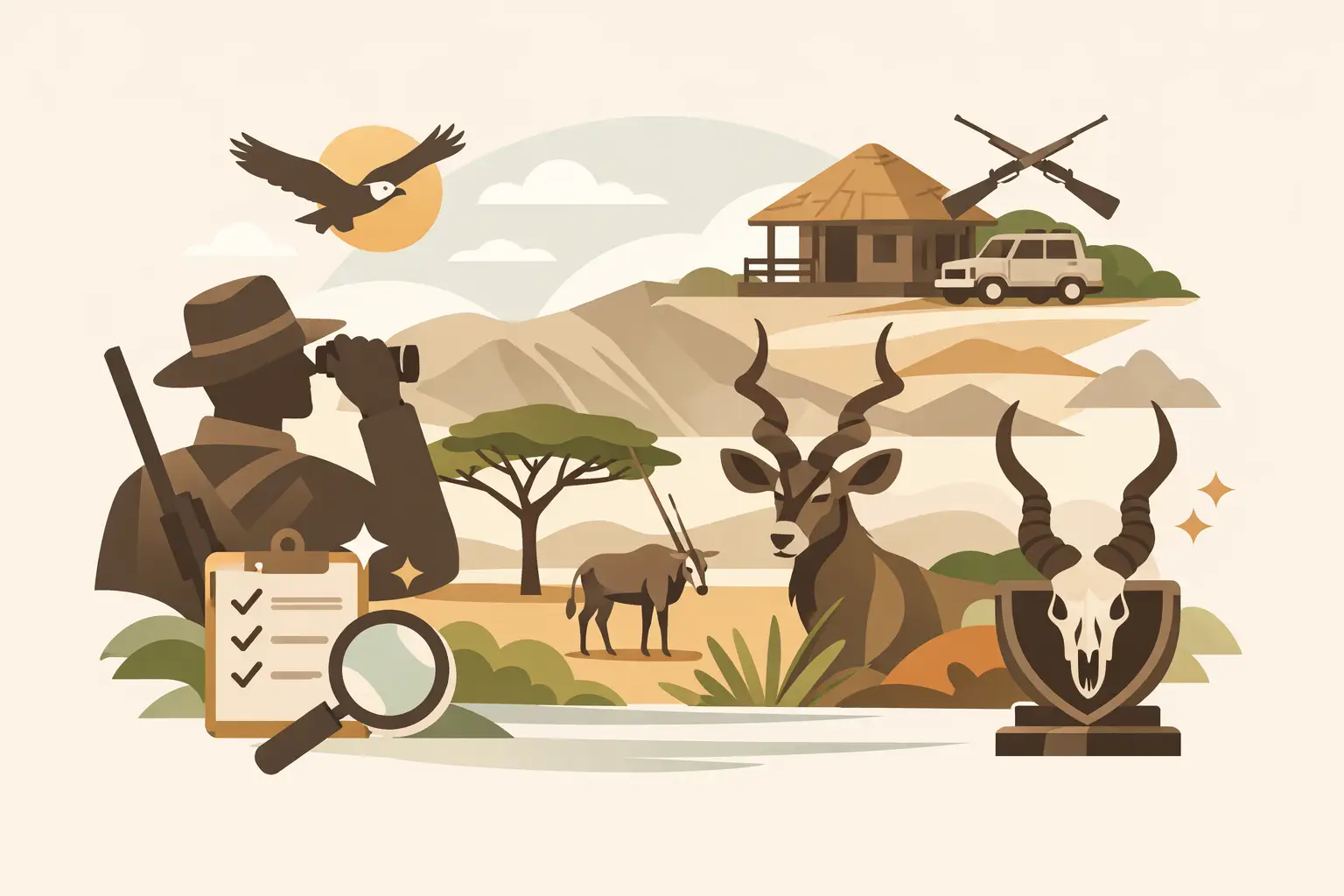
This style is especially rewarding for kudu, eland, gemsbok oryx, zebra, wildebeest, springbok, and warthog. A mature kudu bull may use thick cover, low drainage lines, and the wind to his advantage. An old eland bull can cover great distance without appearing rushed. Oryx often stand in open ground where the final approach has no room for careless movement. The hunt becomes a series of small decisions: where to circle, when to wait, whether to crawl forward, and when to let the animal walk.
The physical side should be understood realistically. Walk-and-stalk does not mean running all day, but it can mean several miles over uneven ground, ducking under thorns, kneeling in sand, and holding still when the animals are close. A good outfitter adjusts the pace to the hunter. Older hunters, first-time visitors, and anyone managing an injury can still enjoy a tracking-based safari with careful planning, sensible distances, and appropriate shooting support.
The Reward Is in the Process
A successful stalk carries a special memory because every member of the team has contributed. The PH has read the animal and the terrain. The trackers have kept the spoor alive. The hunter has stayed quiet, moved when asked, and made the shot count when the moment arrived.
Not every stalk ends with a trophy, and that is part of the honest appeal. A bull may step into cover. A cow may catch your scent. The wind may turn at exactly the wrong time. You return to camp tired, perhaps empty-handed, but with a better understanding of why a mature animal has survived for so long.
When a Blind Is the Better Choice
Blinds are useful tools, not shortcuts. In Namibia’s dry periods, waterholes draw regular movement from a wide range of animals. They can be particularly practical for hunters who need a quieter pace, have limited mobility, or want to spend more time observing behavior before deciding on a trophy.
A blind also has a place when conditions make stalking difficult. Strong, swirling winds can ruin an approach in thick bush. High midday temperatures may slow game movement away from water. If a particular mature animal is consistently visiting a waterhole, sitting carefully may be the most responsible way to hunt him without pushing the area too hard.
For bowhunters, blinds are often essential. Close-range shooting, steady positioning, and concealed movement are necessary for an ethical arrow opportunity. Rifle hunters can benefit as well, especially when pursuing species that are alert, difficult to judge in cover, or moving through a limited window of activity.
There is no shame in choosing a blind after a hard morning on tracks. The best safaris are flexible. You might track kudu at dawn, return for a proper lunch and a rest, then sit a waterhole in the late afternoon as doves settle nearby and the bush grows quiet before the first animals come in.
Patience Is Still Hunting
A good blind hunt asks for restraint. The waterhole may bring young bulls, cows with calves, and several animals that look impressive at first glance. The PH will help judge age, horn shape, mass, and whether an animal is truly mature enough for the goal you set.
That waiting can be one of the finest parts of the day. You see who yields at water, how zebra remain alert while drinking, how warthogs approach in quick bursts, and how a mature bull often waits until the rest have settled. It is not passive if you are paying attention.
Choosing the Best Method for Your Safari
Start with your priority. If your main goal is a traditional, active plains-game safari, walk-and-stalk should be the foundation of the hunt. It suits hunters who enjoy fieldcraft and are willing to accept that the best trophy may take time. At Eldoret Hunting Safaris, tracking-based hunting is central to how the team works the veld and pursues quality rather than volume.
If you have a specific physical concern, are bringing a spouse or family member who would enjoy a calmer session, or want to include bowhunting, blinds may deserve more time in the schedule. Hunters seeking several species can often benefit from both methods. There is no rule saying you must hunt every animal the same way.
Your first conversation with your PH should cover the species you want, your shooting confidence, typical field distances, fitness level, and what you consider a meaningful hunt. Be candid. If you prefer a solid rest and do not enjoy long walks, say so. If you came to follow tracks until your legs are dusty and your shirt is stained with acacia, say that too.
Let Conditions Decide Some of the Day
The strongest plan is rarely a rigid plan. Morning tracks may be fresh and the wind right, making a stalk the obvious choice. By afternoon, heat and wind may favor a waterhole. Rain can alter movement. A trophy bull found during a drive may change the entire day.
Experienced hunters know that a safari is not improved by forcing a preferred method when the country is telling you something else. The goal is a clean, ethical opportunity on the right animal. Everything before that moment – the tracks, the glassing, the quiet wait, the missed chances, and the camp talk afterward – is what gives the hunt its weight.
Choose the method that lets you hunt well, respect the game, and enjoy the people and country around you. Then leave enough room in the plan for Namibia to surprise you.