A mature kudu bull rarely makes a mistake twice. He may stand broadside in the early light, his spiral horns showing above the thorn, then vanish with two quiet steps into cover that seemed too thin to hide anything. That is why walk stalk kudu hunting is one of Africa’s most satisfying pursuits. It asks a hunter to slow down, glass hard, trust the people on the ground, and take a shot only when the animal gives you the right opportunity.
On Namibia’s dry bushveld, a kudu hunt is not measured by how many miles the vehicle covers. It is measured by the long glassing sessions, the fresh track crossing a sandy road, the careful approach through thornbush, and the moment a good bull finally stands still in honest country. For hunters who want a fair-chase safari rather than a rushed trophy collection, that process is the whole point.
What Walk Stalk Kudu Hunting Really Means
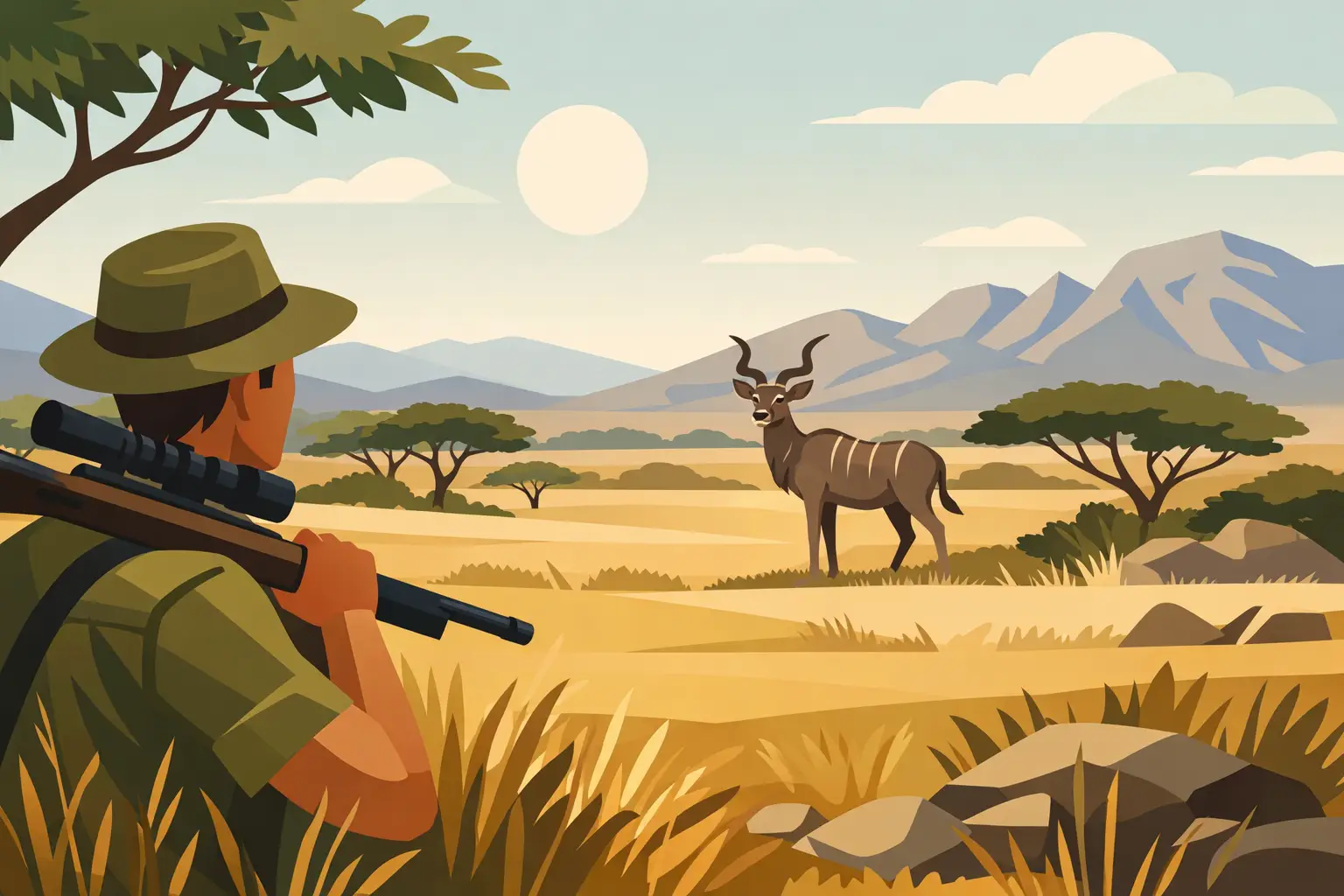
Walk-and-stalk hunting begins with observation. A professional hunter, tracker, and hunter may use a vehicle to cover country and reach productive areas, but the hunt itself happens on foot. From a ridge, termite mound, or open edge of the veldt, the team glasses thickets, drainage lines, and hillsides where kudu feed, bed, and move between cover.
Once a bull is spotted, the work changes. Wind direction, sun, terrain, and the location of cows all matter. Kudu have large ears, sharp eyes, and a natural habit of using brush and broken ground to their advantage. A stalk that looks simple from 400 yards away can become a long detour when the wind shifts or a cow starts feeding toward the approach.
There are also days when the first sighting is a track rather than a horn. Namibia’s sandy soils can tell a clear story in the hands of experienced trackers. The width and depth of a spoor, the freshness of disturbed sand, the droppings, and the direction of travel can help separate a promising bull from ordinary movement. The San trackers who work beside our hunting teams bring generations of field knowledge to that process. Their eyes often pick up a bent grass stem, a faint print, or a flash of gray hidden in thorn well before the visiting hunter sees it.
Why Kudu Are a True Fair-Chase Trophy
A mature greater kudu is one of the most handsome animals in Africa, but horn length alone should never be the only focus. A worthwhile old bull carries heavy, weathered horns with deep curls and solid mass. He often has a darker face, a fuller neck, and the deliberate manner of an animal that has survived several seasons.
Age, condition, and the way a bull uses the land are part of ethical trophy selection. A younger bull with long-looking but lighter horns may still be growing. A responsible professional hunter will take time to judge the animal properly and will tell a client when patience is the better choice. That honesty protects the quality of the hunt and the future of the kudu herd.
Fair chase also means respecting the animal after the shot. No hunter wants to lose a wounded kudu in thick cover. A careful shot decision, followed by disciplined tracking when necessary, is a basic part of doing the job right. Sometimes that means passing a marginal chance late in the day. It can be frustrating for a few minutes, but it is better than taking a risk that cannot be called back.
The Conditions That Shape the Hunt
Wind Is the First Rule
Kudu live by their noses. A stalk that puts the wind behind you is usually finished before it starts, especially in calm country where scent hangs in the brush. Your PH will constantly check the wind, and the route may change several times before the team gets close. Be ready to walk farther than expected because the easiest line is rarely the right one.
Early mornings and late afternoons are productive times to glass, but kudu can be encountered throughout the day. In hotter conditions they often retreat into shade and become harder to spot. That does not mean hunting stops. It means the pace becomes more deliberate, with slow glassing around thick cover and water routes.
The Veldt Rewards Patience
On a 25,000-acre Namibian property, there is room for a bull to use the country naturally. Open patches may offer a brief view of a shoulder, while dense thorn can hide the rest of the animal. Hunters should expect uneven ground, low branches, thorns, and periods of quiet waiting. Good boots, neutral-colored clothing, a daypack, and the ability to move slowly matter more than fancy gear.
Fitness helps, but this is not a race. Most hunting days can be adapted to the guest’s mobility and goals. The key is to communicate honestly with your PH before the safari begins. A hunter who can cover ground comfortably has more options, while a hunter who needs a gentler pace can still enjoy productive glassing and carefully planned stalks.
Preparing for the Shot
A kudu is large, yet the target can be smaller than it appears once brush, branches, and a turned shoulder enter the picture. Practice from field positions before traveling. Shooting sticks are common and steady, but you may also need to shoot kneeling, seated, or with a pack used as support.
Your rifle should be one you know well. Many hunters choose proven medium calibers such as the .30-06, .308 Winchester, .300 Winchester Magnum, 7mm Remington Magnum, or .375 H&H. The best choice depends on what you shoot confidently and whether your safari includes larger plains game or dangerous game. More important than caliber debate is a properly zeroed rifle, quality controlled-expansion bullets, and the discipline to wait for a clear vital-zone shot.
Before the trigger is pulled, ask simple questions: Is the bull truly mature? Is the shoulder clear? Is the animal standing well enough for a solid shot? What happens if he moves one step? A professional hunter will guide you, but the final shot still deserves your full attention. Take the time you need, breathe, settle on the sticks, and follow through.
After the Shot: The Work Is Not Finished
Even a well-hit kudu may run into heavy cover. Watch the bull carefully after the shot and listen for his direction of travel. Mark the last place you saw him, then let your PH and trackers read the sign before the group pushes ahead. Charging into the brush can destroy the very evidence needed to recover the animal.
This is often where a walk-and-stalk safari becomes most memorable. The trackers move quietly through the veldt, studying each mark in the sand. The PH considers the blood, the stride, and the behavior of nearby game. When the bull is found, there is relief, respect, and a moment that no photograph fully captures.
At Eldoret Hunting Safaris, that respect continues after recovery. The animal is handled properly by the field team, and the work of skinning and trophy care is carried out with the same attention given to the hunt itself. Nothing is treated as casual just because the hard part is over.
Camp Life Belongs to the Safari
A good kudu hunt carries into the evening. Back at camp, rifles are cleaned, boots come off, and the day’s stalk is replayed around the fire. There may be fresh game on the table, a cold drink in hand, and the last light settling over the Namibian bush. Those quiet camp conversations often become as valuable as the measurements recorded later.
For international hunters, private hosting makes a real difference. Being the only group or family in camp allows the day to run around your hunt, your pace, and your plans. A non-hunting spouse or family member can enjoy game viewing, time at camp, or an added river or coastal excursion without feeling like an extra person in a crowded operation.
Kudu hunting is not always easy, and it should not be. The old bull that makes you work through wind, brush, and doubt is the one you remember when you see his horns at home. Come ready to walk, listen, and let the veldt set the terms. That is where the real story begins.