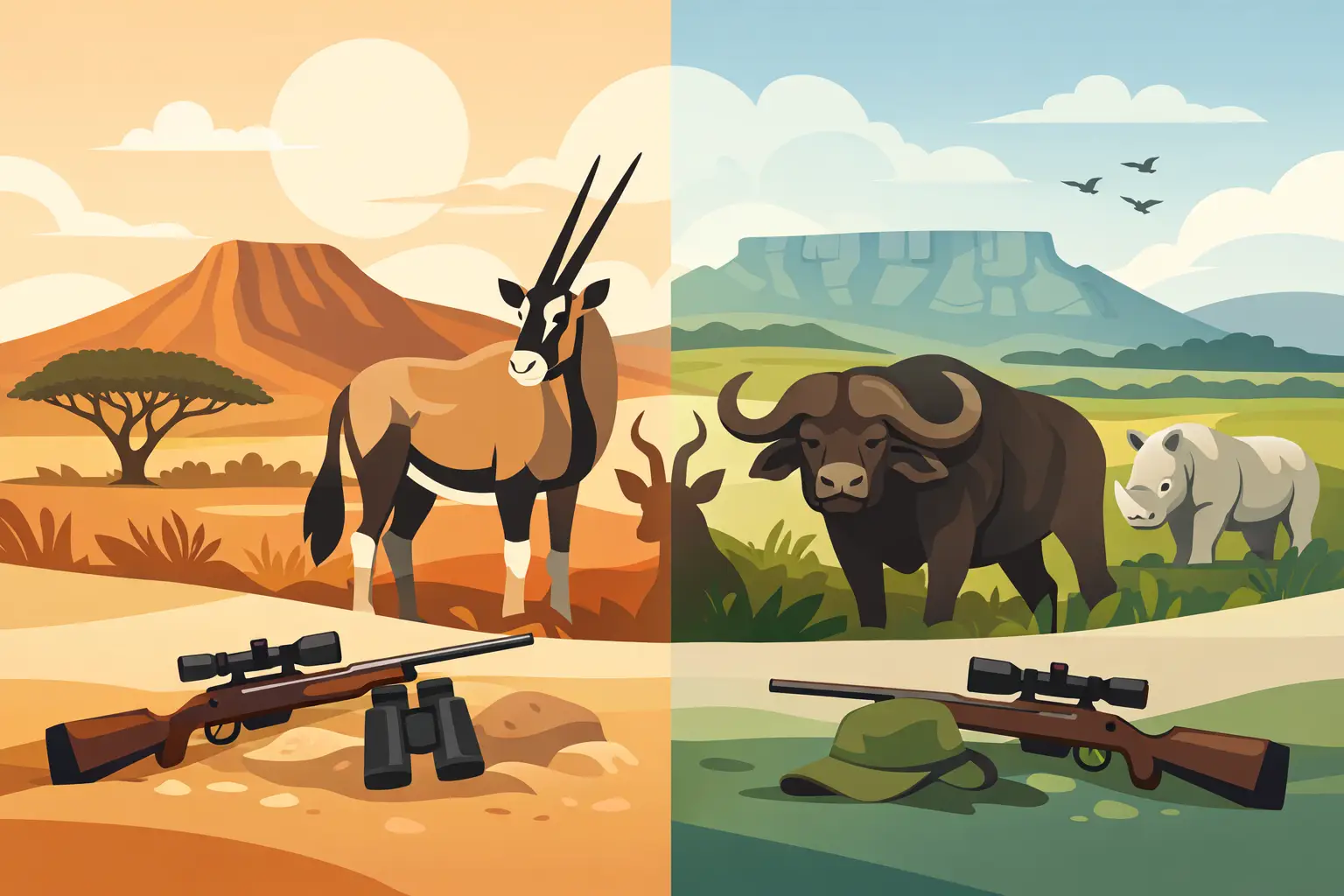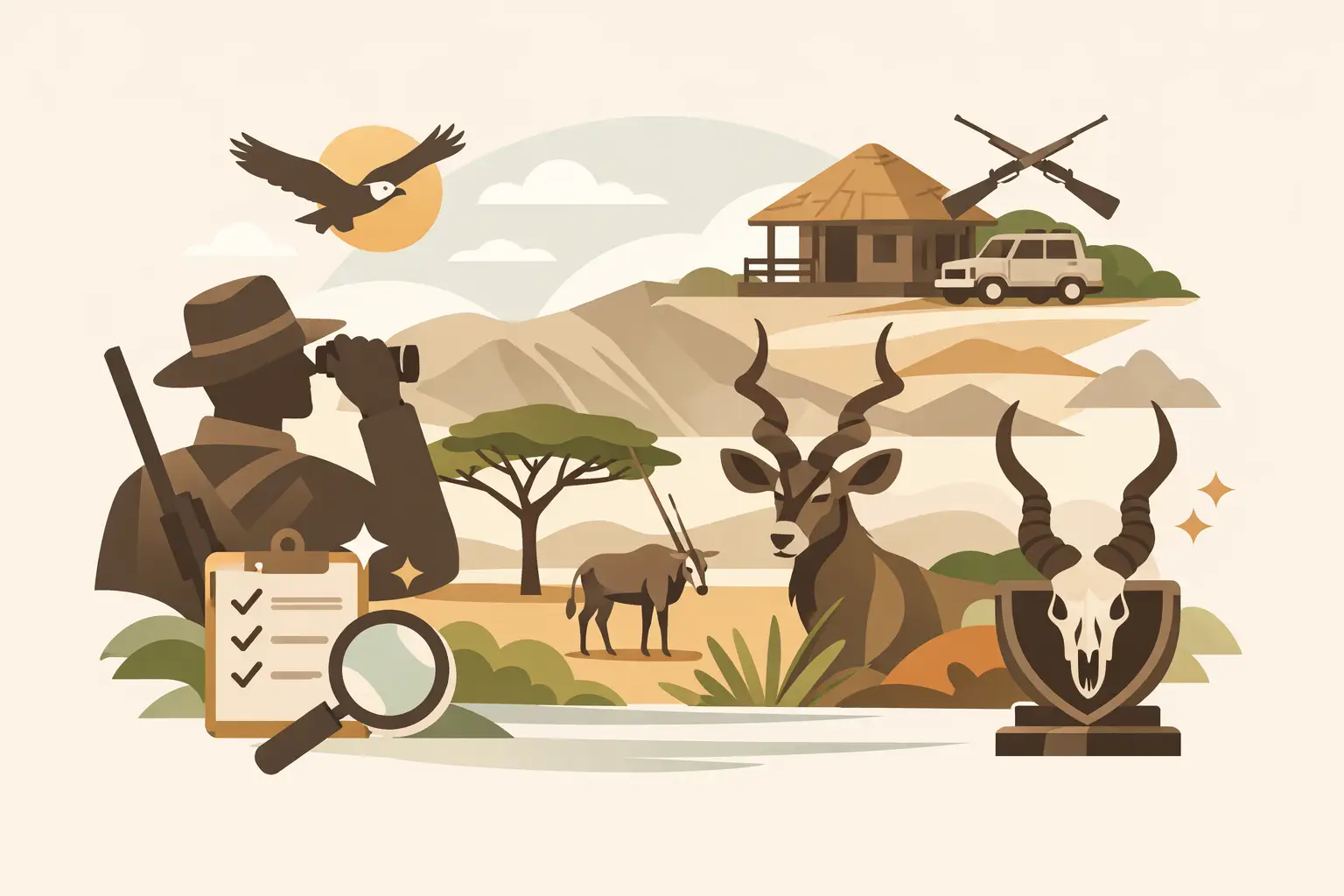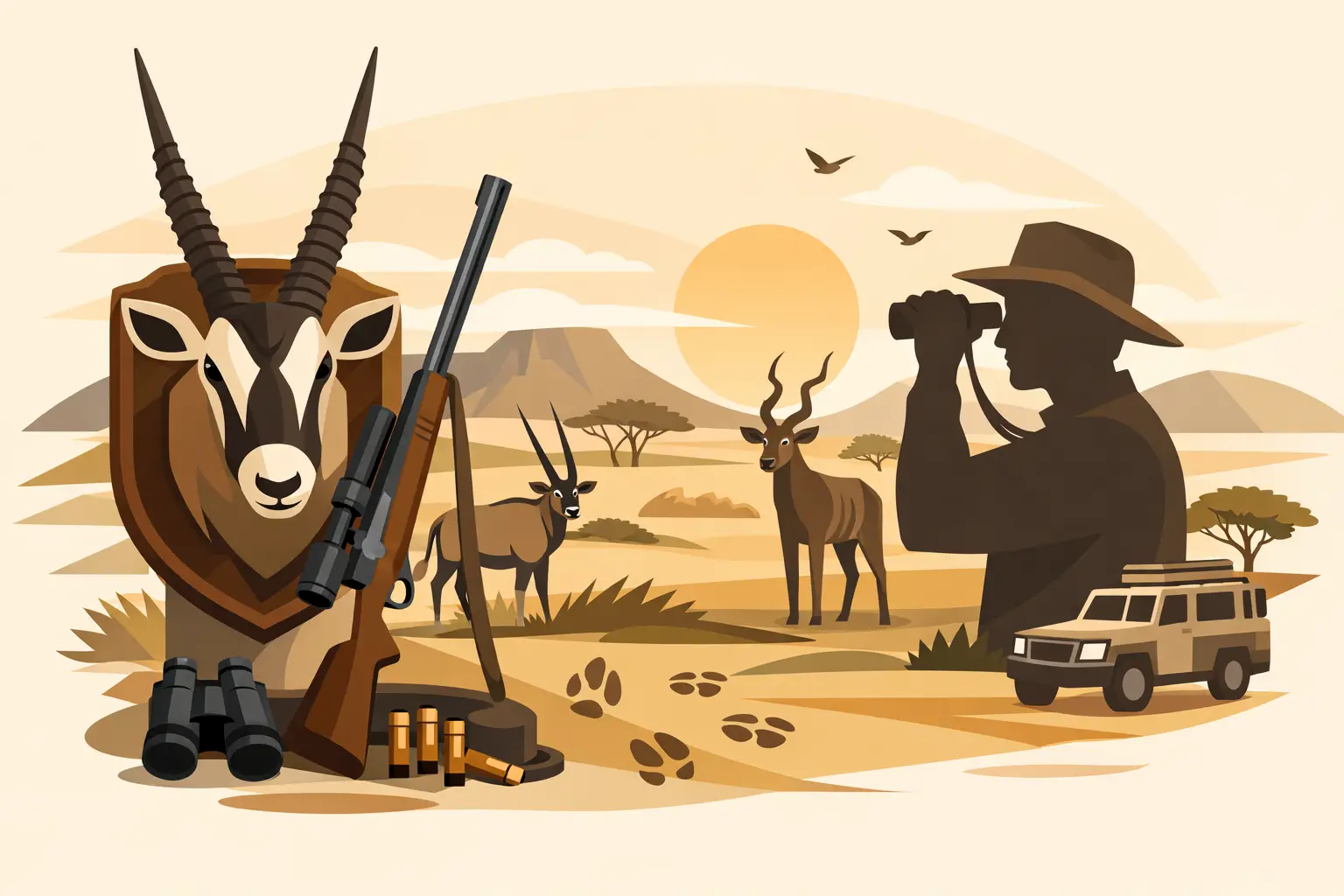
A kudu bull steps quietly through thornbrush at first light. You have followed his tracks with your professional hunter and trackers for hours, and the decision to take him is yours alone. Trophy fees are part of that decision, because they place a clear value on the animal harvested and help shape the final cost of a Namibian hunting safari.
For many first-time African hunters, the phrase can sound confusing or overly commercial. It does not need to be. When handled honestly, a trophy-fee system gives you flexibility: you pay the agreed daily rate for the hunt, then pay only for the species you successfully take. It lets a hunter arrive with a wish list, hunt the conditions the veldt gives him, and build a safari around opportunity rather than a rigid bundle.
What Trophy Fees Actually Mean
A trophy fee is the agreed price charged for a particular animal after it has been legally and ethically harvested. It is separate from the daily rate, which generally covers your accommodation, meals, professional hunting services, hunting vehicle, trackers, skinners, and normal camp support.
The fee differs by species. A common plains-game animal may carry a lower fee than a mature kudu, eland, giraffe, or a scarce desert-adapted species. Dangerous game and predator fees are in a different category altogether because permits, quotas, specialized areas, security, government requirements, and the number of people involved all add substantially to the cost.
The important point is simple: a trophy fee is not a charge for firing a shot. It is a charge tied to a successful harvest, subject to the terms agreed before the safari. A good outfitter provides a current price list and explains those terms before you book.
Why Trophy Fees Make Sense for Fair-Chase Hunting
Fair-chase hunting is not a supermarket shelf. A mature bull does not appear on command, and no honest professional hunter can promise the exact animal you imagined from a photograph. Weather, spoor, wind, rut timing, hunting pressure, and the way a particular animal uses the property all matter.
A trophy-fee structure respects that reality. You may come hoping for a wide kudu and leave with a heavy old gemsbok that gave you the better hunt. Or you may spend several days pursuing eland tracks in deep sand, decide not to rush the shot, and return another season. The hunt remains honest because the animal is earned in the field.
It also allows hunters in the same party to follow different goals. One hunter may focus on a mature zebra and blue wildebeest while another waits for a hard-earned warthog, springbuck, or kudu. Spouses and family members can enjoy camp, game viewing, fishing, or local excursions without every day being tied to a fixed collection of animals.
What Is Usually Included and What Is Separate
Every outfitter sets its own terms, so never assume one price list works like another. Still, trophy fees normally cover the right to harvest the listed species and the initial field care after the animal is taken. Skinning, caping, salting, and preparing horns or skulls for the taxidermist are often part of the standard hunting operation, but ask for this in writing.
The costs that commonly sit outside trophy fees include daily rates, flights, firearm import paperwork, ammunition, gratuities, taxidermy, shipping, dipping and packing, export documentation, and any required permits. Some species may involve conservation levies, government tag fees, or concession charges. These are particularly relevant for buffalo, elephant, hippo, crocodile, leopard, lion, cheetah, and hyena hunts arranged in areas where tags and quotas are legally available.
Do not treat these details as fine print. Ask how your trophies will be handled from the skinning shed to the taxidermist, who pays which government charges, and what costs may change after the hunt. Clear answers are a sign of a professionally run safari.
Daily Rates and Trophy Fees Work Together
It helps to see the two costs as different parts of the same trip. Daily rates pay for the time, people, camp, vehicles, meals, and field effort needed to hunt properly. Trophy fees reflect the animals you actually take.
A lower daily rate paired with unusually high trophy fees is not automatically a bargain. Neither is a package that sounds all-inclusive but limits your choice or encourages hurried shooting. Compare the total likely cost for the species you genuinely hope to hunt, then look at the hunting area, guide-to-client ratio, camp policy, and reputation of the people hosting you.
For a private safari, the value is often found in time and attention. At Eldoret Hunting Safaris, one group or one family is hosted at a time on 25,000 acres in northeastern Namibia. That means your hunt can follow the tracks, the weather, and your own pace rather than a crowded camp schedule.
Questions to Ask Before You Book
A transparent conversation before the deposit is paid prevents most surprises later. Ask for the current trophy-fee list, the daily-rate schedule, and a clear list of included and excluded services. If you are considering a package, ask whether the listed animals can be substituted and whether any unused trophy value can be credited toward another species.
You should also ask about wounded animals. This is a serious subject, not an awkward one. On ethical operations, a wounded animal is pursued immediately and with every reasonable effort. If it is not recovered, the financial responsibility depends on the signed terms, the circumstances, and the professional hunter’s judgment. Understand the policy beforehand, then shoot only when you are steady, comfortable, and certain.
For hunters chasing a particular class of trophy, ask how the outfitter manages age and quality. A responsible professional hunter should be willing to pass young animals, explain what he sees in the field, and tell you when an animal is mature rather than simply large-looking. Horn length matters, but age, character, body condition, and the story of the stalk matter too.
Planning a Realistic Trophy Budget
Start with your priority animal, then select two or three species that would make the trip complete. Build a working budget around those animals, the number of hunting days required, travel, taxidermy, and shipping. Keep a reserve for an unexpected opportunity, because Africa has a way of presenting one at the least planned moment.
A hunter pursuing a first safari may be well served by a focused plains-game plan: kudu, oryx, zebra, wildebeest, impala, warthog, or springbuck, depending on the area and season. A returning hunter may choose fewer animals and spend more days looking for one old bull. Neither approach is better. The right choice depends on your experience, available time, desired trophies, and how much you enjoy the track itself.
Do not build the budget around the lowest advertised prices alone. Hunting needs good people on the ground: a capable PH, experienced skinners, reliable camp staff, and trackers who can read a faint track where most people see only dust. Traditional San tracking knowledge can turn a difficult follow-up into one of the most memorable parts of the safari.
The Ethical Side of the Fee
The best trophy-fee system supports restraint. It gives the hunter and professional hunter room to wait for mature animals, pass animals that do not feel right, and make decisions based on responsible management rather than a need to fill a package quickly.
Ethical hunting also means respecting local law, seasons, permits, quotas, and export rules. It means using enough rifle, practicing before arrival, listening when the PH says to hold, and giving every animal a careful, respectful recovery effort. The trophy is not just horns on a wall. It is the record of a place, a stalk, the people beside you, and the responsibility carried from the first shot to final preparation.
When you review trophy fees, look beyond the number next to each species. Ask what kind of hunt that number supports: how the land is cared for, who is guiding you, whether the camp is private, and whether the people involved will still be proud of the hunt when the dust has settled. That is the kind of value worth carrying home.