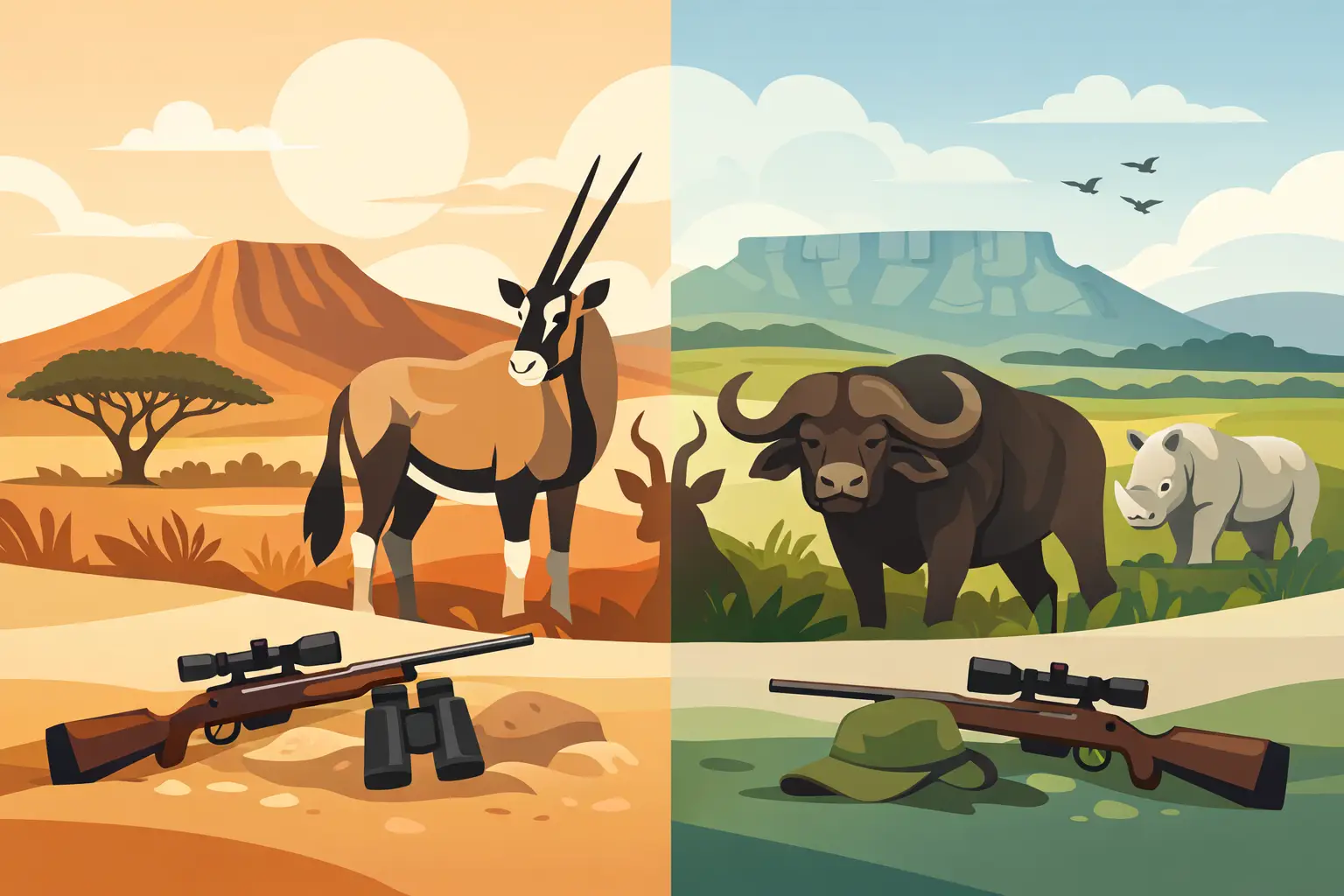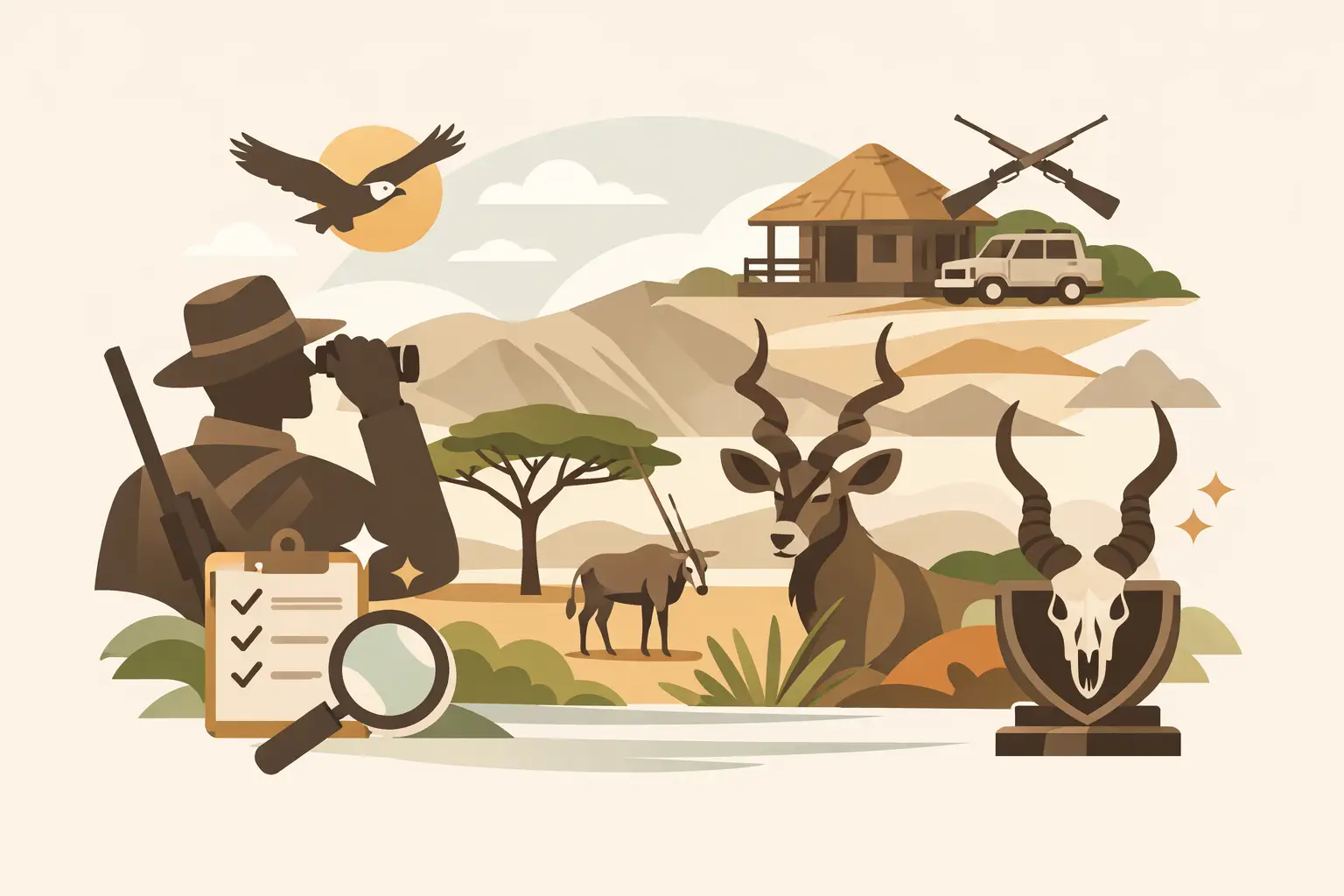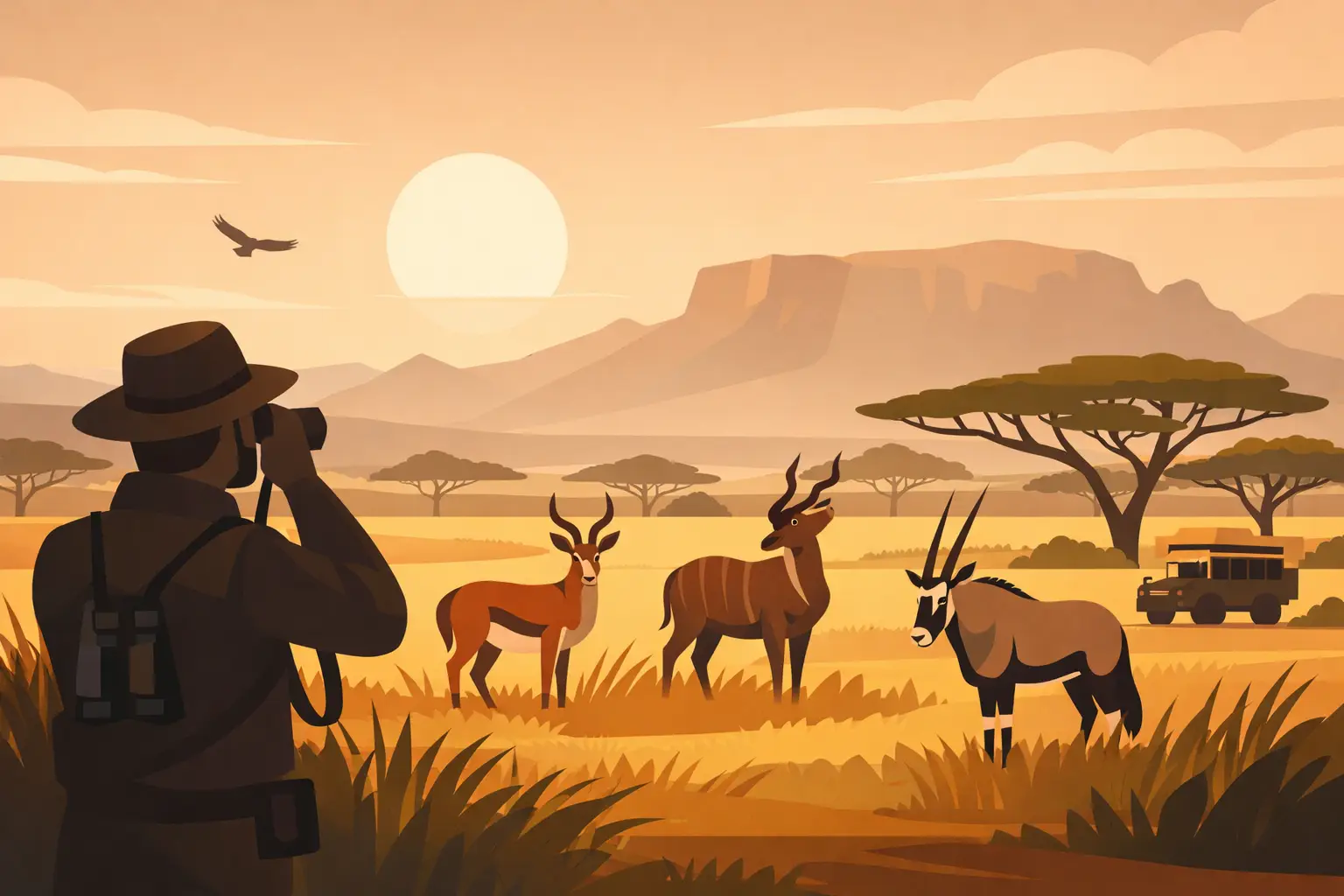
A mature kudu bull slipping through thornbrush at first light can make a hunter forget the miles behind him. That is the pull of the best Namibia plains game: it is not simply a list of species or a collection of trophy fees. It is a hunt shaped by dry wind, long glassing sessions, fresh tracks in the sand, and the patient work required to get close without forcing the moment.
Namibia is one of Africa’s great plains-game destinations because its landscapes demand different kinds of hunting. Thick brush, open savanna, dry riverbeds, grass flats, and scattered mopane all hold game differently. A good safari starts by choosing species that fit your goals, your available days, and the kind of hunt you want to remember.
What Makes the Best Namibia Plains Game Worth Hunting
The strongest plains-game safaris are built around quality, not a rushed species count. A hunter may arrive with a long wish list, but a mature trophy taken after a proper stalk is often more satisfying than several animals taken in a hurry. Namibia rewards patience. Animals live in country where they can see, smell, and disappear quickly.
For many international hunters, kudu is the first priority. For others, it is a big old eland bull, a heavy-horned gemsbok, or the striped hide of a mountain or Burchell’s zebra. The right selection depends on whether you want a classic first African safari, a focused trophy hunt, or a family trip that leaves time for game viewing, fishing, and enjoying camp.
A fair-chase approach matters. The animal should have room to use the terrain, the wind, and its own instincts. Hunting on foot with an experienced professional hunter and skilled local trackers puts the emphasis where it belongs: reading country well, making a sound plan, and taking a clean shot when the chance is earned.
The Best Namibia Plains Game Species to Prioritize
Greater kudu: The classic first trophy
Greater kudu belongs near the top of nearly every Namibia wish list. A mature bull carries a heavy, sweeping set of spiraled horns, but his real defense is his ability to vanish. Kudu often feed in brushy country where a hunter may see a flick of an ear, a white chevron on the face, or the curve of a horn before seeing the whole animal.
Kudu hunting is ideal for hunters who enjoy walking, glassing, and working slowly through cover. Early mornings and late afternoons can be especially productive, though a tracker may find a usable trail at any hour. Do not judge a kudu only by length. Age, mass, horn shape, and overall character are all part of a trophy worth taking.
Eland: Africa’s largest antelope
A mature eland bull is a serious prize and a very different hunt from kudu. These big animals can appear calm, then cover ground with surprising speed when disturbed. Older bulls may carry deep body mass, a heavy dewlap, worn horn tips, and the unmistakable loose skin and darkened features that show age.
Eland is often best pursued as a tracking hunt. A fresh spoor can lead through sand, brush, and open country for miles. It is physically demanding in warm weather, but it is the kind of day that stays with a hunter long after the trip is over. If eland is your main goal, schedule enough days and arrive prepared to walk.
Gemsbok or oryx: Built for Namibia
Gemsbok, commonly called oryx, may be the most iconic antelope in Namibia. Their long, straight horns, bold black-and-white facial markings, and pale gray coats make a striking trophy. They also belong in this country. Seeing a herd move through open veld with red sand or thorn country behind them is pure Namibia.
Oryx can be difficult to judge at a distance because both sexes carry impressive horns. Your professional hunter will help identify a mature animal with the body size, horn thickness, and shape you want. They are tough, alert animals, and careful shot placement is essential.
Zebra: A trophy with real presence
Zebra is sometimes treated as an add-on, but a mature stallion is a fine plains-game trophy in his own right. Each hide is individual, and a properly prepared zebra skin brings the memory of the hunt straight into a trophy room.
The challenge is often getting a clear look at the right animal among a herd. Zebra have sharp eyes, strong hearing, and plenty of companions watching in different directions. They also demand a deliberate approach after the shot. Their toughness and the country they inhabit make them more than a casual opportunity.
Blue wildebeest: Tough, alert, and underrated
A blue wildebeest bull has the kind of character many hunters appreciate more after they have hunted one. Thick bosses, curved horns, a dark mane, and a powerful front end give him a rugged look. He is also known for being alert at the wrong moment, especially when the wind turns or another animal in the herd becomes uneasy.
Wildebeest are a good choice for hunters who enjoy spot-and-stalk hunting in more open country. A mature bull is worth taking time to judge. Wide horn spread alone does not tell the whole story. Boss development, age, symmetry, and the bull’s overall build matter just as much.
Springbok and warthog: Small trophies, big memories
Springbok and warthog deserve room in a well-planned safari. Springbok are beautiful, quick, and watchful, with clean lines and rich markings. Their hunting can be deceptively challenging on open ground where a careful stalk is required.
Warthog offer a different kind of fun. A big old boar with well-developed tusks, worn ears, and a scarred face has plenty of personality. They are often encountered while hunting other game, but an old boar is never a poor choice when the opportunity is right.
Build a Hunt Around Country, Not Just a Checklist
The best Namibia plains game itinerary is rarely the one with the most animals written on it. A seven- to ten-day hunt gives most guests enough time to settle into the rhythm of camp, pursue primary species properly, and remain open to unexpected opportunities. If your goals include kudu, eland, zebra, or several mature antelope, more days give you better choices and less pressure.
Start with two or three priority animals. Then add secondary species you would be pleased to take if the right trophy appears. This keeps the safari focused. It also helps your professional hunter make sound daily decisions based on weather, wind, tracks, sightings, and the animals moving through the area.
At Eldoret Hunting Safaris, the one-group-or-one-family-at-a-time camp policy gives hunters the freedom to shape each day around their own goals. On 25,000 acres in northeastern Namibia, hunts are conducted with professional hunters, local San trackers, and a team that knows the ground and its game. That personal approach matters when a fresh track calls for a change of plan or when a spouse would rather enjoy a quiet morning at camp before joining the afternoon outing.
When to Hunt Namibia Plains Game
Namibia’s hunting season generally offers excellent plains-game opportunities through the drier months, when vegetation is less dense and animals concentrate more predictably around water and feeding areas. Conditions vary by region and by year. Early season can bring thicker cover and fine-looking animals, while later dry-season hunts may make glassing and tracking easier.
There is no single best month for every hunter. If you dislike cold mornings, ask about earlier dates. If you want the driest conditions and are comfortable with crisp dawns, later season may suit you well. Trophy quality, local rainfall, and the species on your list should guide the decision more than a calendar alone.
What to Bring to the Field
Bring boots you have already worn in, not a brand-new pair saved for Africa. Neutral clothing in layers, a hat, quality binoculars, and a small daypack will cover most needs. A light shooting rest or sticks may be used when the moment calls for it, but expect to walk, sit, kneel, and use the natural cover the veld provides.
Just as important, bring realistic expectations. Fair-chase hunting has quiet stretches. A trophy may take several days, and a hard-earned animal can be more meaningful than the one you expected to find on the first morning. Let your outfitter know what matters most to you, including trophy standards, physical limitations, rifle preferences, and whether non-hunting companions are traveling with you.
The right plains-game safari leaves room for more than the shot. It includes coffee before daylight, the tracker’s finger on a fresh print, a lunch under a tree, stories around the fire, and good food after a long day in the veld. Choose your animals with care, hunt them honestly, and give Namibia enough time to show you why its game country has kept generations of hunters coming back.