A five-star comment about good food and a clean room may be pleasant to read, but it does not tell you how a hunt was conducted when the tracks disappeared in dry sand at noon. The best Namibia hunting outfitter reviews reveal what happened in the field: how hard the team hunted, whether trophies were earned fairly, how the professional hunter handled pressure, and whether the guest was treated as a hunter rather than a booking number.
For an overseas hunter, reviews are often the first real look behind an outfitter’s photographs. Namibia has excellent hunting, capable professionals, and vast country, but operations are not all built the same way. Read carefully and you can separate genuine client experience from broad praise that could apply to almost any lodge.
What Strong Namibia Hunting Outfitter Reviews Reveal
A useful review has detail. It names the species pursued, describes the terrain, mentions the stalk, and gives a sense of the hunter’s actual role in the outcome. A client who writes about following fresh kudu tracks through thornveld, glassing a bull across a long valley, or passing younger animals before taking a mature trophy is giving you something meaningful to evaluate.
Look for comments about the pace of the hunt as well. Some hunters want a full species list in a short window. Others would rather spend several days on one old eland or a heavy-horned kudu. Neither preference is wrong, but the outfitter should be clear about what kind of hunt they run. Reviews that repeatedly mention patience, walking, tracking, and careful trophy selection usually point toward a fair-chase operation rather than a volume-driven program.
The same applies to misses and difficult days. No honest hunting safari produces a trophy every time a guest steps off the truck. A credible review may mention wind changes, long walks, a missed opportunity, rain, or an animal that simply got away. Those details are not warning signs. Often, they are proof that the hunt was real.
Read Beyond the Trophy Photo
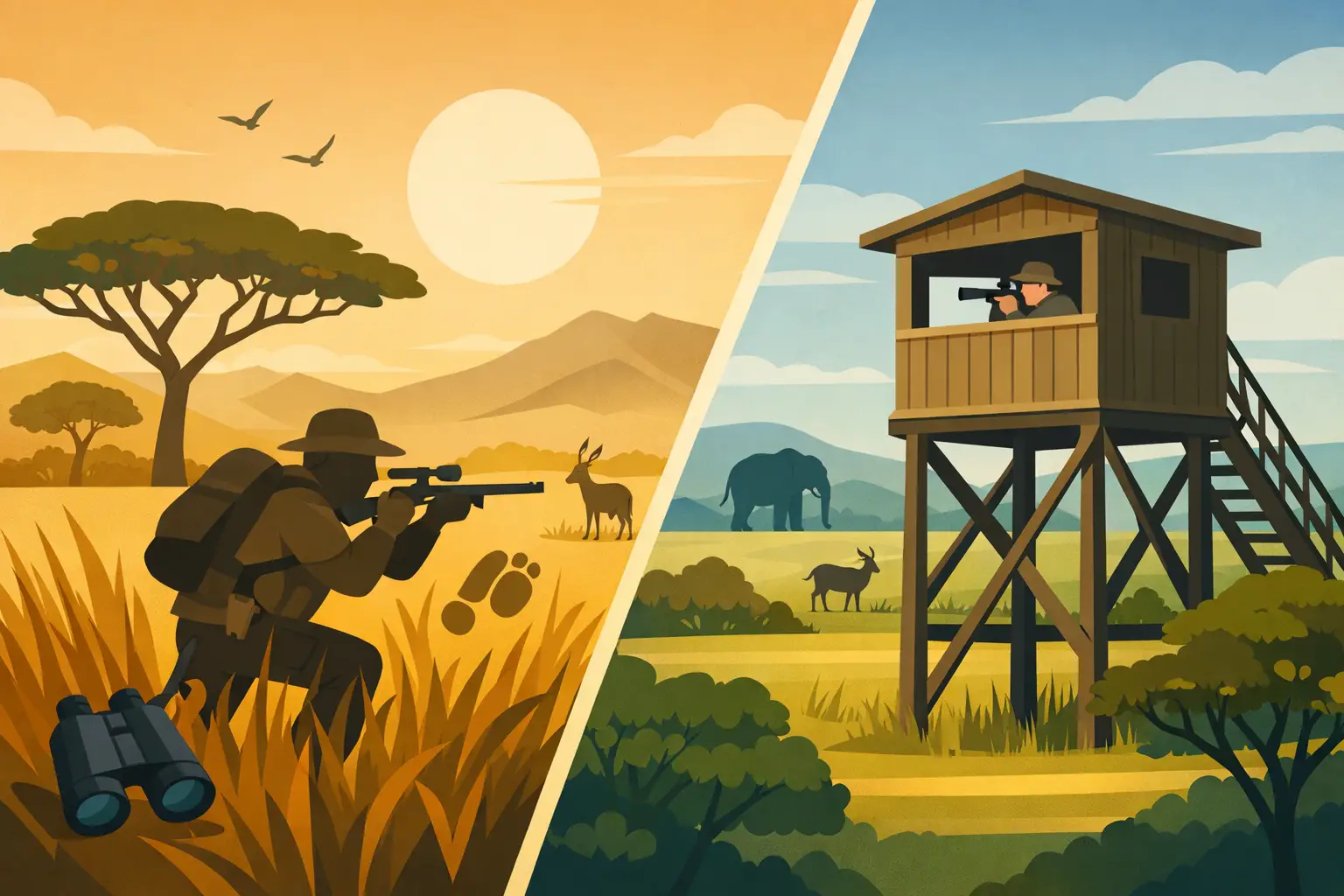
A photograph can show an impressive animal, but not the circumstances of the hunt. When reading reviews, pay attention to phrases such as “walk-and-stalk,” “tracked on foot,” “we passed several bulls,” or “the PH explained why we waited.” They tell you more than a score or a smiling grip-and-grin picture.
Also notice whether clients talk about the land itself. Namibia includes open savanna, thornbush, river country, rocky hills, and thick cover where a tracker’s eye can make the difference. Hunters who describe seeing abundant game while still working hard for a mature animal are often describing the balance most serious sportsmen want.
Questions to Ask Behind Every Review
Reviews are personal accounts, not a substitute for a direct conversation. Use them to form better questions before you book. If several hunters praise trophy quality, ask how the outfitter judges maturity and what standards apply to the species on your list. If they praise a professional hunter, ask who will guide you and whether that person will be with you for the entire safari.
Camp privacy deserves the same attention. A large lodge with many hunting parties may suit a hunter who enjoys a busy social atmosphere. But if you are traveling with your spouse, family, or a close group of friends, one party in camp can change the entire experience. Your daily schedule, meals, vehicle, conversations around the fire, and hunting plan remain your own.
Ask how many hunters are on the property at one time, whether observers are welcome in the field, and how non-hunting days are handled. For a first African safari, these practical answers can matter as much as the trophy list.
When a review says the staff “felt like family,” read it with a little care, then ask what that meant. Was the host present? Were meals prepared around the guests’ schedule? Did the camp accommodate a spouse who wanted to game-view, read, fish, or rest between outings? Specific hospitality is more valuable than a vague compliment.
The People Behind a Good Hunt
In Namibia, the best reviews often return to the people. A professional hunter brings judgment, safety, and calm direction. A good tracker reads broken grass, dust, tracks, and the small signs most visitors would walk past. Skinners and camp staff handle the work after the shot with care, from field preparation through trophy documentation and daily camp life.
This is especially true on a tracking-based hunt. Local San trackers carry knowledge earned through a lifetime in the bush. Their contribution should not be treated as decoration in a brochure. When hunters describe a tracker finding an old bull’s line after a night of wind, or quietly signaling that an animal is close in thick cover, they are describing a team effort that has real value.
At Eldoret Hunting Safaris, hunts are conducted on a 25,000-acre property in northeastern Namibia with one group or family hosted at a time. That approach is not for a hunter chasing the fastest possible checklist. It is for guests who value private camp life, careful hunting, and the time to work a track properly with local guides and San trackers.
Trophy Quality Is More Than Inches
A review that says “great trophies” is a start, but it should not be the end of your research. Kudu, eland, oryx, zebra, blue wildebeest, springbuck, giraffe, and warthog each call for different expectations. Age, horn character, body condition, field judgment, and the hunting area all matter.
Ask for realistic expectations based on your dates and the time available. Early-season conditions may differ from late-season conditions. A hunter with ten days and a focused list has more room to wait for the right animal than a hunter attempting many species in five days. Good outfitters will discuss those trade-offs plainly instead of promising every animal on the wish list.
For buffalo, elephant, hippo, crocodile, leopard, lion, cheetah, hyena, and other concession-based hunts, careful planning matters even more. Tag allocation, hunting dates, legal requirements, and concession conditions can determine what is possible. Reviews from clients with similar dangerous-game goals are useful, but a current, direct discussion is essential.
Watch for Consistency, Not Perfection
No outfitter should be judged by one glowing review or one unhappy comment alone. Read across several years and look for a consistent pattern. Do returning guests mention the same hosts, the same standard of effort, and the same care for the hunt? Do spouses and non-hunters speak well of their time? Are concerns answered professionally when they appear?
Be cautious with reviews that are all superlatives and no substance. “Best trip ever” may be true, but it gives you little to work with. Equally, do not dismiss an outfitter because one client expected a result that weather, shooting, or wild animals did not provide. Look at whether the operation was honest, prepared, and committed to the hunt.
A good way to test what you are reading is to request references from recent hunters with goals similar to yours. Speak to a plains-game hunter if that is your plan. Speak to a couple if you are bringing your spouse. Ask what they would do differently, what surprised them, and whether they would return. The last question is often the clearest one.
A Safari Should Still Feel Personal
The strongest reviews usually remember more than horns and distances. They remember coffee before first light, the sound of guinea fowl around camp, a tracker’s quiet grin after a long follow-up, and a well-earned meal after sunset. They remember being looked after without being fussed over.
That is the standard worth seeking in Namibia: honest hunting country, people who know it well, and a camp where your goals are taken seriously. Choose the outfitter whose reviews show not merely that guests took trophies, but that they hunted them the right way and left wanting to return.