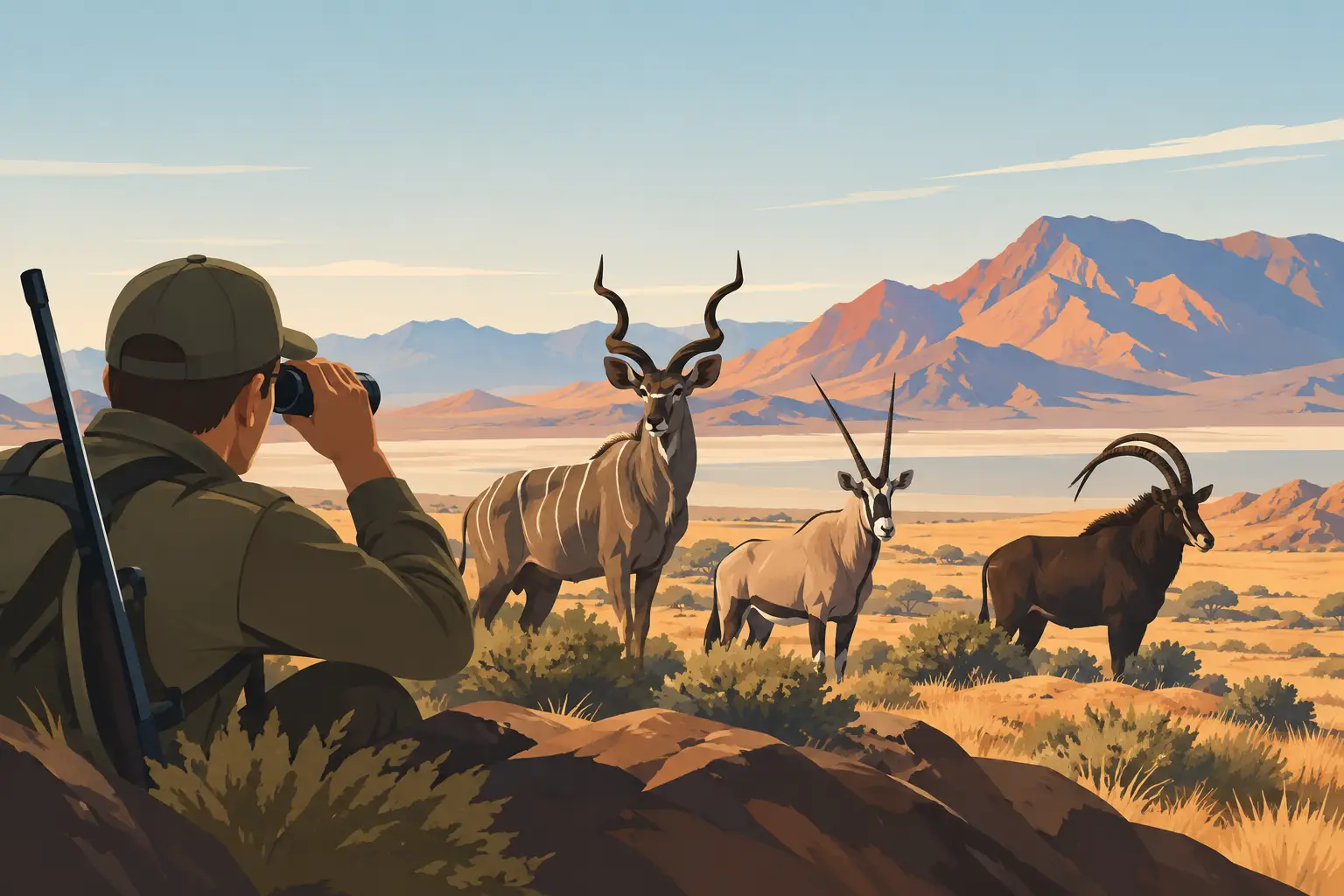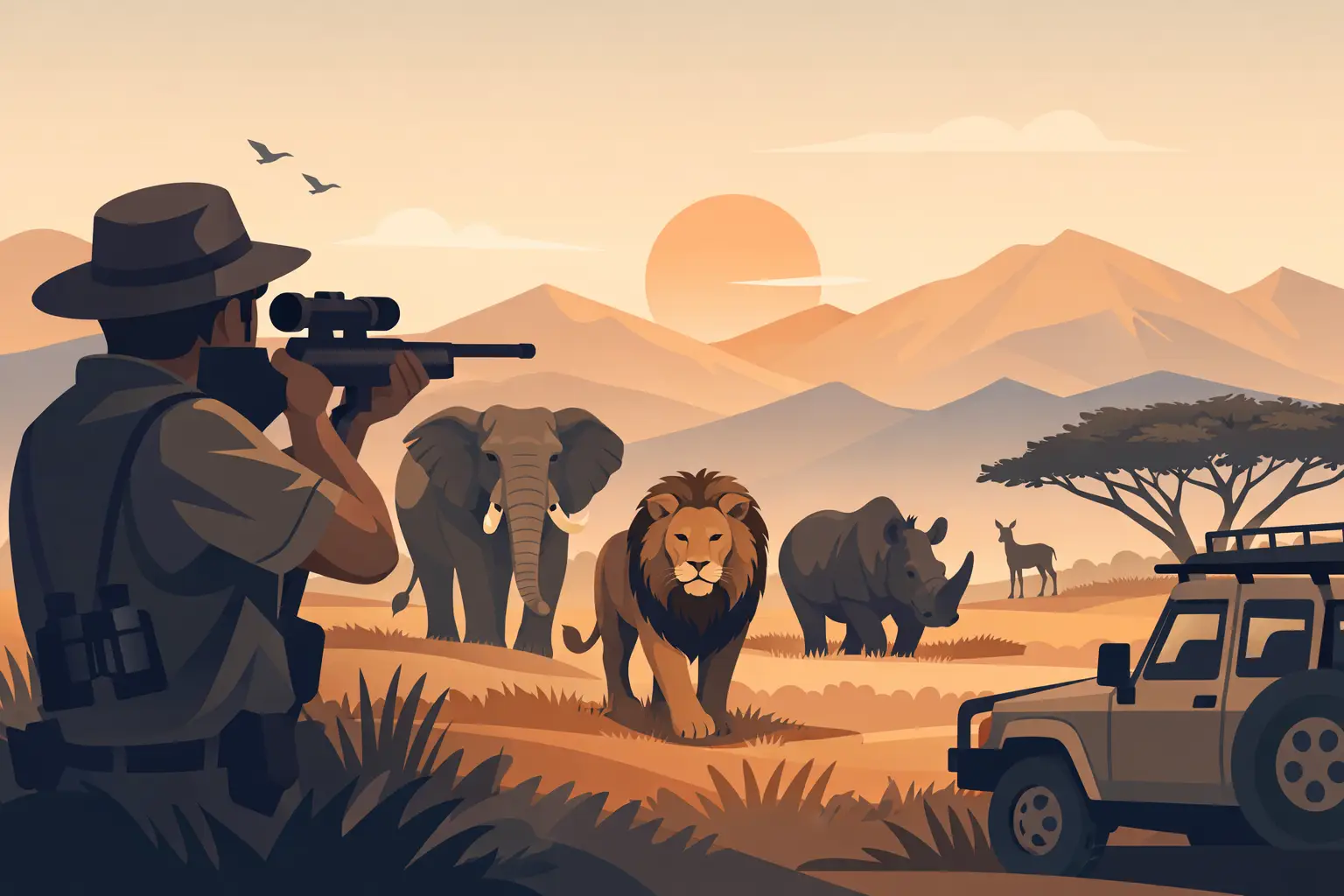
A dangerous game hunt is not measured by the size of the animal alone. It is measured by the moment when the track freshens in soft sand, the wind turns toward thick cover, and every person in the line understands that a poor decision can have serious consequences. For the hunter, it is one of Africa’s greatest pursuits. For the professional hunter, trackers, and concession team, it is work that demands discipline from the first morning to the final follow-up.
Namibia offers an exceptional setting for hunters who want dangerous game pursued properly: on foot, in wild country, with legal permits, experienced local people, and enough time to let the hunt unfold as it should. The goal is never to rush an encounter or manufacture a story. The goal is a fair, ethical hunt that respects the animal, the land, and the people standing beside you.
Dangerous Game Is Earned in the Field
Buffalo, elephant, hippo, crocodile, leopard, lion, cheetah, and hyena are not all hunted in the same way, nor are they available under the same conditions. Species availability depends on the area, the season, conservation requirements, and the lawful allocation of tags. A serious outfitter will be plain about this from the start rather than promising an animal before the proper permits and hunting areas are confirmed.
A buffalo hunt may begin with long hours behind tracks through mopane and riverine cover. The first tracks of the day might be old, crossed by fresh spoor, then disappear where the ground turns hard. You may walk many miles before seeing the animal. That is part of it. A mature bull that has survived predators, drought, and hunters did not get old by standing in the open.
Elephant hunting requires another level of patience and judgment. Age, ivory, herd movement, wind, terrain, and the behavior of surrounding animals all matter. Hippo and crocodile demand their own careful approach around water, where distances can deceive and a wounded animal can disappear into thick reeds or deep channels. Predator hunting is equally specialized, governed by strict legal and ethical considerations, local conditions, and a professional hunter’s knowledge of the particular concession.
This is why dangerous game should never be treated as an add-on to a safari. It deserves focused planning, the right area, sufficient days, and a team prepared for the animal being pursued.
The Professional Hunter Sets the Pace
A capable professional hunter does more than carry a rifle and call the shots. He reads sign, watches the wind, judges distance, understands animal behavior, manages the approach, and knows when not to proceed. On dangerous game, restraint is a mark of experience.
There are times when the correct call is to back out. Perhaps the wind is wrong. Perhaps the bull is bedded in cover too thick for a clean shot and a safe follow-up. Perhaps light is fading, a herd is unsettled, or the angle is not right. A hunter who has traveled a long way may feel impatient, especially after several hard days, but forcing the situation is never worth it.
Good guiding is calm and clear. Before the stalk, the PH should explain where everyone will stand, how the shot opportunity may develop, what happens after the shot, and why silence and close attention matter. During the approach, the client needs to listen closely and move exactly when asked. Dangerous game hunting is a partnership, but it is not the time for freelancing.
At Eldoret Hunting Safaris, tailored dangerous-game hunting is arranged in Caprivi concessions when the required tags are allocated. That work relies on professional hunters, local knowledge, and the kind of practical field discipline that comes from working in Namibia year after year.
Why Local Trackers Matter
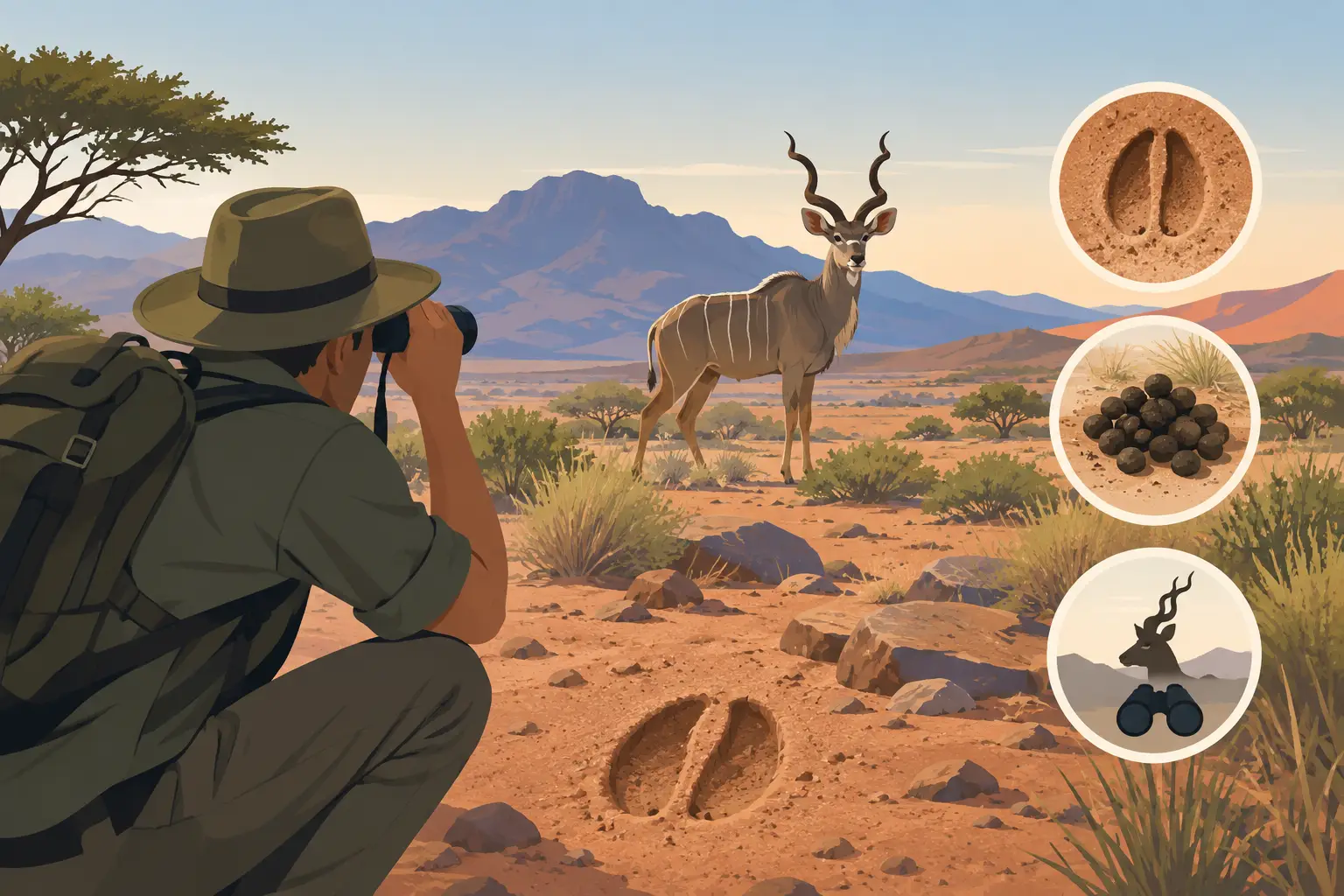
The best track in the world is only useful if someone can interpret it. A broken twig, disturbed dust, a wet mark in a hoofprint, dung, feeding sign, and the direction of a beetle trail can all tell a trained tracker something about where an animal has gone and how recently it passed.
Namibian hunting has a deep tradition of tracking, and San trackers bring field knowledge that cannot be replaced by a GPS screen. They read the ground at a pace that surprises many first-time guests. More importantly, they understand when a track changes from routine work into a situation that needs greater caution.
On a buffalo follow-up, for example, the track team may be looking not only for blood but also for changes in stride, disturbed brush, places where the animal paused, and signs that it has circled back. A wounded buffalo can be silent and close. The people at the front must be fully present.
That traditional skill is one reason a walk-and-stalk hunt feels so different from a hunt built around roads, vehicles, and quick opportunities. You become part of the process. You see the country underfoot, learn to move with the wind, and understand that the trophy is only one part of the experience.
Preparation Begins Before You Land
International hunters should prepare early, especially when dangerous game is the main objective. Rifle import paperwork, airline requirements, ammunition rules, travel routing, permits, trophy export planning, insurance, and physical conditioning all deserve attention well before departure. A good safari team can guide you through the practical details, but the hunter still needs to arrive organized.
Your rifle should be familiar, not newly purchased for the trip. Practice from sticks, from standing and kneeling positions, and under a little pressure. Dangerous game shooting is rarely about a benchrest group. It is about placing a controlled first shot when the PH says the moment is right.
Bring clothing suited to walking quietly and comfortably in the veldt. Neutral colors, broken-in boots, a light layer for cool mornings, sun protection, and a daypack that does not rattle are more useful than fancy gear. Namibia’s country can be dry, dusty, hot, thick, or wet depending on where and when you hunt. Comfort helps, but mobility and attention matter more.
Physical fitness is not about competing with your tracker. It is about being able to walk steadily, stop without gasping, get into position, and remain focused after hours in the field. The better prepared you are, the more you will enjoy the hunt and the fewer limits you place on the team.
Fair Chase Includes the Follow-Up
The ethical standard of a dangerous game hunt is clearest after the shot. Everyone hopes for a quick, clean result, and careful shot selection gives the best chance of that. But wild animals can react unpredictably, even when hit well. If a follow-up is needed, it is not optional work. It is the most important work of the day.
A proper team takes the time required. They mark the last known position, study the evidence, plan the approach, and move with caution. There is no room for casual behavior, loose conversation, or celebrating before the situation is resolved. The animal deserves respect, and every person involved deserves a safe, disciplined process.
This is also where expectations matter. A fair-chase hunt does not guarantee a shot on the first morning, or even a shot at all. Weather, tracks, animal movement, tag conditions, and chance all have a say. The right hunter understands that uncertainty is not a failure of the safari. It is what makes the opportunity genuine.
Camp Should Give You Room to Breathe
After a serious day in the field, camp matters. Not because dangerous game hunting needs polished luxury, but because a private, well-run camp gives hunters the rest and attention they need. A good meal, a cold drink, clean accommodation, and time around the fire allow the day to settle in.
The best camp conversations are often not about the final shot. They are about the tracker who found an old spoor where nobody else saw it, the bull that vanished into the trees, the long quiet walk before sunrise, or the way the red Namibian dust looked in the last light. For spouses and family members, a thoughtfully planned safari can also include game viewing, fishing, river time, or sightseeing while the hunting party is afield.
Choose a dangerous game safari for the right reason: not to collect a quick story, but to take part in a demanding, lawful hunt with people you trust. Arrive prepared, listen carefully, respect the country, and let the track decide the pace. That is where the real memory is made.