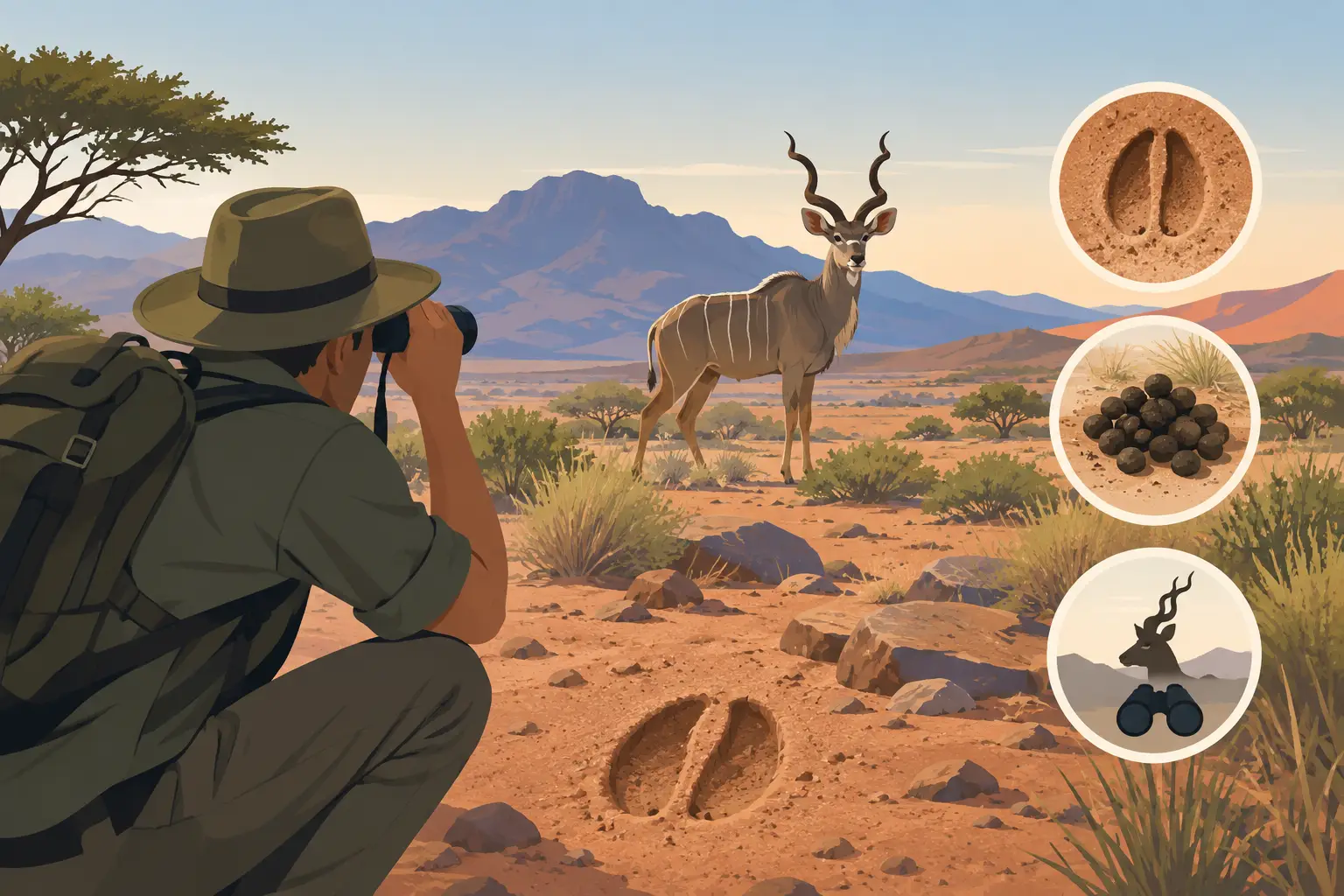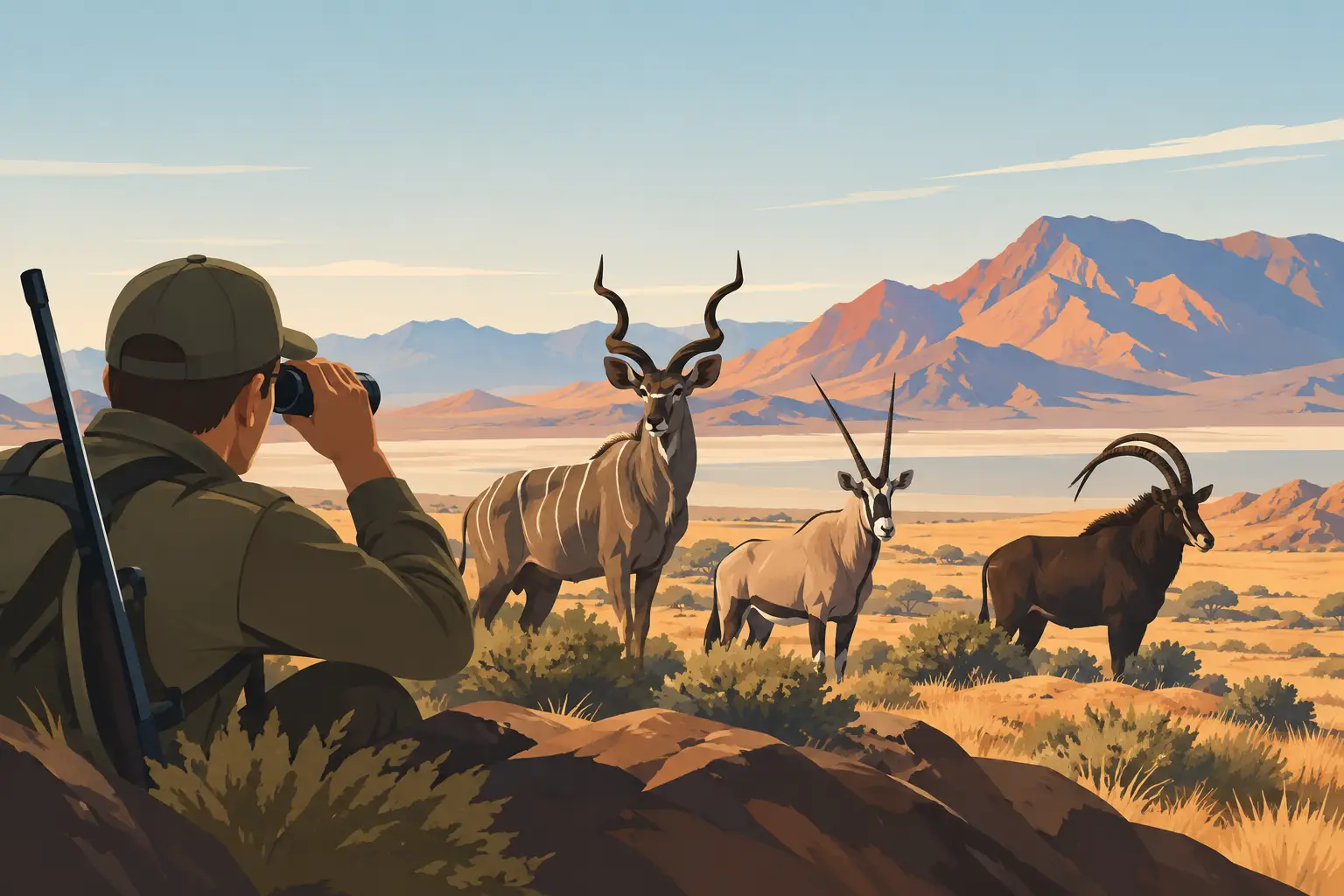
The first morning in Namibia can arrive faster than expected. One moment you are stepping out of an airport after a long international flight; the next, you are hearing guinea fowl call beyond camp, checking your rifle at the range, and looking across country where a mature kudu may disappear into thornbush without a sound. To prepare for an African hunting safari well, handle the practical work before you leave home so you can give your attention to the hunt when it counts.
A good safari is not measured by how many animals are on a list. It is measured by sound judgment in the field, proper shot selection, respect for the game, and time shared around the fire after a hard day of walking. Preparation puts you in position to enjoy all of it.
Start With the Hunt You Actually Want
Before buying boots or booking flights, be honest about your goals. Are you coming for a first African plains-game hunt, with kudu, gemsbok, zebra, wildebeest, and warthog on the wish list? Are you focused on one old bull eland? Or are you planning a dangerous-game or predator hunt where permits, concessions, timing, and physical demands require more advance coordination?
The answer affects the season, your rifle choice, your budget, and even the pace of the trip. A hunter pursuing several plains-game species may want enough days to settle into the country rather than rush from one opportunity to the next. A hunter after a particular mature trophy should leave room for patience. Wild animals do not read itineraries.
Ask your outfitter exactly what type of hunting is offered. Fair-chase hunting on open country, supported by experienced local trackers, is a very different experience from shooting animals over feed or inside a small enclosure. At Eldoret Hunting Safaris, the work is built around walk-and-stalk hunting on a 25,000-acre Namibian property, with San trackers who read the ground in ways most visitors have never seen. That kind of hunt rewards hunters who are ready to walk, listen, and wait.
If a spouse, family member, or non-hunting companion is traveling with you, discuss that early as well. A private camp, game viewing, fishing, river time, or a few days at the coast can make the trip better for everyone. Africa should not feel like a trip one person endures while another hunts.
Paperwork Comes Before Packing
International hunting travel has moving parts, and the details depend on your departure country, firearms, connections, and species. Start early. Your outfitter should provide clear guidance, but you are still responsible for confirming current requirements with the relevant authorities and airlines.
Your passport should have sufficient validity beyond your travel dates and enough blank pages for entry stamps. Check visa requirements for your nationality, including rules for any country where you connect. Carry copies of your passport, travel itinerary, travel insurance, hunting invitation or booking documents, and emergency contacts separately from the originals.
Traveling with a firearm requires particular care. Confirm your airline’s firearm and ammunition rules before purchasing tickets, then confirm them again shortly before departure. Requirements for locked hard cases, ammunition packaging, declarations, and firearm permits can vary by airline and transit airport. Do not assume a rule from last year’s trip still applies.
For American hunters, temporary firearm export documentation should be arranged before travel. Hunters from other countries should check their own export and re-entry requirements. Your outfitter can generally help with the destination-side process, but a calm check-in begins with paperwork organized in a folder and firearm serial numbers recorded accurately.
Trophy export and import also deserve an early conversation. Some species may require permits or have restrictions in your home country. Decide whether you want shoulder mounts, European mounts, rugs, or other preparation before the hunt begins. A reputable outfitter will explain the local field-prep process and help make sure the necessary records are kept, but no one can replace the hunter’s responsibility to understand import rules at home.
Build Fitness for the Veldt, Not the Gym Mirror
You do not need to be a marathon runner to hunt plains game in Namibia. You do need to be able to walk uneven ground steadily, climb in and out of a vehicle, carry your rifle safely, and remain composed when the moment comes. The veldt can be hot, dry, sandy, rocky, thick with brush, or all of those within a single day.
Begin walking several months before departure if you can. Add hills, stairs, or a light pack. Focus on ankles, knees, hips, and lower back, because they are often what complain after a long stalk. Good boots help, but boots cannot compensate for feet that have not spent time in them.
Break in the footwear you intend to wear. Choose quiet, supportive boots with enough room for socks without rubbing. Bring a second pair of comfortable camp shoes or light boots. Blisters are small problems that can become large ones when you are trying to keep up with trackers through thorn country.
Hydration matters more than many visiting hunters expect. Dry air can hide how much water you are losing. Get into the habit of drinking consistently during the day, and do not spend the first two camp days trying to recover from travel, dehydration, and too much celebration on the flight over.
Practice the Shots Africa Gives You
The rifle does not need to be exotic, but it must be reliable, familiar, and properly zeroed. Common, proven hunting calibers work well when matched to the species and loaded with suitable controlled-expansion bullets. Your professional hunter can advise on an appropriate setup for the animals you intend to pursue, particularly if your plans include eland or dangerous game.
Practice from field positions. A bench confirms a zero, but it does not prepare you for shooting off sticks while your heart is working and a kudu bull is angled behind brush. Spend time standing at shooting sticks, kneeling, sitting, and shooting from a pack. Learn how quickly you can find the reticle, settle the rifle, control your breath, and make the shot only when it is right.
Most plains-game opportunities occur within reasonable rifle range, but distance is not the main difficulty. Wind, animal movement, brush, angle, and nerves are what turn an easy range into a serious shot. Do not arrive determined to shoot farther than you have practiced. A good PH would rather hear you say, “I am not comfortable,” than follow a wounded animal for hours.
Bring enough ammunition from the same lot you used for practice and sight-in, while staying within airline limits. Keep it in the required packaging. After arrival, check your rifle again before hunting. Flights, baggage handling, and temperature changes are reasons to verify, not reasons to worry.
Pack for Quiet Comfort, Not a Catalog Photo
Neutral clothing in olive, tan, brown, and muted green works well in the bush. Avoid bright colors and noisy fabrics. Layering is practical because mornings can be cool before the sun becomes strong, especially during the Namibian winter hunting season.
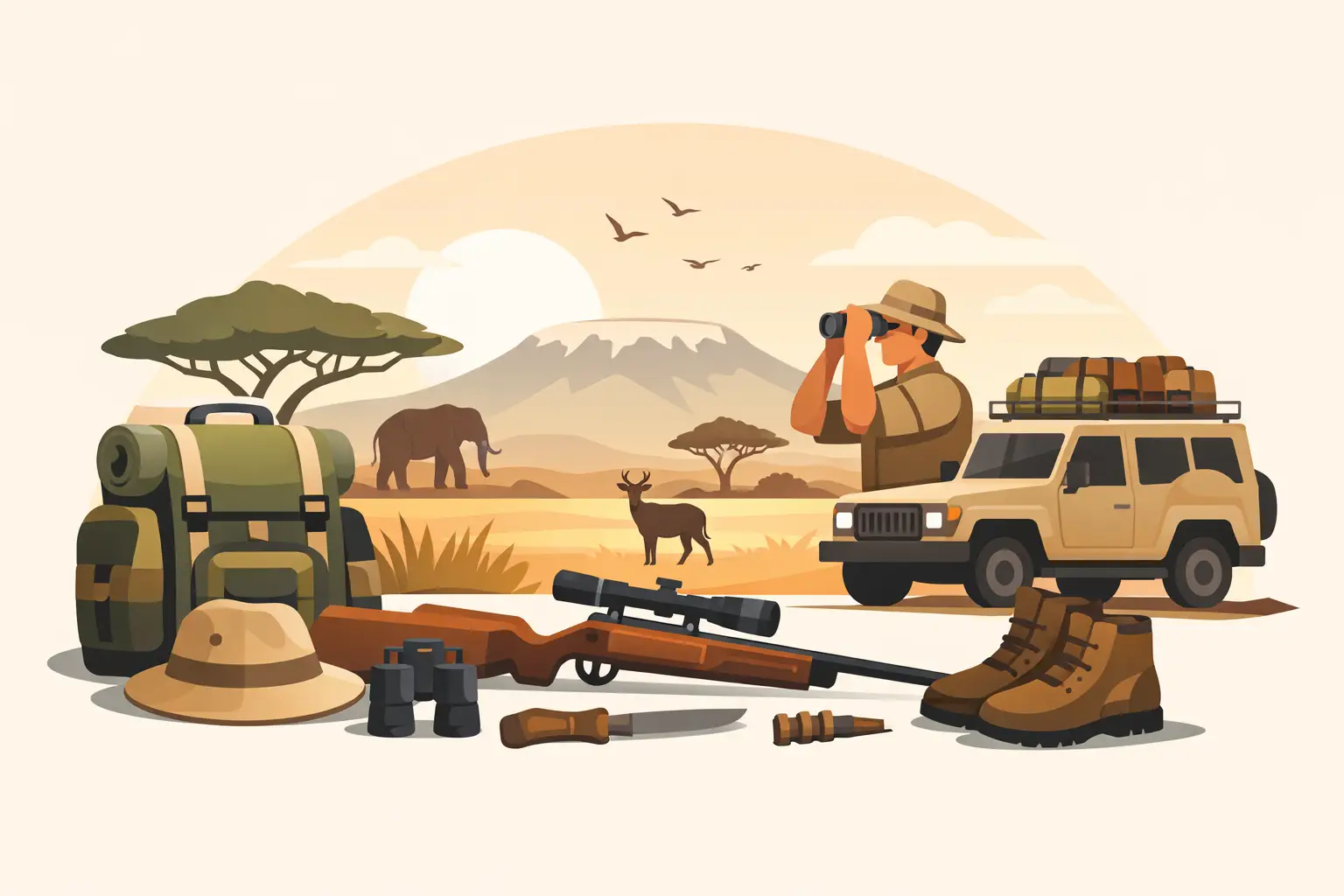
A few items earn their place every day: a soft, brimmed hat; quality sunglasses; sunscreen; lip balm; a small daypack; a refillable water bottle; and a headlamp for moving around camp after dark. Pack light rain protection if your travel dates call for it, and carry any personal medications in your hand luggage.
Do not overpack camouflage clothing or expensive gadgets you have never used. Good binoculars are more useful than another shirt. A compact camera is worthwhile if you enjoy photographs, but remember to put it down sometimes. The best moments are often the ones that happen before a shot, when trackers have stopped, everyone is watching, and the bush suddenly feels very still.
Let Your Professional Hunter Lead the Field Work
Your PH, trackers, and skinners know the country, the animals, and the local conditions. Listen closely during the first safety talk and ask questions whenever you are unsure. They will tell you where to stand, when to load, how to approach a track, and what to expect after an animal is down.
Ethical hunting is not a slogan added after the fact. It shows in the decision to pass a young animal, wait for a clear shot, respect quotas and tags, make every effort on a wounded animal, and use the meat responsibly. Trophy quality is about maturity, character, and a hunt honestly earned, not simply the longest measurement on a sheet.
Bring patience to the process. There may be long drives, false starts, missed chances, and hours when the only result is a better understanding of the country. Those are not wasted hours. They are part of hunting wild Africa fairly.
After the day’s work, take time to enjoy camp. Eat well, tell the truth about the shot if you can, and let the people hosting you share the place they know. A safari has a way of slowing a person down. If you arrive prepared, you can let it do exactly that.