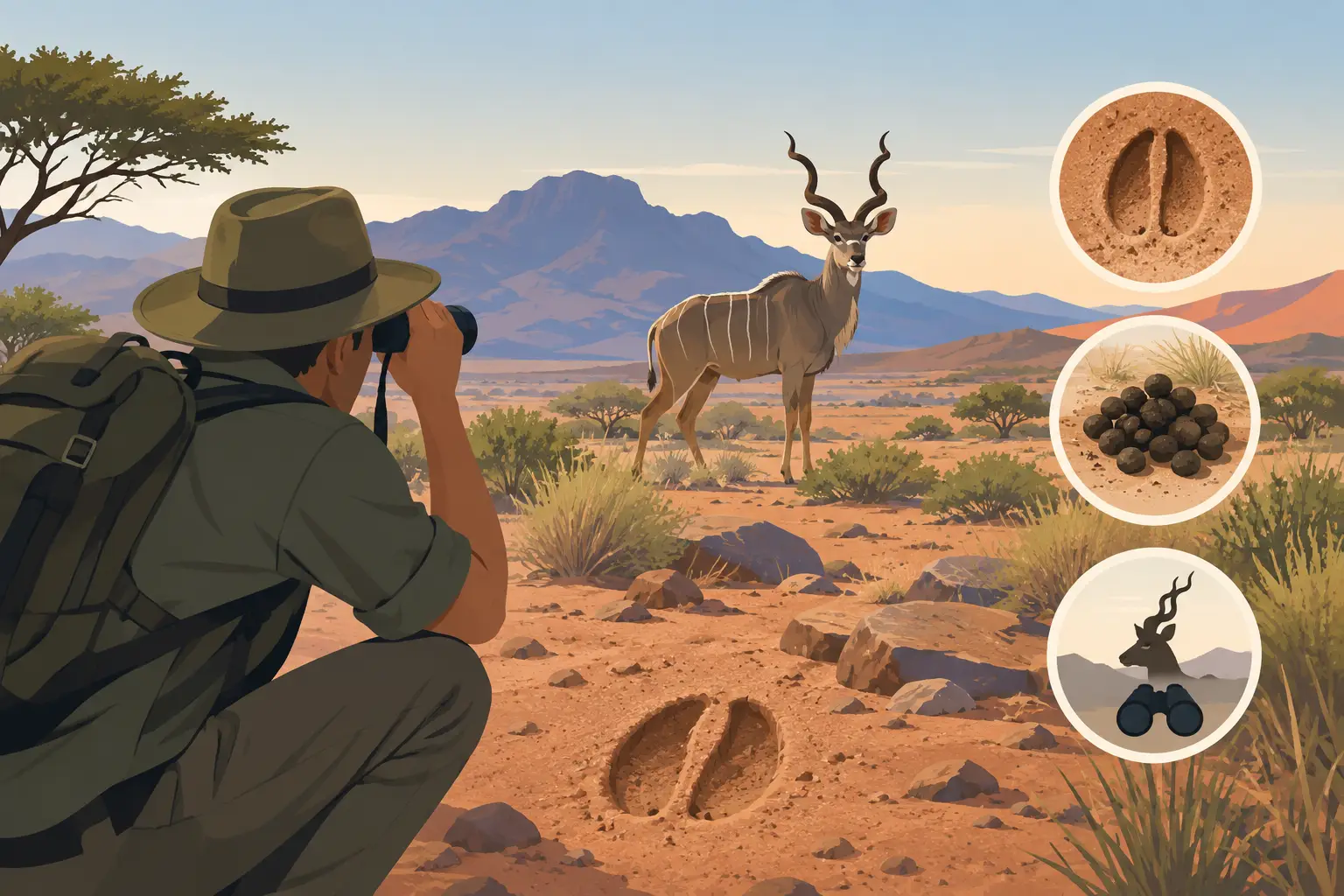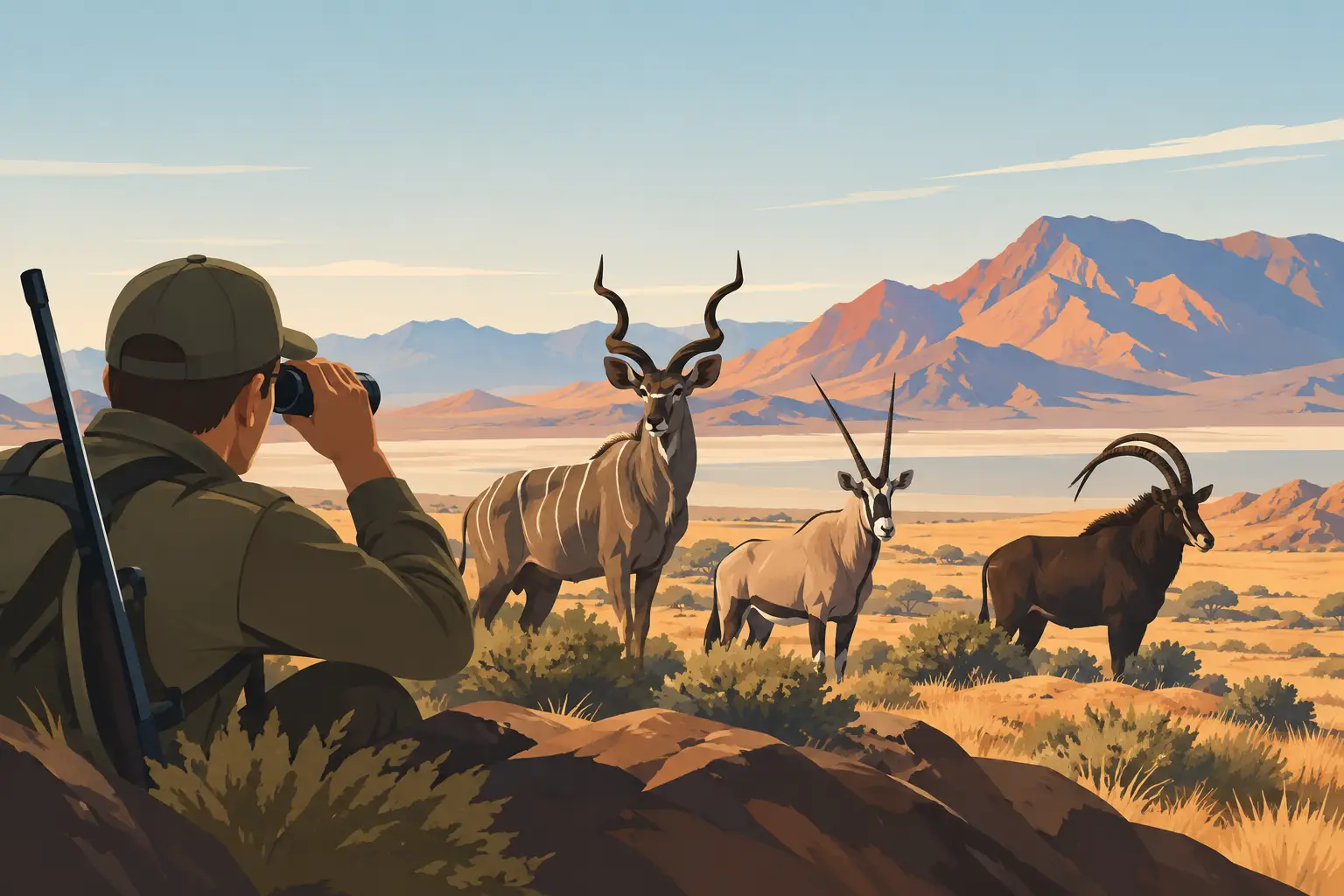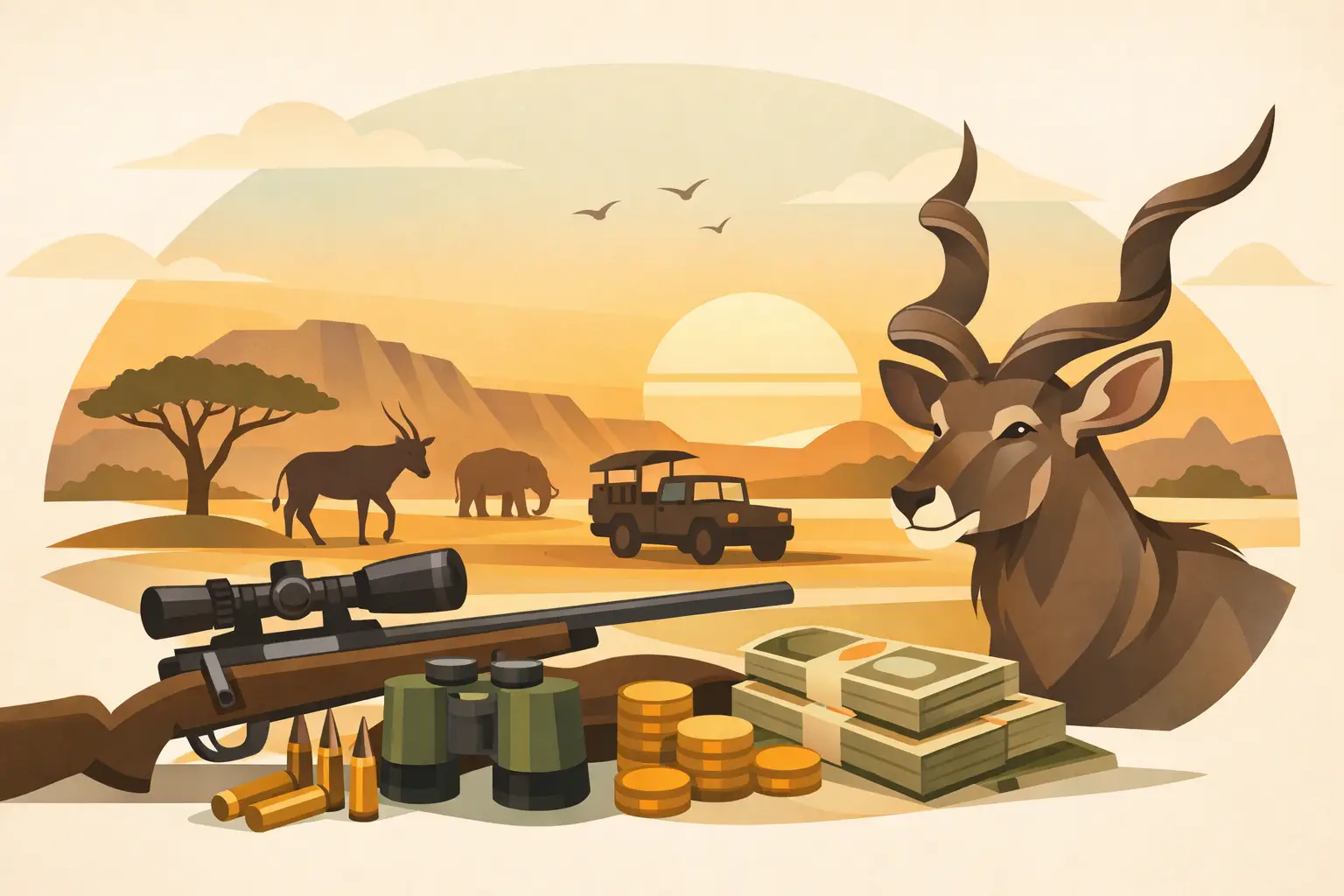
The bull kudu steps out of the thornveld at first light, his horns carrying the deep curl every hunter hopes to see. In that moment, Namibia trophy fees are not an abstract line on a price list. They are part of a decision made after days of tracking, glassing, walking into the wind, and passing younger animals. Understanding how those fees work before the hunt lets you focus on the animal, the country, and the people beside you when the chance finally comes.
For an international hunter, a Namibian safari is a major trip. There are flights, hunting days, taxidermy arrangements, licenses, tips, travel insurance, and often a spouse or family member joining the adventure. Trophy fees deserve the same careful attention as the daily rate, not because they should take the joy out of hunting, but because clear expectations make for a relaxed, honest safari.
What Namibia Trophy Fees Pay For
A trophy fee is the charge applied when a species is successfully harvested. It is separate from the daily rate, which generally covers your accommodation, meals, professional hunter, hunting vehicle, camp staff, and the normal day-to-day operation of the safari. The trophy fee is tied to the specific animal taken.
That structure gives hunters freedom. You can arrive with a focused goal, such as a mature kudu and gemsbok, or keep the trip open and decide what the veldt offers. It also means that a hunter who takes one exceptional old bull does not subsidize another guest who takes a long list of species.
The fee helps support the wildlife management behind the hunt. On a well-run Namibian property, game populations must be monitored, water maintained, fences and roads repaired where applicable, anti-poaching efforts supported, and harvests kept within sensible limits. In concession areas, additional permits, quotas, local agreements, and government requirements can affect the cost, particularly for dangerous game and predators.
A good price list is not simply a shopping list of animals. It reflects the work required to keep wildlife healthy and hunting ethical year after year.
Why Fees Differ So Much Between Species
No two trophy fees carry the same value because no two hunts demand the same resources. A warthog may be plentiful on one property and surprisingly difficult to find in mature trophy class. An old eland bull can cover great country and test a hunter’s legs for days. Kudu, zebra, blue wildebeest, springbok, and oryx each have their own population levels, trophy standards, and hunting challenges.
Rarity is one factor, but it is not the only one. The size of the hunting area, the condition of the habitat, the time of year, available quotas, and how selective the outfitter is all matter. A lower fee may be entirely legitimate if a species is abundant and the property is managed well. It may also mean a different hunting model, a younger age class, or less time spent pursuing the right animal. Ask what the price represents rather than judging it by the number alone.
Dangerous-game and predator fees sit in a different category. Buffalo, elephant, hippo, crocodile, leopard, lion, cheetah, and hyena hunts may involve allocated tags, concession costs, specialized staff, baiting or scouting where legal and appropriate, extra security, and complex export paperwork. Availability can change from one season to the next. A responsible outfitter will never promise a tag that has not been allocated.
Trophy quality is not only about inches
Most experienced hunters understand that a mature animal is more than a measurement. Heavy bases, worn tips, a dark face, a thick neck, and the behavior of an animal that has survived several seasons often tell a better story than a number in a record book.
That is especially true on a walk-and-stalk hunt. At Eldoret Hunting Safaris, the aim is not to push hunters through a high-volume list. It is to hunt properly, with professional hunters and local San trackers reading tracks, wind, broken grass, and fresh sign. Sometimes the best bull is taken early. Sometimes a hard-earned trophy is the one you have to leave until tomorrow because the wind turns or the shot is not right.
Read a Trophy Fee List Before You Commit
Ask for the current season’s price list in writing. Prices can change with operating costs, exchange rates, permit requirements, and available quotas, so a list from a previous season should never be treated as final. Then ask the outfitter to explain what is included and what remains your responsibility.
The questions worth asking are practical. Does the quoted trophy fee include value-added tax or any conservation levy? Are permit charges included for the species you want? Is there a trophy handling, skinning, salting, or delivery charge to a local taxidermist? What happens if an animal is wounded and cannot be recovered? Are there charges for non-hunting observers, transfers, charter flights, ammunition, or hunting licenses?
These details are not awkward to discuss. A professional outfitter expects them. Clear answers early in the process protect both the hunter and the hunting operation.
Wounded-game policy deserves special attention. Ethical hunters take every reasonable precaution, but animals can move at the shot, brush can deflect a bullet, and a well-hit animal can travel farther than expected. Many operations charge the full trophy fee for an animal that is wounded, even if it is not recovered after a serious search. The exact policy should be stated before the hunt. More importantly, both hunter and PH should agree that recovery comes first, even when it costs valuable hunting time.
Build a Budget That Leaves Room for Opportunity
Start with the daily rate and the number of hunting days needed for your goals. A plains-game safari is rarely improved by trying to take too many species too quickly. Hunters often enjoy a longer stay with fewer targets because it allows time to wait for mature animals, hunt different habitats, and enjoy camp without watching the clock.
Next, select a core list of animals you would be genuinely happy to take, then add one or two opportunity species only if your budget permits. The old kudu bull you came for should not be compromised because every dollar was committed to animals you merely thought you might see.
Your total safari budget should also account for international airfare, firearm import arrangements or rifle rental, gratuities, taxidermy and shipping, travel insurance, and personal purchases. If you are bringing a non-hunting spouse, build in time for river fishing, game viewing, sightseeing, or a few days on the Atlantic coast. A well-planned safari gives everyone a reason to remember the trip.
Do not forget the final days of hunting. A hunter who has already taken his principal animals may still encounter an exceptional zebra stallion, a heavy old warthog, or a mature blue wildebeest. Having a clearly agreed reserve amount prevents a rushed decision in the field. It also makes it easier to say no if an animal is good but not the animal you want.
The Cheapest Fee Is Not Always the Best Value
There is nothing wrong with comparing Namibia trophy fees between outfitters. You should compare them. But compare the full hunt, not only the lowest listed number.
A bargain fee can look different once transfers, permit charges, accommodation, handling costs, and other extras are added. More importantly, ask whether the hunt offers the experience you are traveling across the world to have. Is there enough land to hunt properly? Will you share camp with several unrelated groups? Are mature animals being protected? Will your guide recommend passing a young animal, even if taking it would mean immediate revenue?
Private attention has value. So does a camp where the host knows your name, the tracker knows the country, meals are shared around the table, and tomorrow’s hunt is discussed while the fire burns down. On a 25,000-acre property, the difference between driving around for a quick opportunity and taking the time to track an old animal can define the whole safari.
A Fair Fee Supports a Fair-Chase Hunt
The best trophy fee is one you understand and can accept before the hunt begins. It should be clear, current, and connected to a real animal, real management, and a real hunting opportunity. It should never be used to pressure you into taking an animal you do not want.
When you plan openly with your outfitter, you can arrive with a sensible list, an honest budget, and enough flexibility for the unexpected. Then, when a track disappears into the mopane and your trackers signal that the bull is close, the only number that matters is the one on your rangefinder.