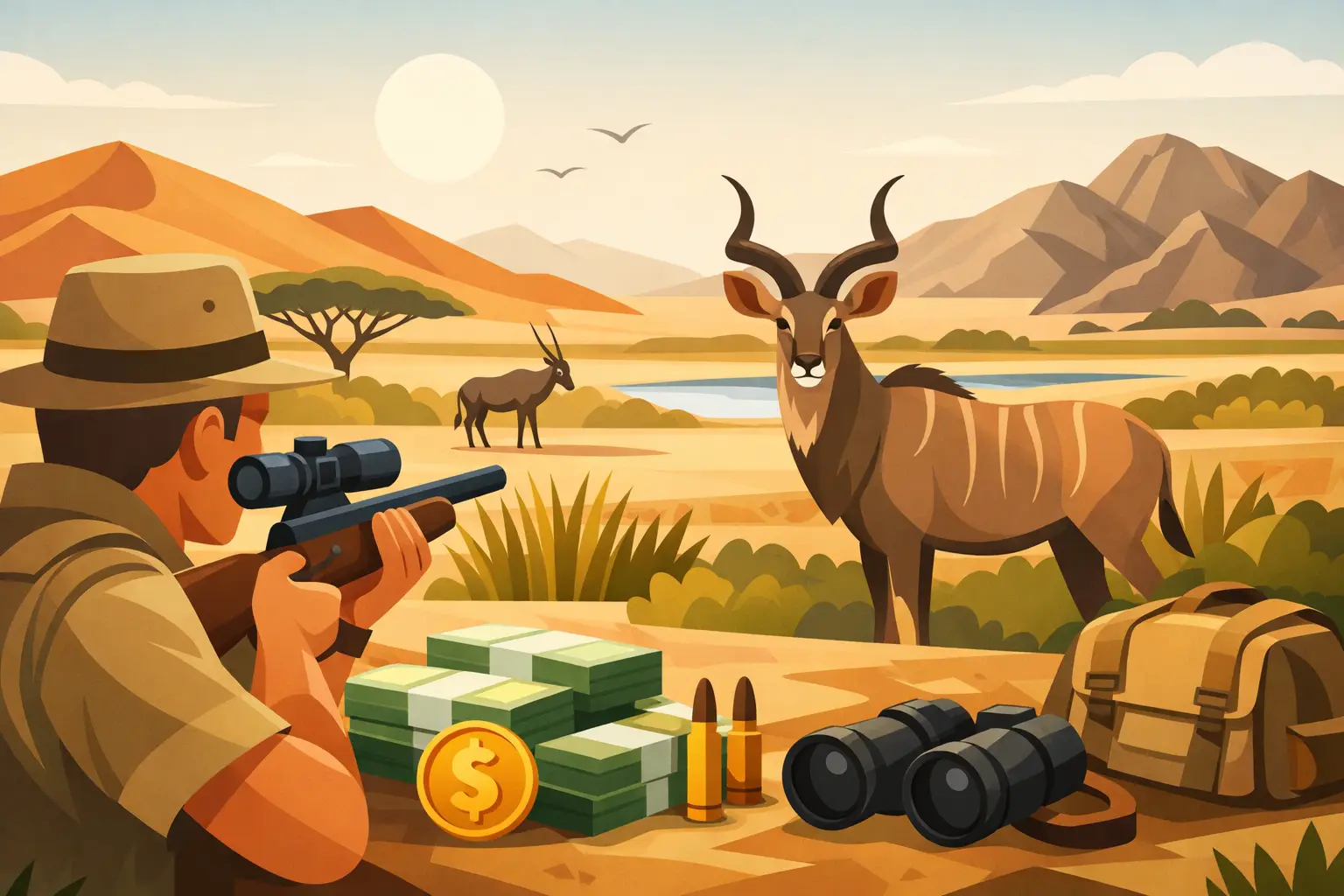
The number on a safari price list is only one part of the trip. Real safari hunt costs are built around the animals you hope to take, the time needed to hunt them properly, how you travel, and what happens to your trophies after the last evening around the fire. A well-planned Namibia hunt does not need surprises. It does need an honest conversation before you book.
For most visiting hunters, the best starting point is not, “What is the cheapest package?” It is, “What kind of hunt do I want to remember?” A hard-earned old kudu tracked through thornveld, an eland bull followed for miles with local trackers, or a mixed plains-game safari with your spouse along for the experience all require different budgets and different amounts of time in camp.
What Makes Up Safari Hunt Costs?
A Namibia safari generally has several separate cost categories. Your outfitter should make each one clear in writing so you can compare one hunt with another on more than a headline rate.
The first is the daily rate or package rate. This commonly covers your accommodation, meals, professional hunter, trackers, skinners, hunting vehicle, field preparation of trophies, and the ordinary day-to-day running of camp. On a private property, it may also include the quiet value many hunters are looking for: no rotation of unfamiliar groups through camp, no competition for the best hunting areas, and time to hunt at the pace the veldt demands.
The second major category is trophy fees. These are charged for animals taken and often vary by species, sex, horn size, age class, and local availability. A warthog or springbuck may fit easily into a first safari budget, while a mature kudu, eland, giraffe, or exceptional zebra represents a more substantial commitment. Trophy fees are not simply a price for horns or hide. In a responsible operation, they help support wildlife management, land care, local employment, and the long-term protection of quality breeding animals.
Then come the travel and administrative expenses: international flights, a possible overnight stay before or after your safari, travel insurance, firearm paperwork where applicable, permit costs, gratuities, and personal purchases. Finally, there is trophy handling after the hunt. Dipping, packing, export documentation, shipping, taxidermy, and import requirements in your home country can be a meaningful part of the total investment.
Daily Rates: Buy Enough Hunting Time
The shortest safari is rarely the least expensive in the long run. Flying from North America or Europe to southern Africa is a major journey, and a rushed five-day hunt can leave little room for weather, tracking conditions, missed opportunities, or simply enjoying the place.
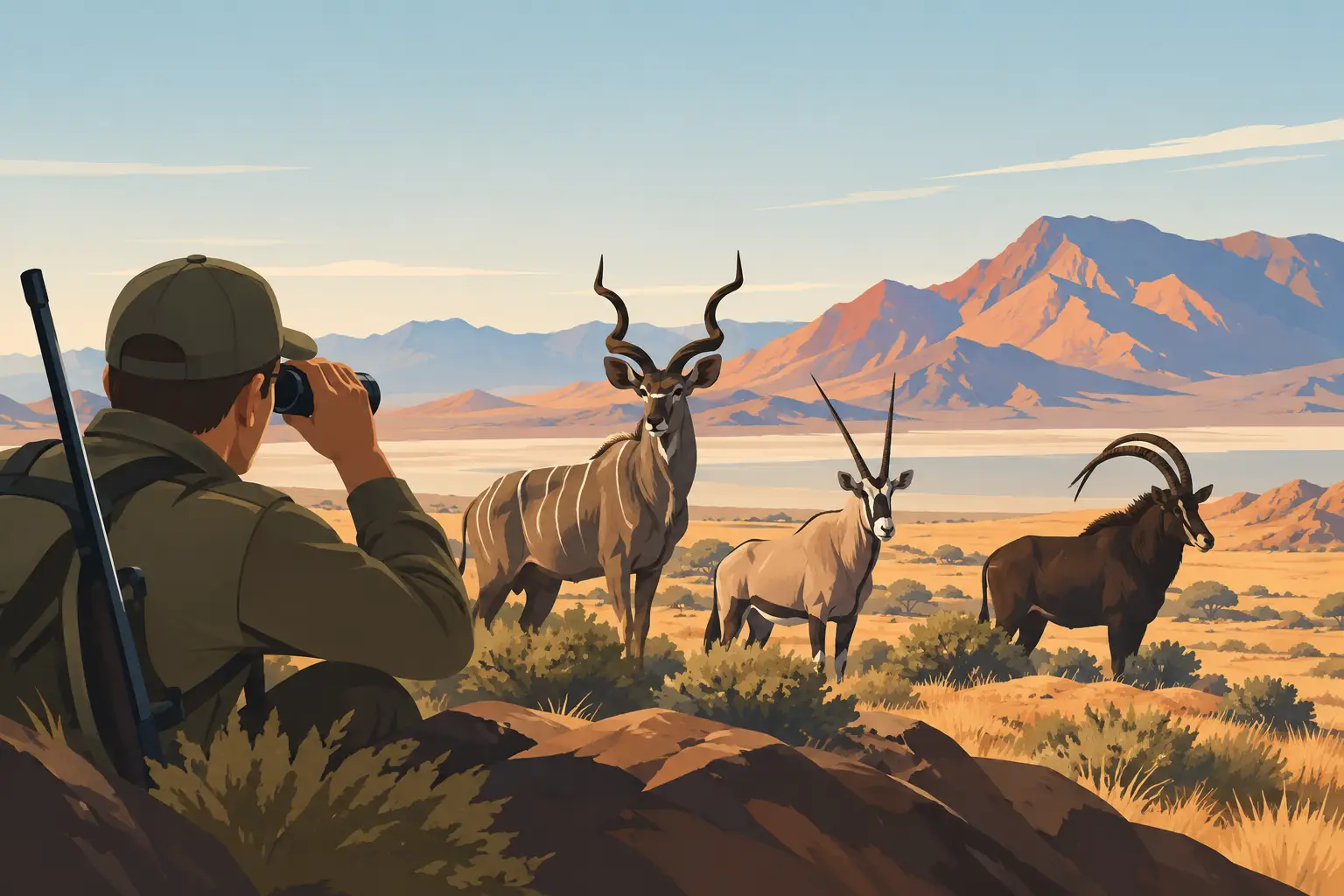
For a plains-game hunter pursuing two or three species, seven to ten hunting days is often a sensible working window. If kudu, eland, or other selective trophies are high on the list, extra days give your professional hunter and trackers the freedom to pass younger animals and wait for the right one. That is especially true on fair-chase hunts where animals are found, judged, and pursued on foot rather than selected from a short list at the edge of a waterhole.
A daily rate also reflects the kind of camp experience you receive. At Eldoret Hunting Safaris, one group or one family is hosted at a time. That can cost more than a high-volume camp on paper, but it means the hunting plan, meals, vehicles, and schedule are centered on your party. For couples and families, that privacy has real value. A non-hunting spouse is not left feeling like an extra seat at someone else’s table.
Trophy Fees and the Cost of Hunting Selectively
Trophy fees deserve careful attention because they can change the final total more than any other line item. Ask for a current species list, then build a realistic plan around the animals you genuinely want rather than every animal that may cross the trail.
A good approach is to choose one primary trophy, two or three likely additions, and one or two opportunities that are entirely optional. For example, a hunter might arrive focused on kudu, with oryx and zebra as likely animals, while keeping a mature warthog or blue wildebeest as a decision for later in the week. This gives the hunt direction without turning it into a race to fill a sheet.
There is a trade-off here. A heavily discounted package can look attractive, but it may encourage quick decisions or include animals you would not otherwise choose. A fair-chase safari is better when the hunter can take time to judge an animal, listen to the PH, and walk away if the trophy is not right. The oldest bull is not always the one with the largest measurement, but age, character, and the story of the hunt matter to many experienced hunters.
Dangerous-game and predator hunting sit in a different cost range. Buffalo, elephant, hippo, crocodile, leopard, lion, cheetah, and hyena hunts may require concession travel, government tags, special permits, additional staff, and more days in the field. Tag availability can change from season to season, so these hunts should be discussed well in advance. They are not the place to make decisions based on a low advertised starting price.
The Costs Hunters Often Forget
International hunters are usually well prepared for daily rates and trophy fees. The expenses that catch people off guard are more often on either side of the hunting days.
Trophy export is the biggest one. Your animal must be professionally prepared in the field, then handled by a taxidermist or shipping agent for dipping, packing, documentation, and air freight or sea freight. The final amount depends on the number of trophies, their size, the destination, and whether you ship raw materials for taxidermy at home or have work completed in Africa. A giraffe or full-mount zebra clearly creates a different shipping calculation than a few skull mounts and flat skins.
Firearm travel can also add cost and planning. Some hunters prefer to bring a familiar rifle, while others choose a camp rifle to simplify airline and permit arrangements. Neither choice is automatically better. Bring your own rifle if confidence with that firearm is central to your shooting. Consider a camp rifle if you want fewer travel complications and have time to confirm the caliber, optics, ammunition, and fit before the hunt begins.
Gratuities are personal, but they should be included in your budget. A PH, tracker, skinner, camp staff, and transfer driver each contribute to the experience, often in ways a guest does not see. Your outfitter can give practical guidance based on the size of your party and the length of your stay.
How to Build a Straightforward Safari Budget
Start with the non-negotiable portion: flights, daily rates, any required permits, and a reasonable allowance for trophy shipping. Next, add the trophy fees for your primary animals. Then set aside a flexible amount for additional trophies, gratuities, souvenirs, sightseeing, or a few days of fishing and river time after the hunt.
Do not spend every dollar on the trophy list before you have allowed for the full trip. Namibia is a long way from home, and it is worth leaving room to enjoy it. An afternoon on the Okavango River, a family drive through the bush, or a few nights at the coast near Henties Bay can become as memorable as the hunting itself.
Before sending a deposit, ask what is included and what is specifically excluded. Confirm whether arrival and departure transfers are covered, whether alcohol and laundry are included, what happens if an animal is wounded but not recovered, how trophy fees are calculated, and who handles export arrangements. Ask about observer rates as well. Clear answers are a sign of a professional outfitter, not an inconvenience.
Value Is Found in the Hunt, Not Just the Total
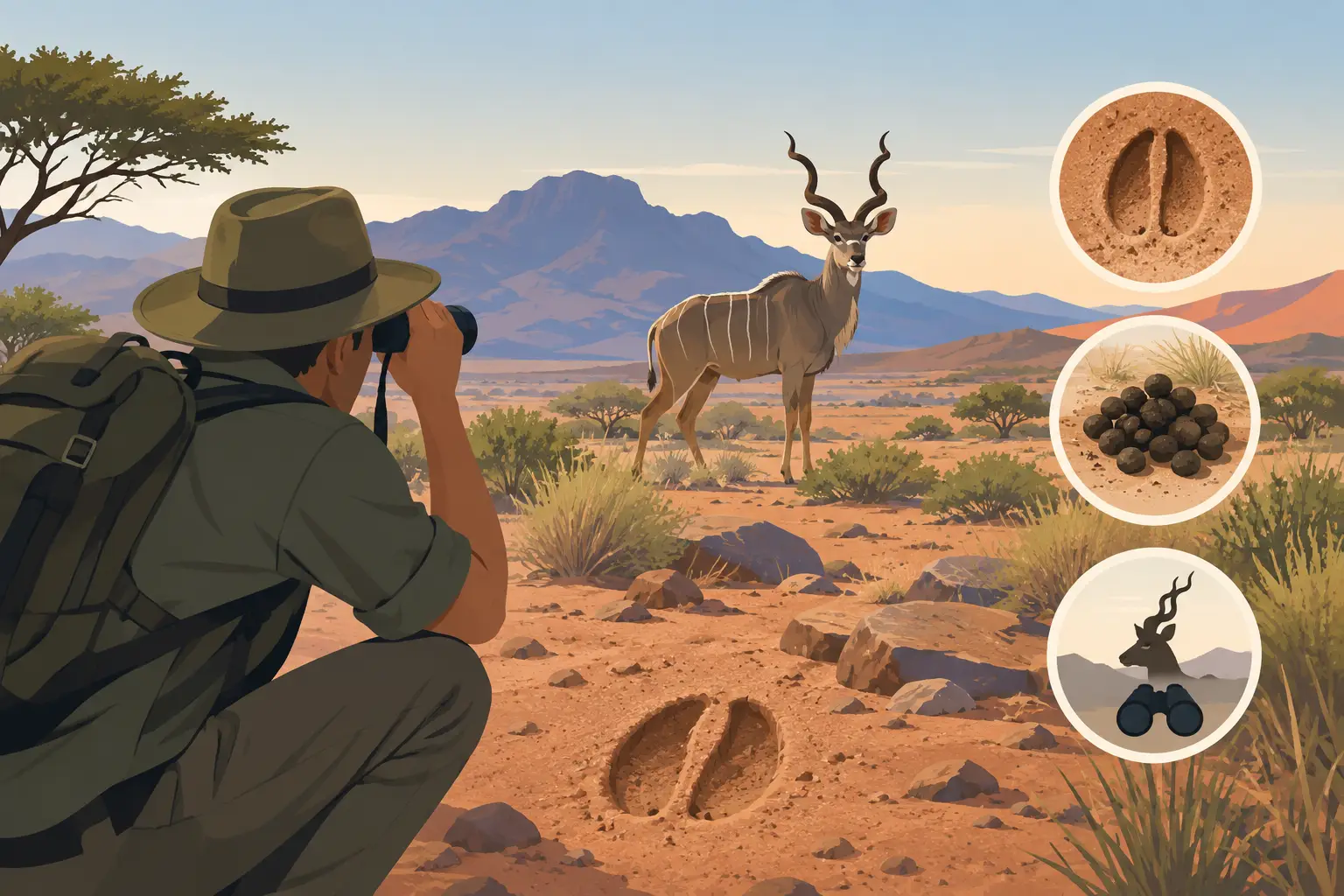
Two safaris can carry similar totals and deliver very different experiences. One may involve rushed drives, crowded camp routines, and pressure to take animals quickly. The other may put you behind a skilled PH and San trackers at first light, following tracks through red sand and acacia, then returning to a proper meal and a quiet camp at sunset.
That second experience is what many hunters mean when they say a safari was worth the money. It is not about luxury for its own sake. It is about good ground, capable people, ethical decisions, enough time, and the feeling that your hunt mattered to the people hosting it.
Build your budget around the animals and experience you truly want, then give the hunt enough days to unfold naturally. The best safari is rarely the one with the lowest starting price. It is the one where you come home with honest trophies, clear memories, and no feeling that you had to hurry through Africa.