A good safari rifle airline transport plan begins long before you are standing at the airline counter with a hard case at your feet. The rifle may be the most familiar part of your hunt, but international travel adds paperwork, airline rules, transit-country requirements, and a little extra patience. Handle it properly, and you can arrive in Namibia ready to check zero, meet your PH, and head into the veldt without an unnecessary headache.
For many hunters, bringing a trusted rifle is worth the effort. You know its trigger, stock fit, bullet performance, and point of impact. On a fair-chase hunt where a kudu may appear for only a few seconds through the thorn or an eland bull steps out at the end of a long track, that familiarity matters.
Start Your Safari Rifle Airline Transport Plan Early
Do not book a flight first and sort out firearm rules later. Before purchasing tickets, confirm that your airline accepts sporting rifles on the route you plan to fly. Rules vary by airline, and they can differ between international and domestic legs. Some carriers accept firearms only on certain flights, while others require advance notice or place limits on ammunition, case dimensions, or connections.
Your itinerary matters as much as the airline. A direct or simple route to Windhoek is usually easier than a cheaper fare with several connections. Every additional airport is another baggage transfer, another set of rules, and another chance for a case to be delayed. A flight that transits South Africa, for example, may require its own firearm transit documentation even when South Africa is not your final destination.
Ask the airline specific questions and keep a written record of the answers: Is a rifle permitted on every leg? Must it be declared in advance? What is the ammunition allowance? Can ammunition travel in the rifle case, or must it be packed separately in checked baggage? Does the transit airport require a permit? Airline staff can make an honest mistake at check-in, so having the carrier’s current policy available on your phone and in print can save time.
Use a Case Built for Real Baggage Handling
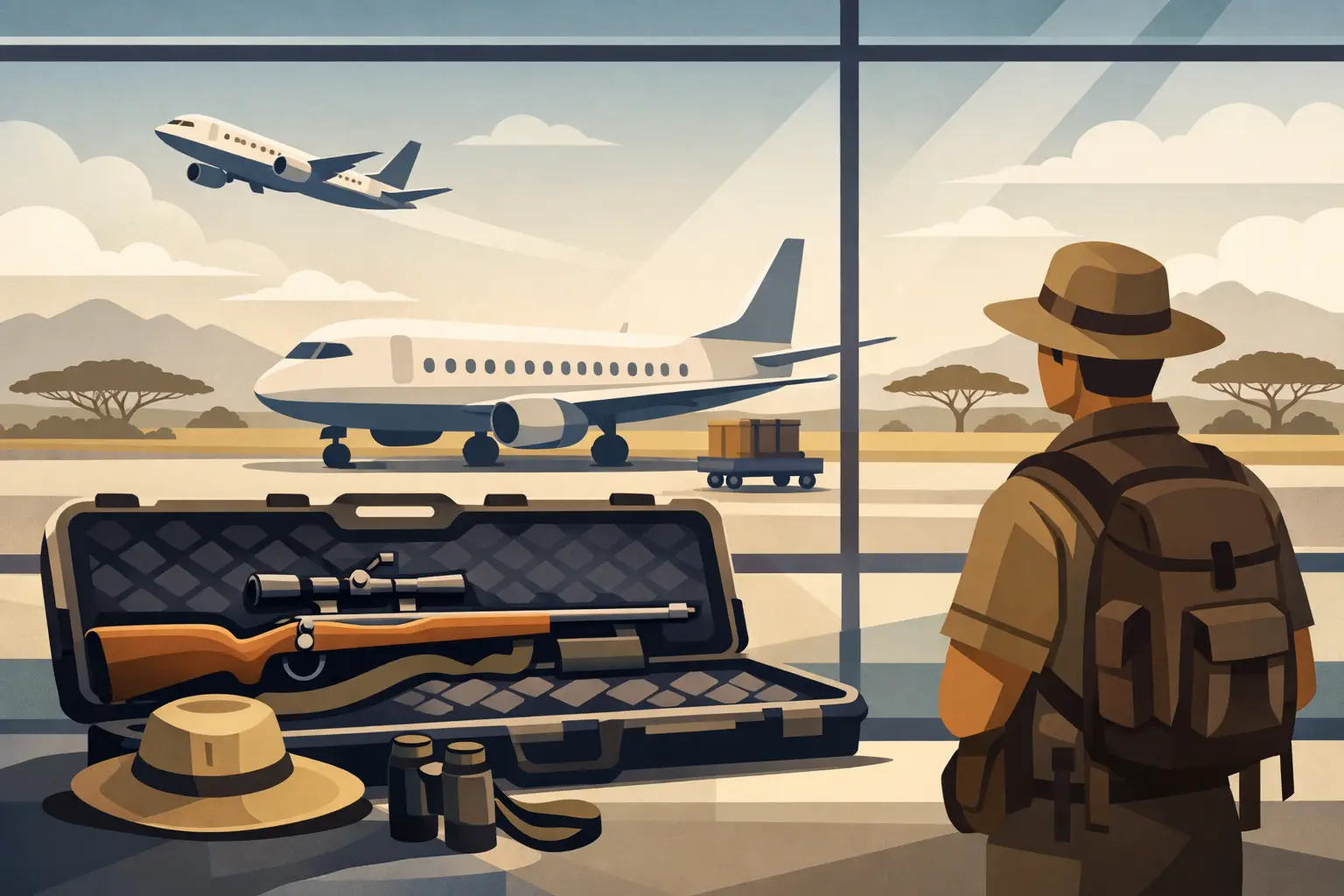
A rifle case should be hard-sided, lockable, and strong enough to protect a firearm from rough handling, conveyor belts, and long flights. Choose a case that allows no easy access to the rifle when locked. A solid case with quality hinges, recessed latches, and several locking points is money well spent.
Inside, the rifle should not shift. Remove the bolt if your case layout allows it, and secure it separately within the locked case. A rifle traveling without its bolt is plainly unloaded and gives you one more measure of peace of mind. Keep the chamber empty, magazine empty, and no ammunition loose anywhere in the case.
Use non-TSA locks where airline and departure-country rules allow or require them for firearms. The case must remain under your control until you hand it over at the firearms declaration point, and it should not be accessible to general baggage staff. Carry spare keys or combinations in your hand luggage, never inside the rifle case.
Put a clear name, phone number, and email address both outside and inside the case. A discreet tag is better than labeling the case with anything that advertises a firearm. Take photographs of the rifle, serial number, scope, case, and contents before leaving home. If baggage is delayed, those photos make a report far easier.
Pack Ammunition Correctly
Ammunition creates more confusion than the rifle itself. Cartridges must be in their original factory boxes or another purpose-built container that protects each round from contact with the others. Loose ammunition in a bag, cartridge belt, or plastic container is not acceptable.
Many international carriers follow a 5 kg, or 11 lb, gross-weight allowance for ammunition per passenger, but do not assume that figure applies to your itinerary. The airline’s policy and the rules of every country on your route are what count. Some airlines insist that ammunition be packed in separate checked baggage. Others allow it in the locked rifle case, provided it is in a proper cartridge box. Confirm this before packing.
Bring only the ammunition you genuinely need. A sensible quantity for a plains-game safari leaves room for checking the rifle at camp, confirming zero after travel, and taking a few extra shots if needed. If you are traveling with a companion, do not assume their allowance can be combined with yours. The allowance is often per person and subject to restrictions on who may carry it.
Carry Paperwork in Your Hand Luggage
Never place essential firearm paperwork inside the rifle case. Keep it in a folder in your carry-on, along with digital copies stored on your phone. Your documents should be clean, easy to read, and in the same name as your airline ticket and firearm records.
For a Namibian hunting trip, carry your passport, firearm ownership documents, proof of return travel, and the safari invitation or supporting letter supplied by your outfitter. The firearm make, model, caliber, and serial number must match every document exactly. Double-check the serial number character by character before you leave home.
Hunters departing the United States should also consider documentation that proves the rifle was already theirs before departure. This helps prevent questions when returning home. If your route includes a transit country, make sure you understand its requirements well ahead of time. Do not rely on a tight connection or a verbal assurance from a booking agent to solve a permit issue at the airport.
If you hunt with a suppressor, specialty firearm, or a rifle chambered in an uncommon caliber, research the rules even more carefully. What is normal equipment at home may be restricted, prohibited, or subject to separate permits elsewhere. A standard sporting rifle in a common plains-game caliber is generally the simplest travel choice.
At the Departure Airport, Give Yourself Time
Arrive earlier than you would for an ordinary international flight. Three hours is often a sensible starting point, and more may be wise at a large airport or on a first overseas rifle trip. Check in at the main counter rather than trying to use a kiosk. State calmly that you are declaring an unloaded sporting firearm in a locked case.
Do not open the case unless directed by airline or security staff. Procedures differ from airport to airport. You may be asked to sign a declaration card, show that the rifle is unloaded, or take the case to an oversized-baggage area after check-in. Stay with the case until staff clearly tell you it has been accepted.
Be polite and patient. Most airline employees do not handle firearms every day, and a calm hunter with orderly paperwork makes the process easier for everyone. Arguments at the counter rarely improve the outcome. If there is confusion, ask for a supervisor and refer to the airline’s written firearms policy.
Arrival in Namibia: Take Your Time at the Airport
At Hosea Kutako International Airport near Windhoek, rifle cases are normally handled through the appropriate firearm clearance process rather than appearing with ordinary luggage. Do not rush toward the exit. Follow the directions of airport staff and complete the temporary firearm import paperwork before leaving the airport.
This is where a good outfitter earns his keep. At Eldoret Hunting Safaris, guests are guided through the practical side of arrival so they can focus on the hunt ahead, not paperwork after an overnight flight. Once your rifle is cleared, the long travel day gives way to the drive north, a proper camp meal, and the first look across Namibian country.
Keep your import permit safe for the entire trip. You will need it when departing Namibia, and the rifle details must match the firearm you take home. Do not casually swap rifles with another hunter or make changes that could create a mismatch on the paperwork.
Plan for Delays Without Letting Them Spoil the Hunt
Baggage delays happen, even on well-planned trips. Put your hunting clothes, boots, medications, binoculars, rangefinder, and essential personal gear in carry-on luggage where practical. You may be without a duffel for a day, but you do not want to be without the basics while waiting for it.
If the rifle case is delayed, report it before leaving the airport and keep every baggage receipt and claim number. Your outfitter can help follow the process, but the airline must locate and deliver the case. This is another reason to arrive a day before the first hunting day when your schedule permits. It gives your rifle time to catch up and gives you time to recover from travel, check zero, and settle into camp.
A rifle that traveled halfway around the world should always be checked on the range before hunting. Scopes can shift, mounts can loosen, and hard cases reduce risk but do not eliminate it. Confirming point of impact is not just sensible preparation. It is part of the ethical responsibility to make the first shot count.
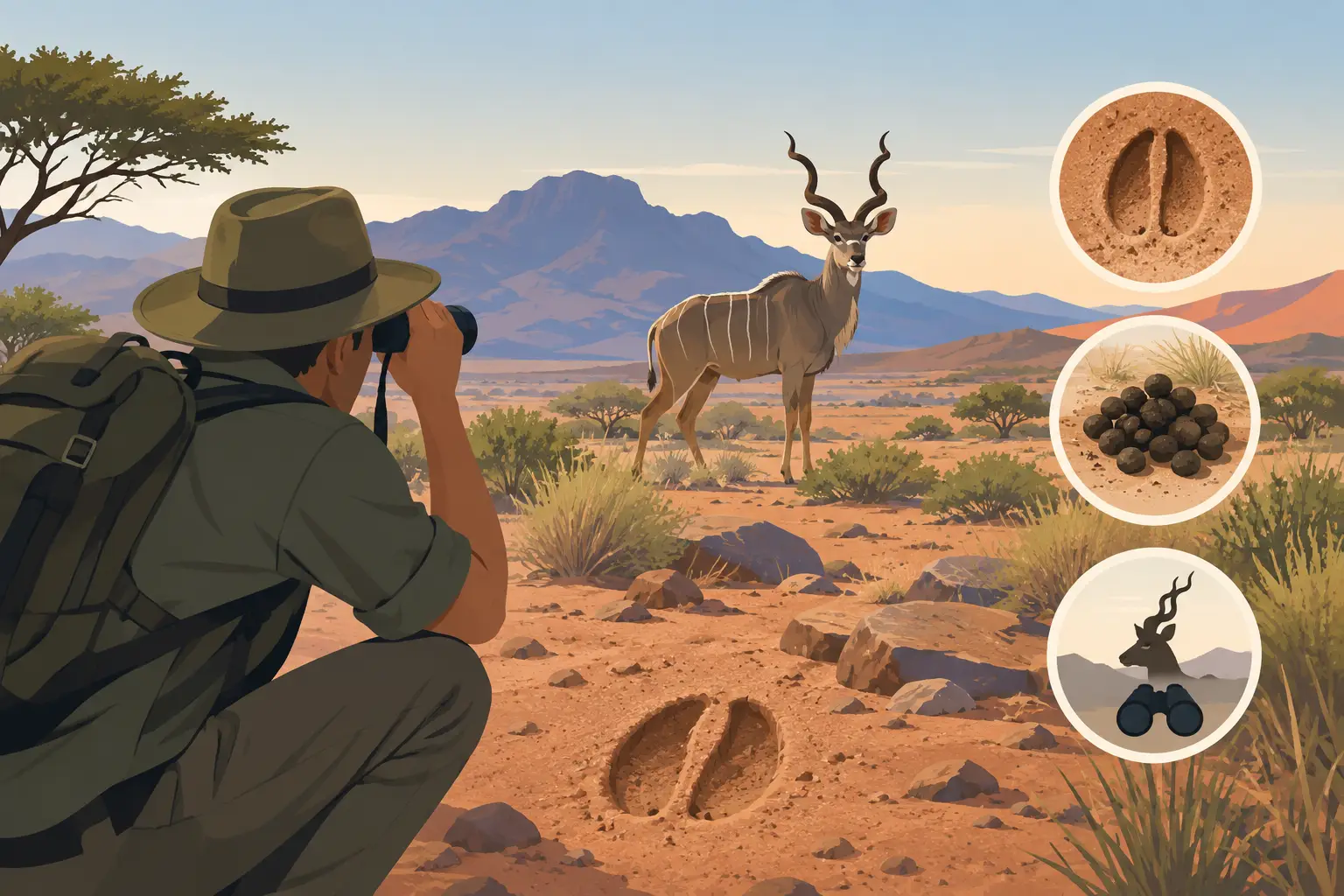
Bring the rifle you shoot well, pack it with care, and build enough time into the journey for the human side of international travel. Then, when the tracker finds fresh spoor in the sand and your PH signals that the bull is close, your attention can stay exactly where it belongs: on the hunt.