The difference between a safari you remember for the right reasons and one you spend years second-guessing often comes down to the people standing beside you in the veldt. Knowing how to choose a hunting guide is not just about finding the lowest daily rate or the longest species list. It is about deciding who will lead the hunt, care for the land, handle your trophies, and welcome you into camp after a long day on foot.
For many American hunters, an African safari is a once-in-a-lifetime trip. Others return every few years because Africa gets under their skin. Either way, the outfitter and professional hunter you choose should make the experience feel personal, honest, safe, and properly hunted.
How to Choose a Hunting Guide: Start With the Hunt
Ask a direct question early: how are the animals hunted? A good answer should be specific. If the outfitter only speaks in broad promises about big trophies and easy opportunities, keep asking.
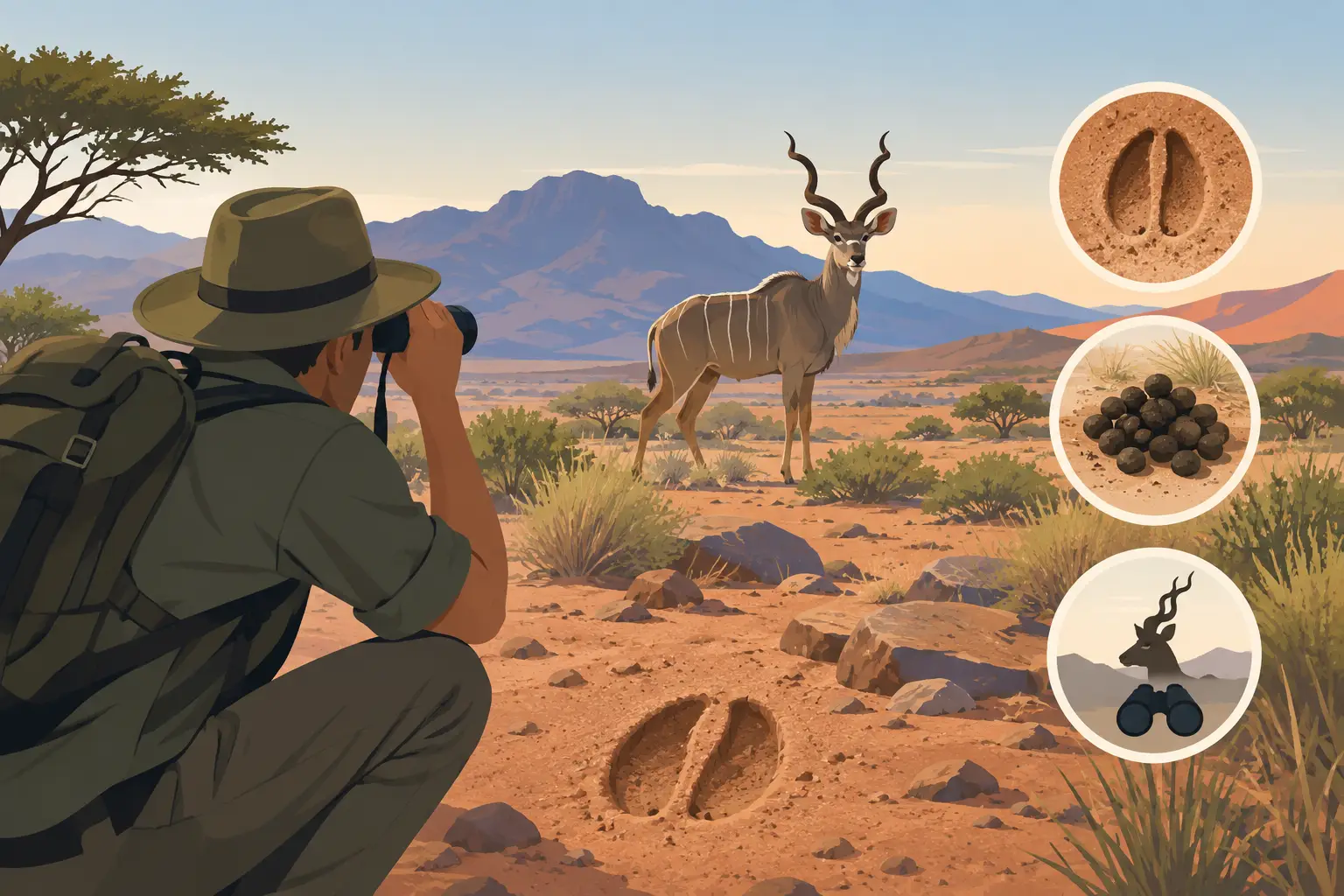
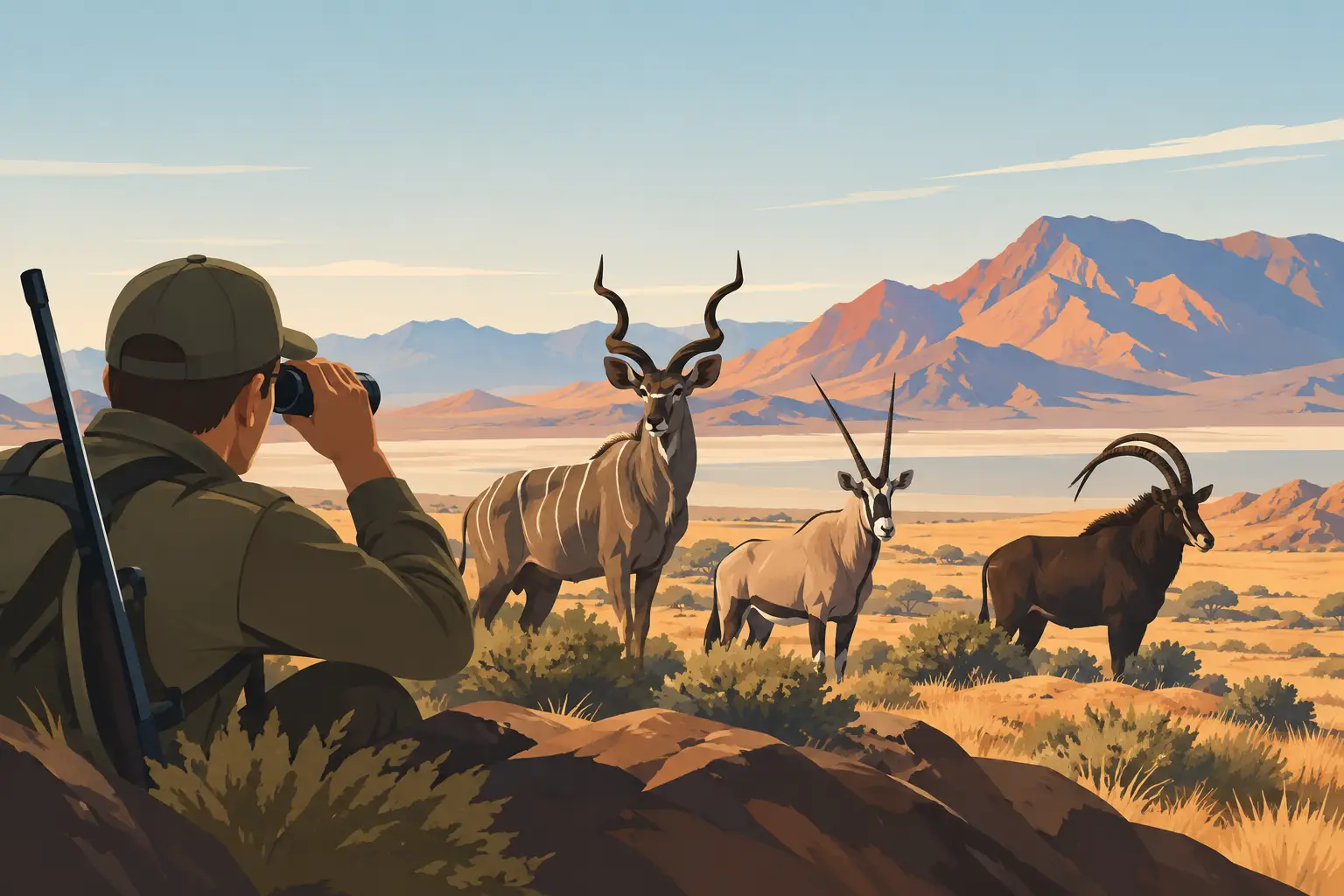
Fair-chase hunting in Namibia often means early mornings, glassing from a rise, reading tracks in soft sand, and making a careful stalk through thornbush or open grassveld. It may mean passing a young bull on day two because he has a fine future ahead of him, then finding the mature animal you came for after several miles on foot. That is hunting, not simply selecting an animal from a list.
There are different properties and hunting models across Africa, and not every hunter wants the same thing. A first-time visitor may prefer a well-managed plains-game ranch with dependable game numbers and comfortable access. A hunter pursuing buffalo, elephant, or leopard may need a concession hunt with more demanding conditions and longer travel. The important point is that the outfitter explains the setting plainly: property size, fencing where applicable, species populations, terrain, hunting pressure, and the realistic effort required.
Ask whether the operation focuses on trophy quality or volume. A guide who manages for mature animals should be comfortable discussing age, horn development, genetics, and why a particular animal is passed. You are looking for a professional who protects the next season as carefully as he plans your current hunt.
Look Closely at the People in the Field
A professional hunter’s license matters, but it is only the starting point. You also want field judgment, calm communication, and local knowledge that cannot be learned from a brochure.
Ask who will guide you personally and whether that person will be in camp throughout your stay. On a private safari, a guide has time to learn how you shoot, what species matter most to you, how hard you want to walk, and when to slow the pace. That relationship changes the hunt. You are not being moved through a production line with a different face behind the sticks each morning.
In Namibia, traditional tracking can be one of the great strengths of a safari. Skilled local trackers read a broken grass stem, a fresh track crossing a road, or the direction a kudu bull took into thick brush. Their work is not a camp decoration or a photo opportunity. It is part of the hunting team. Ask whether trackers are local, experienced, fairly treated, and actively involved in the hunt.
You should also ask about recovery procedures. Every ethical outfitter plans for the possibility of a difficult follow-up. Find out who tracks wounded game, what vehicles and communication are available, and whether the guide will make the hard call to stop and return at first light when conditions demand it. No responsible hunter wants an animal lost, and no good guide treats a poor shot or a long track as an inconvenience.
Check the Operation Beyond the Trophy Photos
Trophy pictures can show what has been taken. They do not tell you how the operation runs on an ordinary Tuesday when a flight is delayed, a rifle case goes missing, or your spouse wants a day away from the hunt.
Ask how many hunting parties are in camp at one time. This is one of the clearest indicators of the experience you can expect. A large operation can be efficient and may suit some groups, but it can also mean more vehicles, more pressure on the property, and less flexibility. A one-group-or-one-family camp gives you privacy at the dinner table, freedom to set the next day’s plan, and the feeling that the week belongs to your party.
Accommodation does not need to be flashy to be excellent. Clean rooms, hot showers, reliable power, good beds, and proper meals matter after hours in the sun. So does the welcome. The best camps have a rhythm: coffee before daylight, a packed lunch or midday return, stories around the fire, and a dinner where guests are treated as people rather than booking numbers.
For couples and families, ask what non-hunting days can look like. Game viewing, birding, fishing, river outings, coastal travel, and sightseeing can turn a hunting trip into a shared holiday. Do not assume these options are available or nearby. Get clear details about travel time, extra costs, and whether activities can be arranged around the hunt without causing frustration for anyone in your party.
Demand Clear Costs and Honest Expectations
A cheap quote can become an expensive safari if the details are vague. Request a complete breakdown of daily rates, trophy fees, observer rates, transportation, government permits, firearm handling, airport transfers, taxidermy preparation, shipping-related costs, gratuities, and any charter flights required for remote areas.
Do not judge an outfitter solely by price. A lower daily rate may be sensible if you are hunting common plains game close to camp. It may be less attractive if it comes with rushed hunting, shared accommodation, unclear fees, or little time with your guide. Likewise, a higher price should be supported by private service, strong hunting ground, capable staff, sound game management, and transparent planning.
Be equally honest about your own priorities. Tell the outfitter if you are focused on a mature kudu, want to hunt eland on foot, need moderate terrain, or hope to add fishing after the hunt. If you have physical limitations, say so before you book. A trustworthy guide can adapt the plan, but he cannot do that if he is hearing it for the first time after you arrive.
Use References the Right Way
Client references remain one of the best ways to judge an outfitter, especially when they come from hunters with goals similar to yours. Ask to speak with recent guests, not only a handpicked list from several years ago. A serious operation should welcome the request.
When you talk to former clients, go beyond asking whether they shot a good animal. Ask whether their guide was present and prepared, whether fees matched the quote, how follow-up was handled, whether the food and accommodations were as described, and whether they would bring a spouse or child next time. The most useful question is simple: did they feel looked after from arrival to departure?
Repeat guests are another strong sign. Hunters do not cross an ocean again because someone had a polished sales pitch. They return because the hunting was honest, the trophies were properly managed, and camp felt like a place they wanted to revisit.
Match the Guide to Your Safari, Not Someone Else’s
The right guide for a Cape buffalo hunt in a remote concession may not be the right guide for a relaxed first safari centered on kudu, oryx, zebra, and springbuck. There is no single best outfitter for every hunter. There is only the operation that fits your goals, values, budget, and travel companions.
At Eldoret Hunting Safaris, that fit begins with a conversation about the hunt you actually want. On 25,000 acres in northeastern Namibia, the focus is on traditional walk-and-stalk hunting, mature plains-game trophies, experienced local guides, and San trackers who know the country underfoot. For hunters seeking dangerous game or predators, the right concession, tag availability, and timing must be discussed well before travel.
Choose the guide who answers difficult questions without pressure, speaks plainly about what is possible, and shows real respect for the animals and people involved. When the sun drops behind the thornveld and you sit down to a good camp meal after an honest day afield, that decision will be felt in every part of the safari.