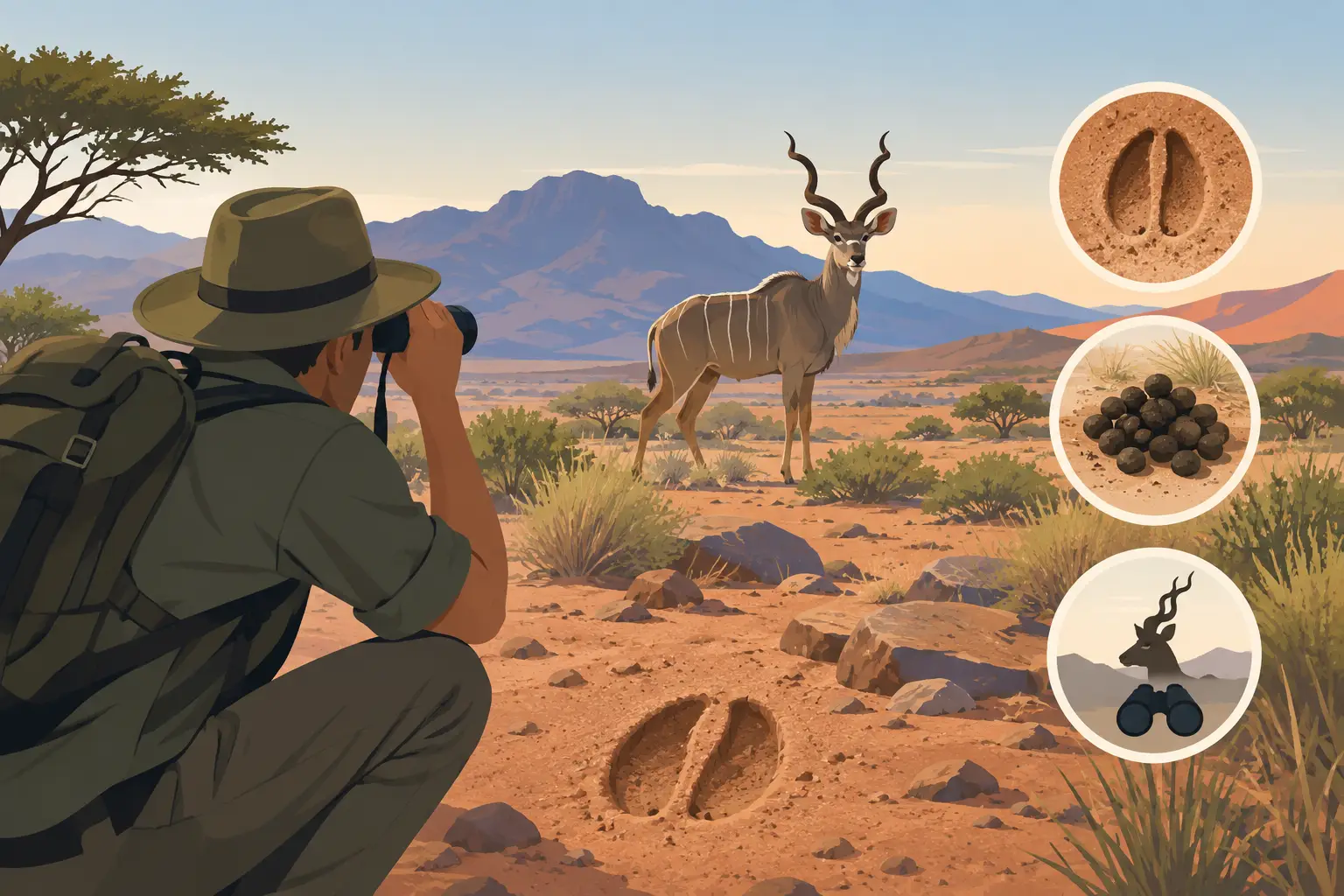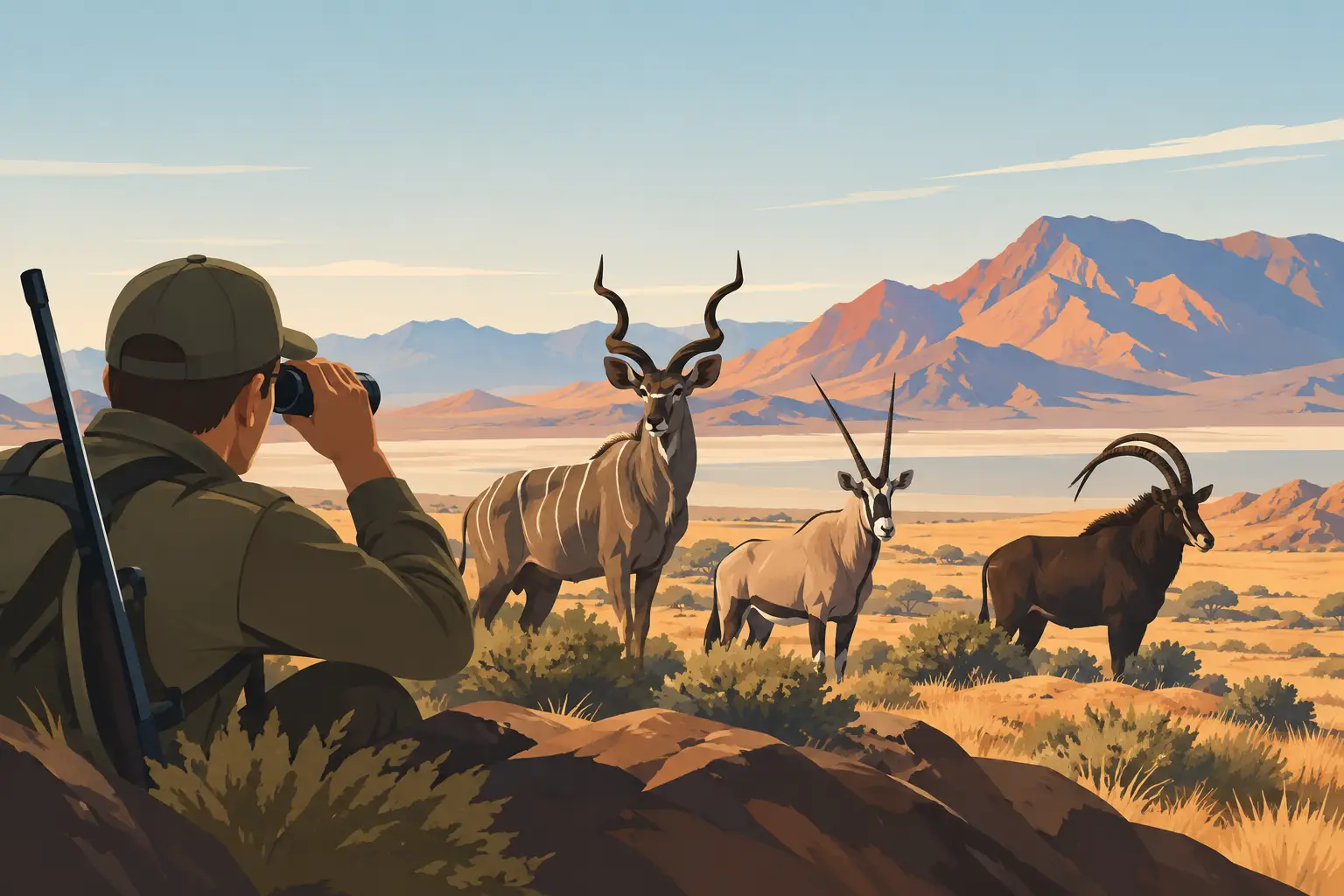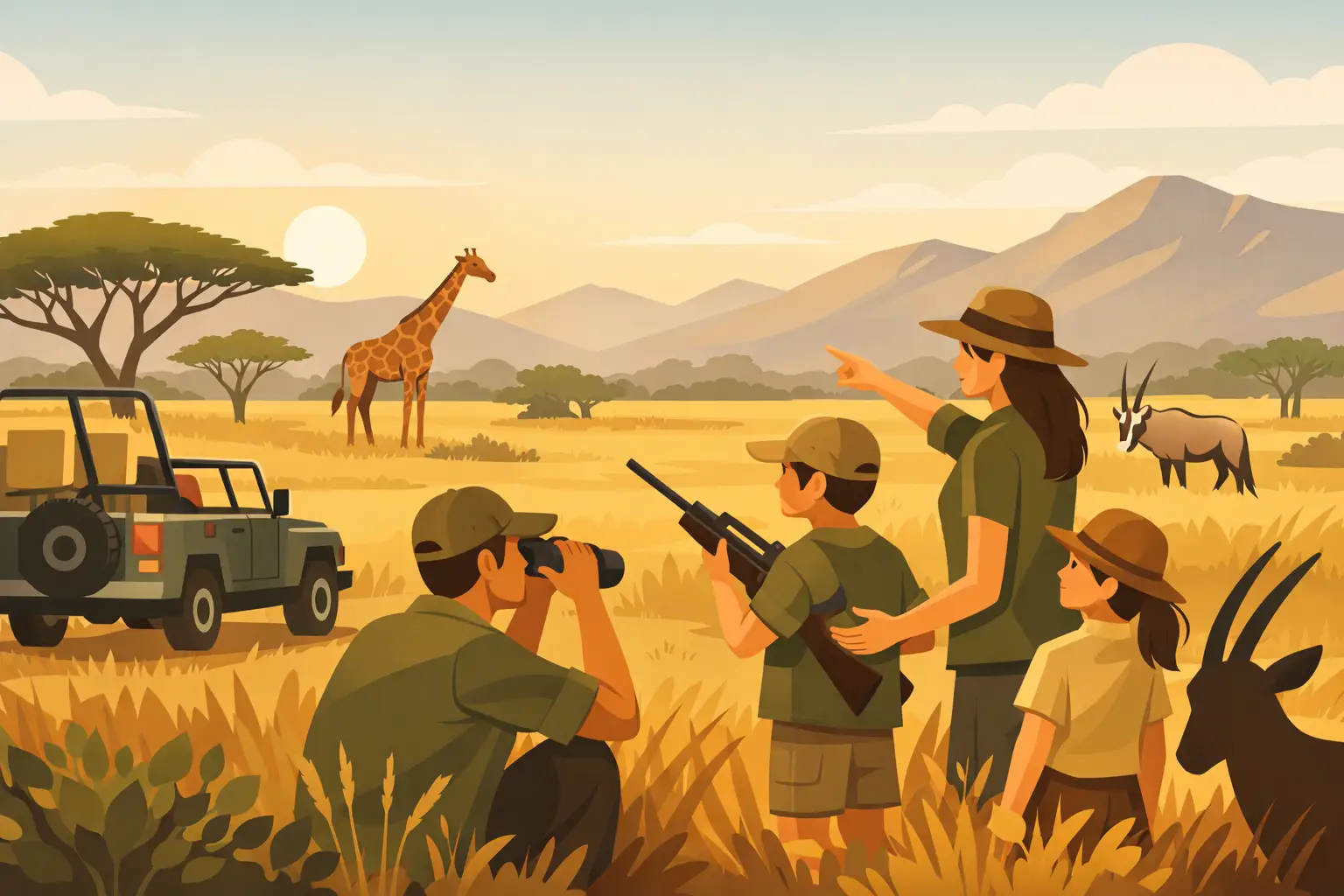
A family hunting safari is not simply a regular hunt with extra beds in camp. It works best when every person has a reason to be there: the hunter pursuing a hard-earned trophy, the spouse enjoying the peace of the veldt, and the children or non-hunting guests having real experiences between morning and afternoon drives. In Namibia, that can mean tracking kudu through thornveld at first light, watching giraffe cross an open plain, sharing lunch under a shady tree, and coming home to a proper meal around the fire.
For international families, the difference is in the planning. A good safari should feel personal from the airport pickup onward, not like joining a rotating schedule of strangers. Privacy, patient guiding, safe field practices, and a camp that welcomes non-hunters are what turn a hunting trip into time the whole family remembers.
Why a Private Family Hunting Safari Matters
Hunting families do not all move at the same pace. One person may want to hunt from dawn until dark. Another may enjoy joining the morning stalk, then prefer a quiet afternoon at camp with a book, a camera, or a pair of binoculars. Children often do best with shorter outings and clear expectations rather than long, demanding days in the truck.
That is why a one-family-at-a-time camp arrangement matters. There is no need to fit your meals, hunting hours, or day trips around another group’s plans. Your professional hunter can shape each day around your goals, the weather, the animals being tracked, and the interests of the people traveling with you.
At Eldoret Hunting Safaris, the camp is reserved for one group or one family at a time. It creates the kind of relaxed atmosphere families usually hope for but do not always find on a large commercial operation. Dinner conversations are about the kudu seen that morning, the tracks found in the sand, and the plan for tomorrow – not introductions to new guests every night.
Start With the Right Expectations
A family safari is still a hunting safari. Fair-chase hunting in Namibia asks for patience, walking, careful shooting, and respect for the animal. The best trophies are not selected from a list and collected on a timetable. They are found by covering country, reading sign, glassing hard, and making the right decision when an old bull finally steps clear.
Families should understand this before booking, especially if it is their first African hunt. Some days produce fast action. Other days are spent following fresh tracks, passing younger animals, or waiting for a mature trophy to show itself. That uncertainty is part of honest hunting, and it is often the part that stays with a hunter longest.
For younger or first-time hunters, plains game provides a sensible place to begin. Warthog, springbuck, zebra, wildebeest, oryx, kudu, and impala-sized game can offer exciting hunts with different levels of walking and shooting difficulty. Eland and giraffe demand more time and endurance, while a mature kudu can test even a very experienced hunter.
Dangerous game requires a different conversation. Buffalo, elephant, hippo, crocodile, leopard, lion, cheetah, and hyena hunts are subject to permits, tag allocations, location, and legal requirements. They also demand mature judgment, disciplined shooting, and close attention to the professional hunter’s instructions. For many families, a plains-game safari at the main camp is the better starting point, with a Caprivi hunt planned separately for an experienced hunter if the proper opportunity is available.
Build Days Around Hunters and Non-Hunters
The easiest mistake is planning every hour around the person carrying the rifle. A better approach is to decide, before arrival, who wants to join hunts and who would rather have a separate rhythm.
A spouse or older child may enjoy the first hour of a morning hunt, when the light is soft and game is moving, then return to camp for breakfast. Others want to stay out all day, learn how tracks are read, and watch the San trackers work a line through dry grass and sandy soil. There is no wrong choice. The point is that no one should feel trapped in a vehicle or left with nothing meaningful to do.
A well-planned family itinerary can include game viewing, photography, birdwatching, time around camp, and short drives to see the country without the pressure of a hunt. Families who stay longer can also arrange fishing and river time near the Okavango, where the day has a different pace entirely. A coastal extension around Henties Bay offers another contrast: Atlantic air, wide beaches, dunes, and a chance to fish or simply rest after days in the bush.
These additions are not filler. They help mixed-interest groups travel well together. The hunter gets focused field time, while everyone else sees more of Namibia than the inside of a hunting vehicle.
Choose Trophy Goals That Fit the Trip
A strong safari plan begins with a short, honest wish list. It is tempting to name every species available, but a family trip is usually better when the schedule leaves room for the country to set the pace. Pick a few priority animals, then keep several additional species as opportunities rather than obligations.
For a first Namibia safari, kudu, gemsbok oryx, zebra, blue wildebeest, warthog, and springbuck make a varied and satisfying collection. Each hunt feels different. Kudu often involves slow tracking and careful glassing in thicker cover. Oryx may be spotted far out in open country. Zebra can be alert and difficult to approach. Warthog hunting is usually full of surprises, particularly when a good old boar disappears into the brush just as the stalk comes together.
Trophy quality should come ahead of numbers. Mature animals carry the character hunters travel to Africa for: heavy horn bases, worn tips, deep bodies, battle scars, and the cautious behavior that comes from surviving several seasons. Passing a young animal is not lost opportunity. It is part of looking after the herd and preserving the standard of hunting for the next guest and the next generation.
Keep Children Safe, Included, and Interested
Children can have a remarkable time in the African bush, but they need an age-appropriate role. A youngster who is old enough to follow instructions can learn about tracks, wind direction, animal behavior, shooting safety, and respect for game. Older youth hunters can take part in carefully planned plains-game hunts under direct professional guidance, subject to all applicable rules and their own readiness.
Younger children should not be expected to sit quietly through every stalk. Short outings are better. Let them see animals, ask questions, help identify tracks at a waterhole, and return to camp before the day becomes too long. Good family memories are made when children finish the day excited, not exhausted.
Parents should also be clear about safety boundaries. A professional hunter’s instruction is final in the field. Rifles are handled only under supervision. Children stay close to an adult around vehicles, campfires, and wildlife areas. Dangerous game hunting is not a spectator activity for young family members.
Pack for Bush Days and Comfortable Evenings
Namibia’s conditions can change quickly between early morning and midday. Neutral-colored clothing that layers well is practical, along with broken-in boots, a hat, sunscreen, and quality eye protection. Bring a small daypack for water, snacks, camera gear, and an extra layer. Avoid bright colors and noisy fabrics when joining a stalk.
For families, comfort is not an afterthought. Good meals, clean accommodation, hot showers, and a welcoming camp table make a real difference after a day on foot. Ask in advance about dietary needs, laundry, room arrangements, travel transfers, and how much time is practical for each hunting goal. Clear questions early prevent small concerns from becoming frustrations once you are in camp.
Let the Safari Be More Than a Trophy List
The trophy room matters, and so does the story behind each animal. Years later, families tend to talk about the tracker who found the first fresh print after a windy night, the long walk to a bull that would not stop, the sound of guinea fowl calling near camp, and the evening when everyone sat together under a wide Namibian sky.
Leave enough open space in the plan for those moments. Hunt hard when conditions are right, rest when the heat is heavy, and let each member of the family experience the country in his or her own way. That is how a safari becomes something more lasting than a successful hunt: it becomes shared ground your family will carry home.