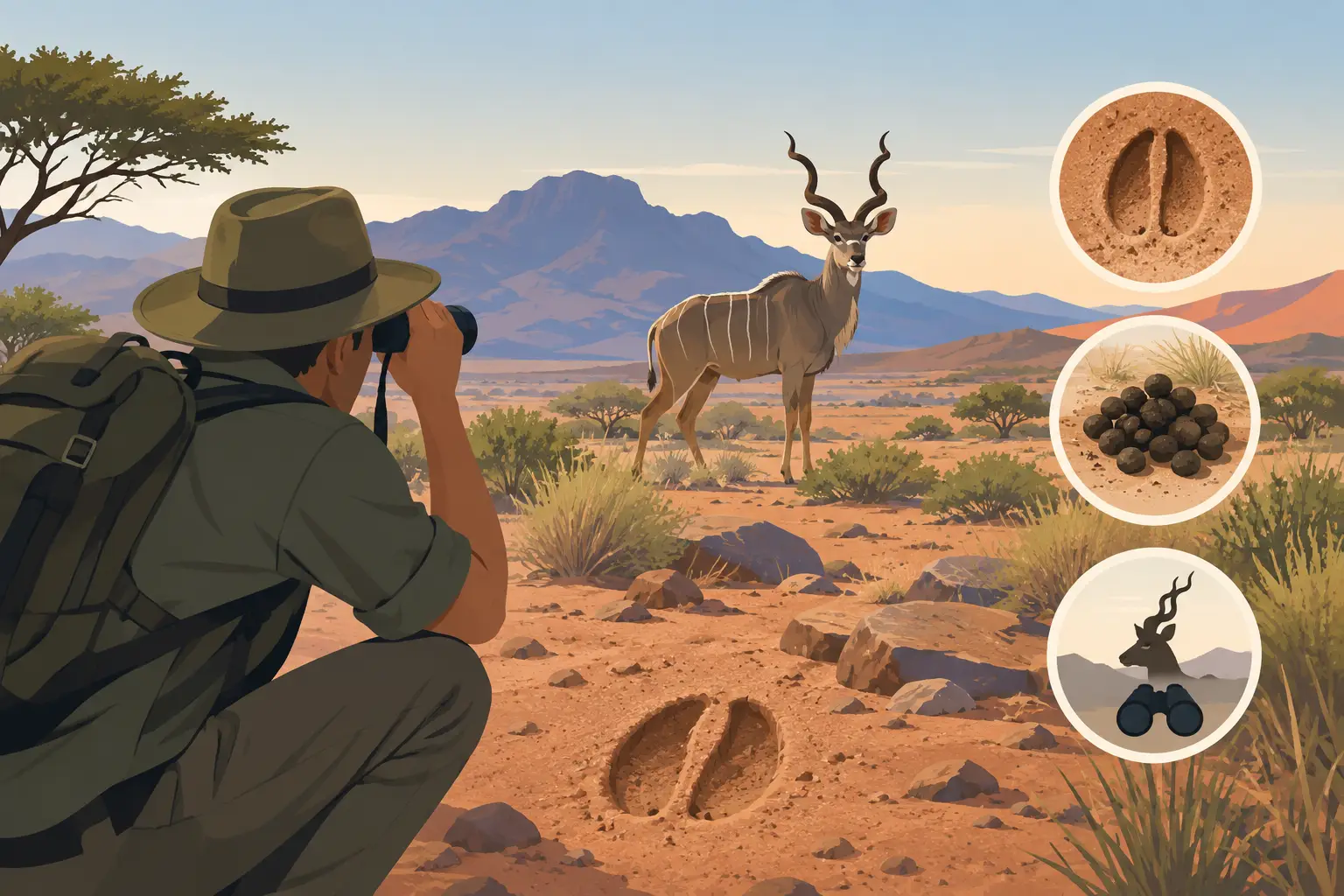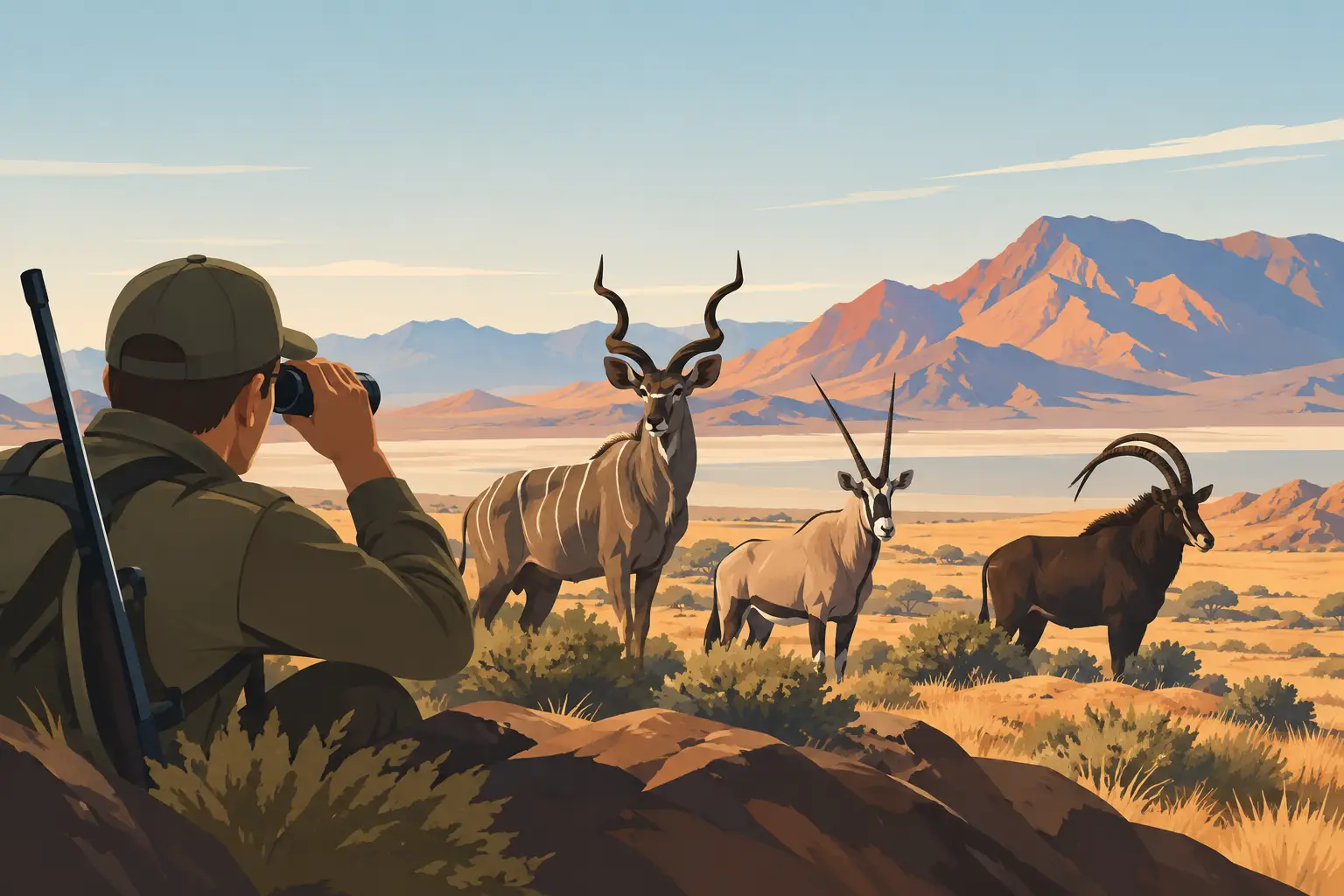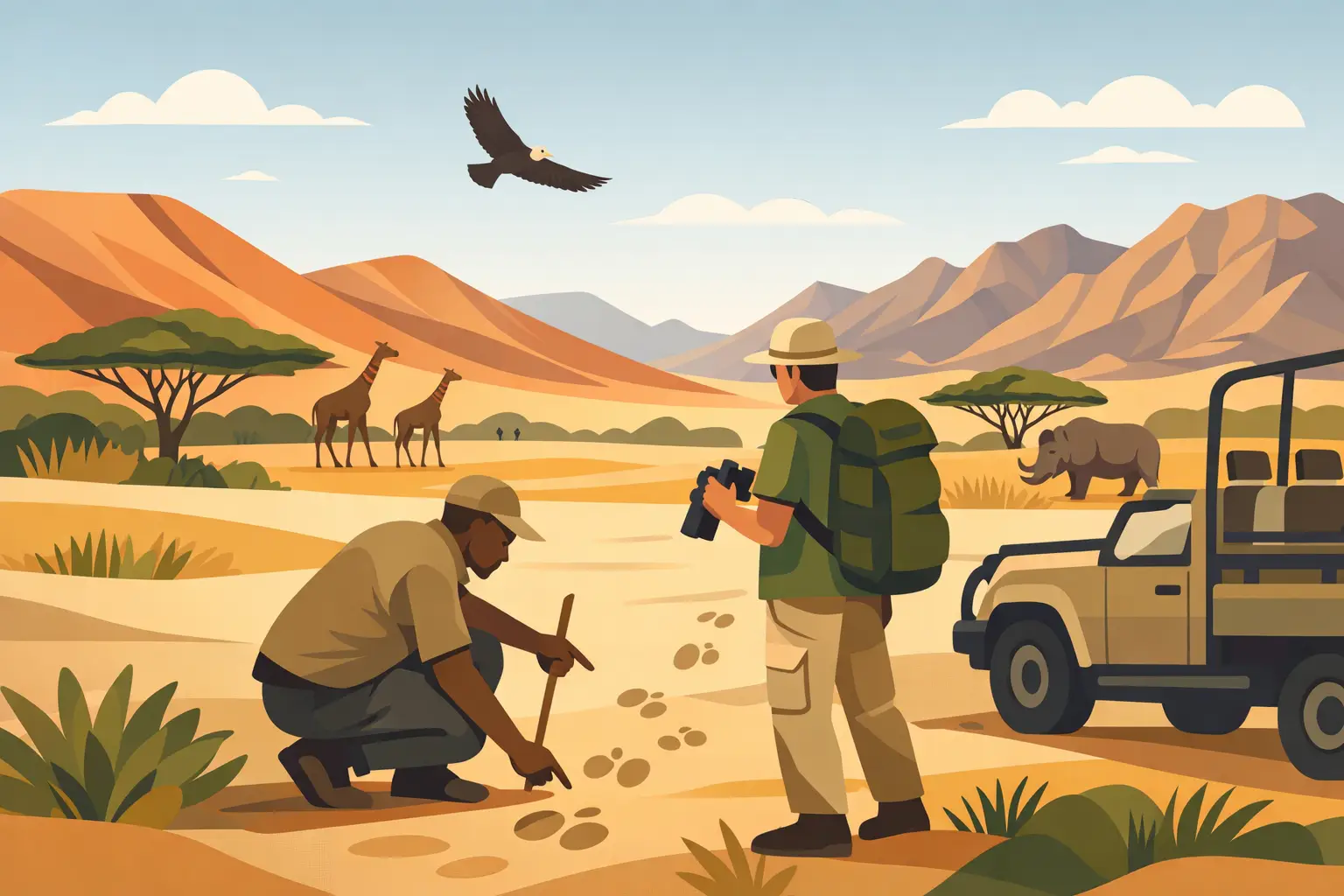
A fresh track in soft sand can change the whole morning. One moment you are moving quietly through thornveld under a cool Namibian sky; the next, a San tracker has stopped, studying a broken stem, a scuff of dust, or the angle of a hoof mark that most visiting hunters would never see. Learning how to hunt with trackers begins with understanding that their skill is not an added extra. It is the heart of a true walk-and-stalk hunt.
On a fair-chase safari, trackers, professional hunters, and guests work as one team. The tracker reads what happened before you arrived. Your professional hunter reads the country, the wind, the animal, and the situation ahead. Your job is to listen, stay ready, move with purpose, and make the right decision when the opportunity is honest.
How to Hunt With Trackers Starts With Trust
A good tracker does far more than point at tracks. He can often tell the species, direction of travel, number of animals, and whether they were feeding, walking steadily, or disturbed. In dry country, he may follow sign over hard ground where the track is almost invisible to an untrained eye. In thicker bush, he notices a leaf turned over, a rubbed branch, or a single hair caught on a thorn.
That knowledge has been built over a lifetime on the land. In Namibia, San trackers carry a traditional fieldcraft that deserves real respect. They are not there for show and they are not simply following a trail. They are interpreting a living story written in sand, grass, and brush.
Trust begins before the first stalk. Let your professional hunter explain how the team will move, who will lead, and where you should position yourself. Ask questions in camp or during a break, not while everyone is listening for an animal in close cover. Once the tracker and PH are working a track, keep conversation low and follow instructions promptly.
Read the Hunt, Not Just the Track
A track tells you where an animal has been. It does not guarantee where it will be when you catch up. That is why successful tracking hunts require patience and sound judgment.
Freshness matters. Sharp track edges, damp soil pressed in a print, dust that has not settled, and recently disturbed insects can all give the team clues. But Namibia is varied country. Wind, heat, dry ground, and livestock or game movement can quickly change what is visible. A skilled tracker weighs several signs together rather than relying on one mark in the dirt.
As the trail develops, your PH will consider more than spoor. Wind direction, terrain, cover, water, feeding areas, and the animal’s likely habits all shape the plan. A kudu bull may use thicker brush and broken country to stay hidden. Eland can cover surprising distances with an easy stride. Warthog tracks may lead from feeding ground into a favored patch of cover. Zebra and wildebeest often bring extra sets of eyes and ears into the equation.
This is where a tracking hunt earns its reputation. You are not rushing toward a result. You are working through the country, trying to get close without forcing the animals or taking a poor opportunity.
Move Like Part of the Team
The simplest advice is often the most useful: walk where you are shown, carry only what you need, and pay attention to the people ahead of you. Thornveld has a way of punishing distractions. A loose water bottle, a branch snapped carelessly, or a boot placed on dry sticks can end a careful approach.
Keep a comfortable following distance behind the PH unless he directs otherwise. The tracker may be down low studying tracks, and the PH needs room to watch ahead and check the wind. Avoid stepping on the line of spoor if possible. It may seem minor, but keeping the sign clear helps the tracker when the trail becomes difficult.
Your pace will change throughout the day. At times, the team may cover ground steadily to close distance on an older trail. At other times, every few yards may be slow and deliberate. A first-time African hunter can be surprised by how physical this feels, especially under a warming sun. Good boots, quiet clothing, water, and a reasonable level of fitness make a real difference.
Do not mistake steady work for a failed hunt. Some of the finest trophies are taken after several hours of careful tracking, when the team has passed on rushed chances and stayed committed to doing it properly.
Let the Wind Make the Decision
Wind is often the final authority in the veldt. A tracker may have the line of travel perfectly, but if the wind carries your scent ahead, the hunt can be over before you ever see the animal.
Expect the PH to stop, circle, wait, or abandon an approach when conditions turn against you. That is not wasted time. It is experienced hunting. The same applies when a mature animal is present but the angle, cover, distance, or movement does not allow a clean, responsible shot. Fair chase includes the willingness to walk away.
For the guest, this means staying mentally flexible. You may have pictured a particular trophy in a particular setting, but the veldt sets its own terms. Respecting those terms is part of what makes the eventual success meaningful.
Know Your Role When Game Is Spotted
When the tracker or PH signals that game is ahead, slow down immediately. Watch the PH for direction and keep your movements calm. He may ask you to move to a tree, kneel, wait, or shift position a few yards to see clearly through the brush.
This is not the time to force the moment. Take the time you are given to identify the animal, confirm it is the right trophy for your goal, and wait for a safe, ethical opportunity. On a quality safari, trophy selection is not simply about the first set of horns that appears. Age, body, horn character, species behavior, and the agreed hunting plan all matter.
Your PH will guide the final decision, but it remains your hunt. Be upfront early in the safari about the animals you hope to pursue and what kind of experience matters to you. Some guests want a hard-earned old kudu bull after a long track. Others are building a plains-game safari around several species. There is room for both approaches, provided expectations are clear and the hunt stays ethical.
Respect the Trackers Who Make the Hunt Possible
The strongest hunting teams have a natural rhythm. The tracker leads with the sign. The PH manages the hunt. The guest remains alert and dependable. Everyone understands that a successful day belongs to the whole group.
Show appreciation in practical ways. Learn names. Greet the team each morning. Ask your PH about the tracker’s observations after a stalk, when there is time to talk. Treat local knowledge as the professional skill it is. Hunters who come to Africa with humility usually take home more than photographs and trophies. They leave with a deeper understanding of the country and the people who know it best.
At Eldoret Hunting Safaris, the tracking team is part of the family experience, not a separate service hidden in the background. On 25,000 acres of northeastern Namibia, a private one-group-or-one-family camp setup gives guests the time and attention to settle into the rhythm of the hunt. Long days in the veldt are followed by good food, camp conversation, and the kind of quiet sunset that makes even an unsuccessful stalk worth remembering.
Prepare Before You Arrive
You do not need to be an elite athlete to hunt on foot in Namibia, but preparation helps you enjoy it. Spend time walking before your trip, preferably in the boots you plan to wear. Practice carrying your rifle safely and comfortably over uneven ground. Learn to move quietly without staring only at your feet.
It also pays to practice patience. Many hunters are accustomed to short windows and quick decisions at home. A tracker-led African hunt can be a different pace. You may glass at first light, inspect tracks, walk for miles, pause for wind, and spend the afternoon following an old bull through country that seems to have no end. That is not a delay between the exciting parts. That is the hunt.
Bring clothing suited to neutral veldt colors, sun protection, and layers for cold early mornings. Avoid heavily scented products. Most importantly, arrive with an open mind. The species on your wish list matter, but the story of how you found them will matter longer.
Let Patience Be the Trophy
A tracking hunt asks more of a hunter than simply being ready when game appears. It asks you to notice the small details, accept the decisions made by the wind and terrain, and value the work that happens before the final opportunity. When you walk back to the vehicle beside the people who read the land for you, every mile becomes part of the memory.
Come prepared to listen, move carefully, and give the veldt the time it requires. The track may lead to a trophy, or it may lead to a lesson you could not have found any other way.