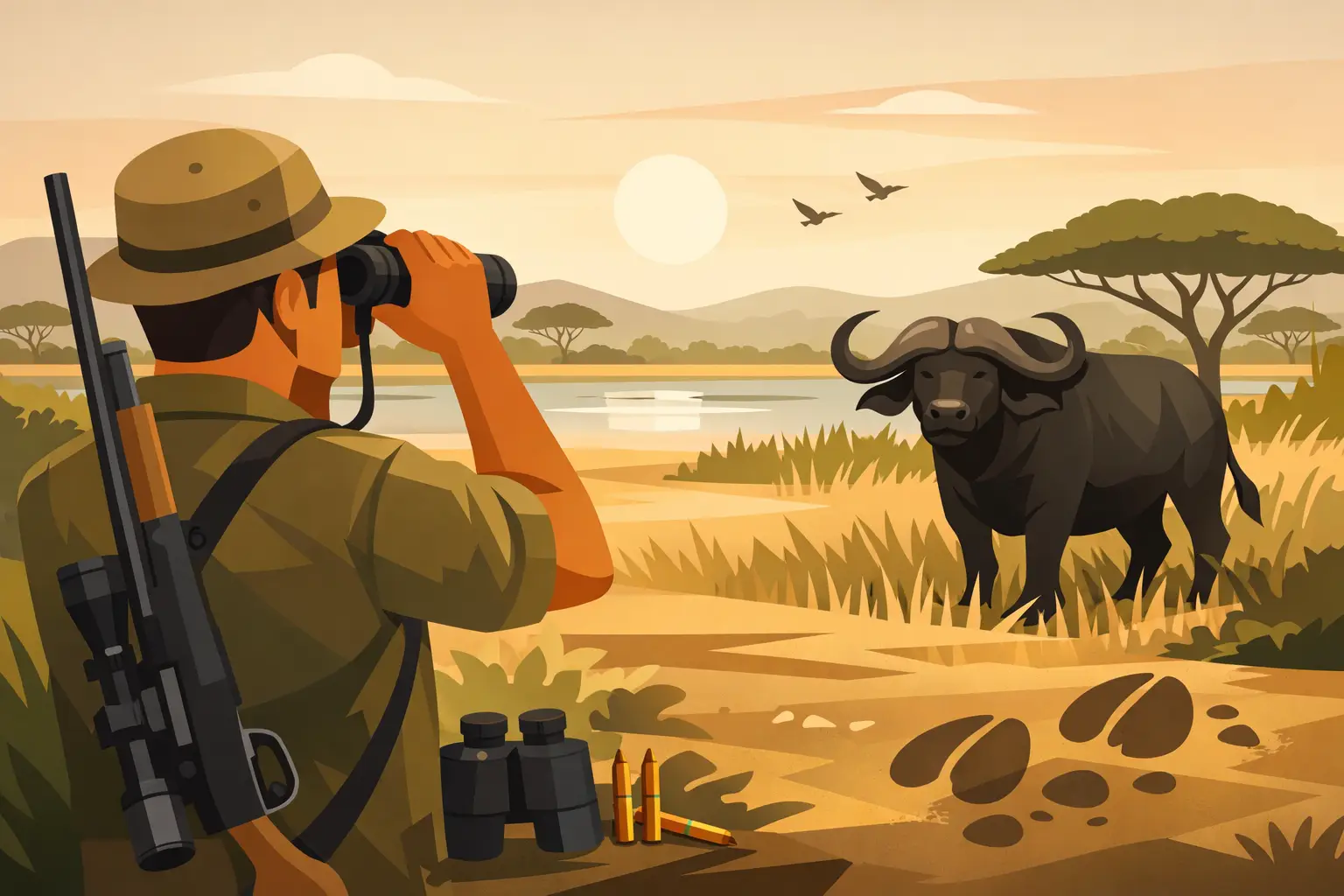
A proper Caprivi buffalo hunting guide starts with one truth: this is not a hunt to rush. In Namibia’s far northeast, buffalo live in thick riverine cover, reedbeds, floodplains, and teak woodland where tracks disappear under elephant spoor and a bull can stand only yards away without showing himself. A good Caprivi hunt is earned on foot, led by a professional hunter who knows the concession and trackers who read the ground as naturally as a map.
For the hunter who wants a real dangerous-game safari, Caprivi offers wild country, old bulls, and the kind of long, careful days that stay with you long after the skin has been salted and packed.
Why Caprivi Buffalo Hunting Is Different
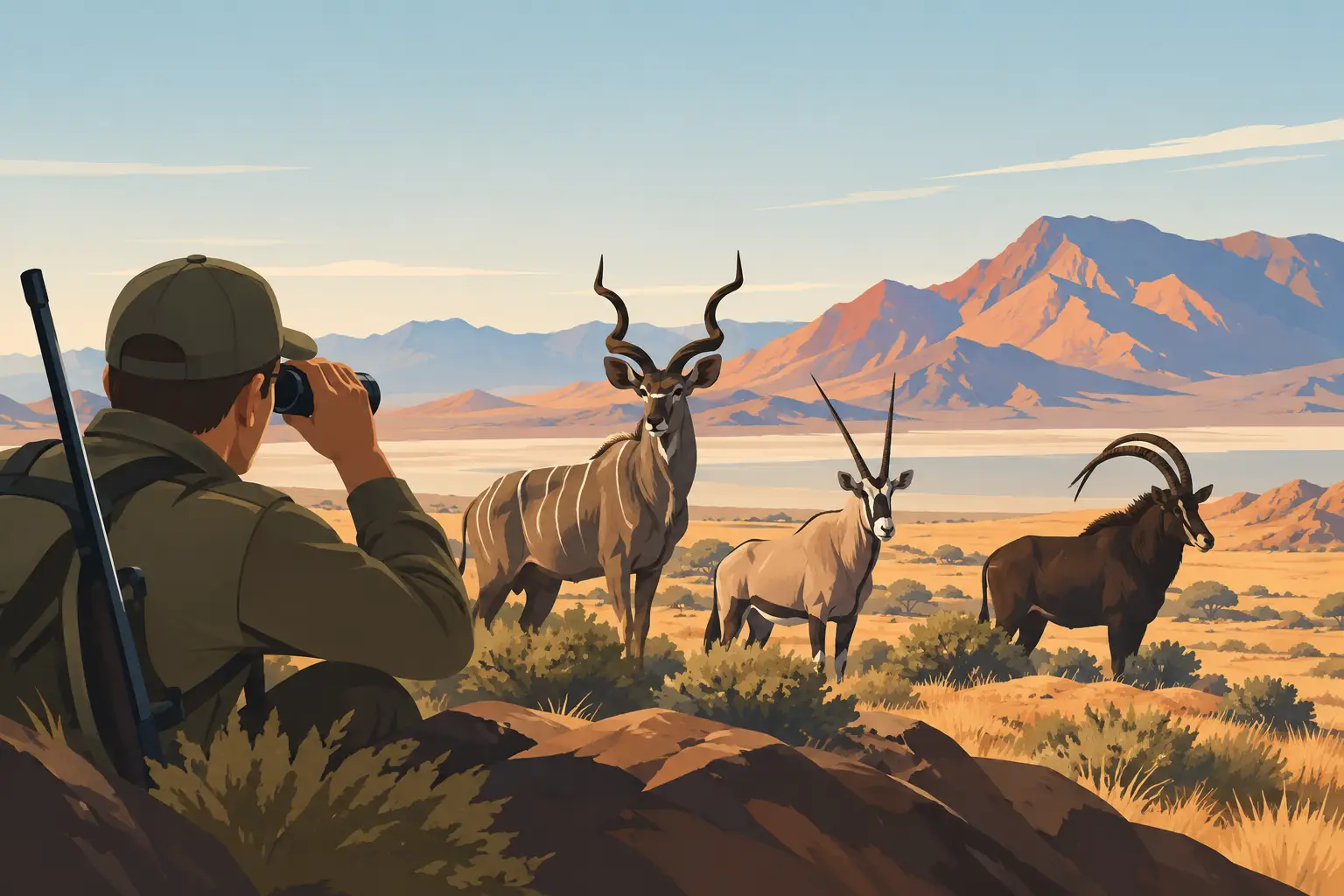
Caprivi, now formally known as Namibia’s Zambezi Region, is a world apart from the dry central and northern Namibian veldt. Water shapes the country here. The Okavango, Kwando, Chobe, and Zambezi river systems support broad floodplains, thick cover, and a concentration of game that includes buffalo, elephant, hippo, crocodile, and a fine variety of plains game.
Buffalo are not hunted as a quick stop between other species. The best bulls are often in breeding herds or moving through heavy cover with other buffalo, cattle, elephant, and game. Separating an old, hard-bossed bull from younger animals takes patience. It also takes restraint. A bull may look impressive for a few seconds before he turns into brush, and a responsible PH will pass rather than force a shot through uncertain cover.
That is the appeal for serious hunters. Fair-chase buffalo hunting means working with wind, tracks, sign, and daylight instead of trying to manufacture an opportunity. Some days begin before sunrise and involve several miles on foot. Other days are slow, with long glasses from a safe distance, waiting for a herd to feed out of reeds or cross an open patch. Both are part of the hunt.
When to Plan a Caprivi Buffalo Hunt
The drier months are generally preferred for buffalo hunting, when roads are more manageable, vegetation has opened up, and animals are easier to track around dependable water and feeding areas. Exact hunting dates, concession conditions, and available quota can change from year to year, so this is a conversation to have early with your outfitter.
Earlier in the season, the country can still be green and thick. It is beautiful, and buffalo may be well distributed, but visibility can be limited. Later in the dry season, tracking conditions may improve while heat, dust, and pressure on water become greater factors. There is no single perfect week. The right time depends on the concession, the current rains, your available travel dates, and whether buffalo is the sole focus or part of a broader dangerous-game safari.
International hunters should also allow enough time before departure for firearm paperwork, temporary import procedures, trophy-import rules in their home country, and any required permits. Buffalo quota is allocated and limited. A reputable operator will be clear about what is confirmed, what is subject to permit approval, and what paperwork must be completed before travel.
Build in Enough Hunting Days
For buffalo, short schedules can create unnecessary pressure. A hunter may see bulls early and take a mature animal on the first day, but that is never something to count on. Weather, wind, water levels, herd movements, and the age structure of the bulls all matter.
A dedicated buffalo hunt deserves sufficient days to track properly and wait for the right bull. If you also hope to hunt elephant, hippo, crocodile, or plains game, add time rather than trying to squeeze everything into a tight itinerary. The best safari plans leave room for the country to set the pace.
What a Fair-Chase Buffalo Day Looks Like
The morning often begins in the dark with coffee, a simple breakfast, and a check of the wind before the hunting vehicle leaves camp. The vehicle gets the team to the area, but the real work begins on the ground. Your PH, trackers, and hunting staff may cut fresh tracks on a sandy road, inspect dung and feeding sign, then decide whether a herd is worth following.
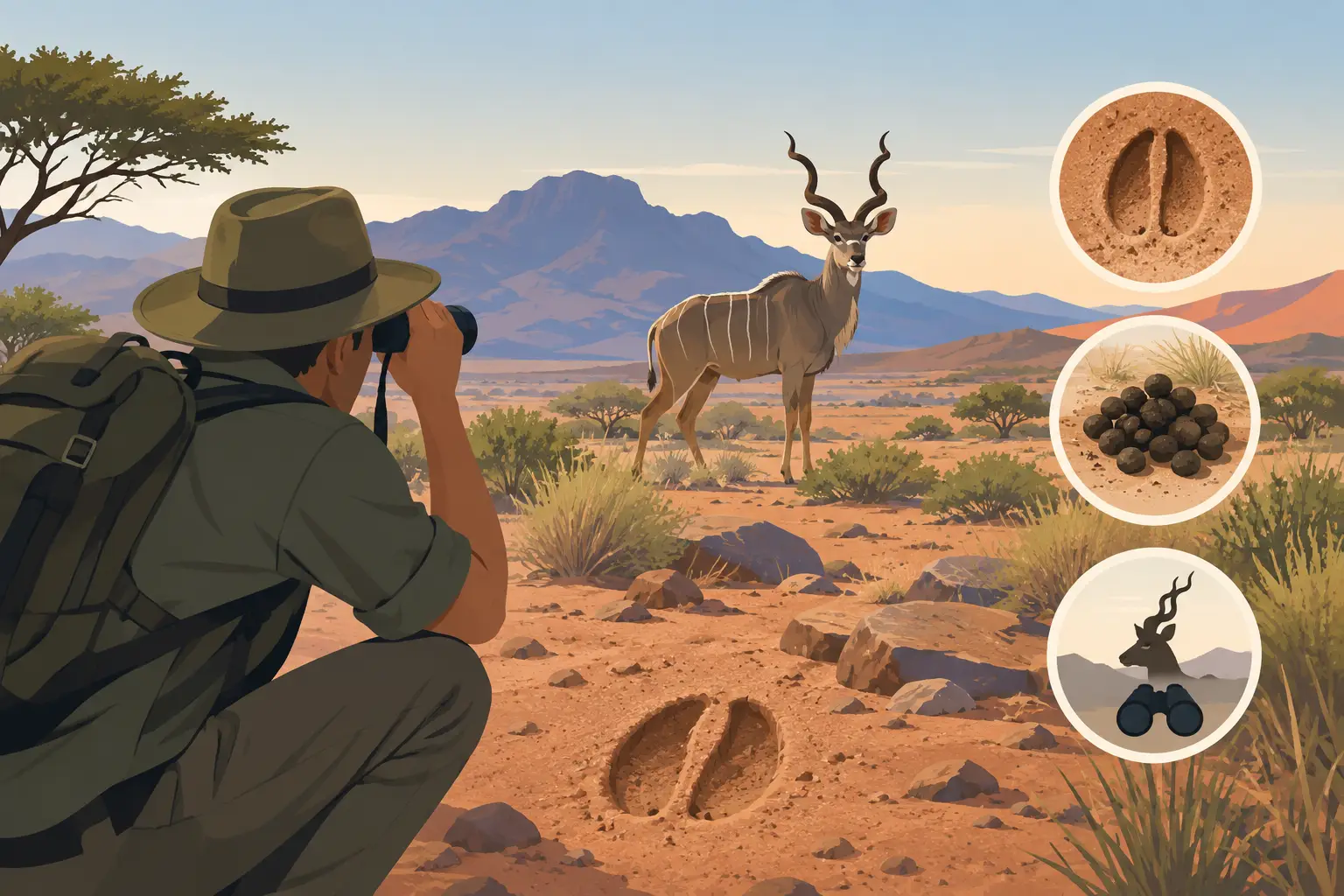
A fresh buffalo track carries a surprising amount of information. The size and spread of the spoor, the depth of the print, broken grass, wet mud, and direction of travel help experienced trackers judge what has passed and how recently. San trackers bring generations of field knowledge to this work. Their ability to stay on old bulls through mixed spoor and broken ground is a major part of a tracking-based safari.
Once the herd is located, the pace slows down. The PH will assess the wind, the cover, the number of animals, and whether there is a safe approach. A buffalo may be standing broadside in the open one moment, then quartering away or disappearing behind cows and calves the next. The hunter’s role is to move quietly, listen closely, keep the rifle ready when instructed, and wait for a clear, ethical shot.
After a successful shot, the work is not automatically over. Buffalo are dangerous animals, especially in thick cover. The follow-up must be deliberate and directed by the PH. This is where experience matters most. There is no place for excitement, guessing, or a wounded animal being pushed carelessly.
Choosing the Right Bull
A mature buffalo bull is more than a wide set of horns. Age is the first consideration. Heavy bosses, worn horn tips, body condition, facial character, and the overall look of an old bull all matter. A PH who spends each season around buffalo can often see details that are easy to miss in a brief encounter.
Horn measurements are part of the trophy record, but they should not be the only goal. A heavily worn, battle-scarred old bull with deep bosses may be a more satisfying trophy than a younger bull with extra width. Hunters who come to Caprivi for the full fair-chase experience usually appreciate that distinction after seeing buffalo on the ground.
Ethical selection also protects the resource. Passing young bulls and avoiding rushed decisions supports the long-term quality of the hunting area. Good conservation hunting is not about taking the first legal animal. It is about taking the right animal under conditions everyone in the field can stand behind.
Practical Preparation Before You Arrive
Buffalo country asks more of a hunter than a comfortable range session. You do not need to be an endurance athlete, but you should be ready to walk uneven ground in heat, step over fallen timber, stand still for extended periods, and mount your rifle quickly from sticks when the PH calls for it.
Practice from realistic field positions before the trip. Shooting sticks are common on dangerous-game hunts, and confidence from a steady rest is more useful than casual bench shooting. Discuss rifle choice, ammunition, and firearm-import requirements with your outfitter well before booking flights. Your PH will have practical preferences based on the local cover and the type of buffalo hunting planned, but the rifle you bring should be one you handle safely and shoot well.
Pack neutral, quiet clothing suitable for warm days and cool early mornings. Good broken-in boots are worth far more than brand-new footwear. Bring a light layer for dawn, a hat, quality hearing protection for travel and range work, and any personal medications in your carry-on baggage. Avoid overpacking. Bush travel is easier when gear is organized and familiar.
Know What Your Safari Includes
Before confirming a hunt, ask direct questions about the hunting area, number of days, quota status, permit arrangements, transport, trophy handling, accommodation, and what happens if weather or wildlife conditions alter the plan. Clear communication avoids disappointment and lets the outfitter build a trip around your real priorities.
At Eldoret Hunting Safaris, dangerous-game hunts in Caprivi are arranged around the applicable concession and allocated tags, while the family’s northeastern Namibian home property provides a private base for quality plains-game hunting. For guests traveling with a spouse, family member, or non-hunting companion, it can make sense to pair the buffalo hunt with time on the Okavango River, fishing, game viewing, or a coastal extension after the work is done.
Camp Life Matters After the Track Ends
A buffalo safari is physically demanding, but camp should feel like a place to recover and share the day honestly. There is a particular satisfaction in sitting down to a good meal after tracking through dust and tall grass, going back over the day’s spoor, close calls, and changing wind. The stories are better when they are told around a fire with people who were there.
For many international hunters, private hosting is as valuable as the hunting itself. One group or one family in camp means the schedule stays personal. You are not competing with another party for vehicles, staff attention, or the best hunting time. Your PH can focus on your hunt, your pace, and the kind of safari you came to Africa to experience.
A Caprivi buffalo hunt rewards the hunter who arrives prepared, listens to the people on the ground, and gives the old bull the respect he deserves. Bring patience, trust the track, and let the country show you why buffalo hunting is still one of Africa’s finest tests.