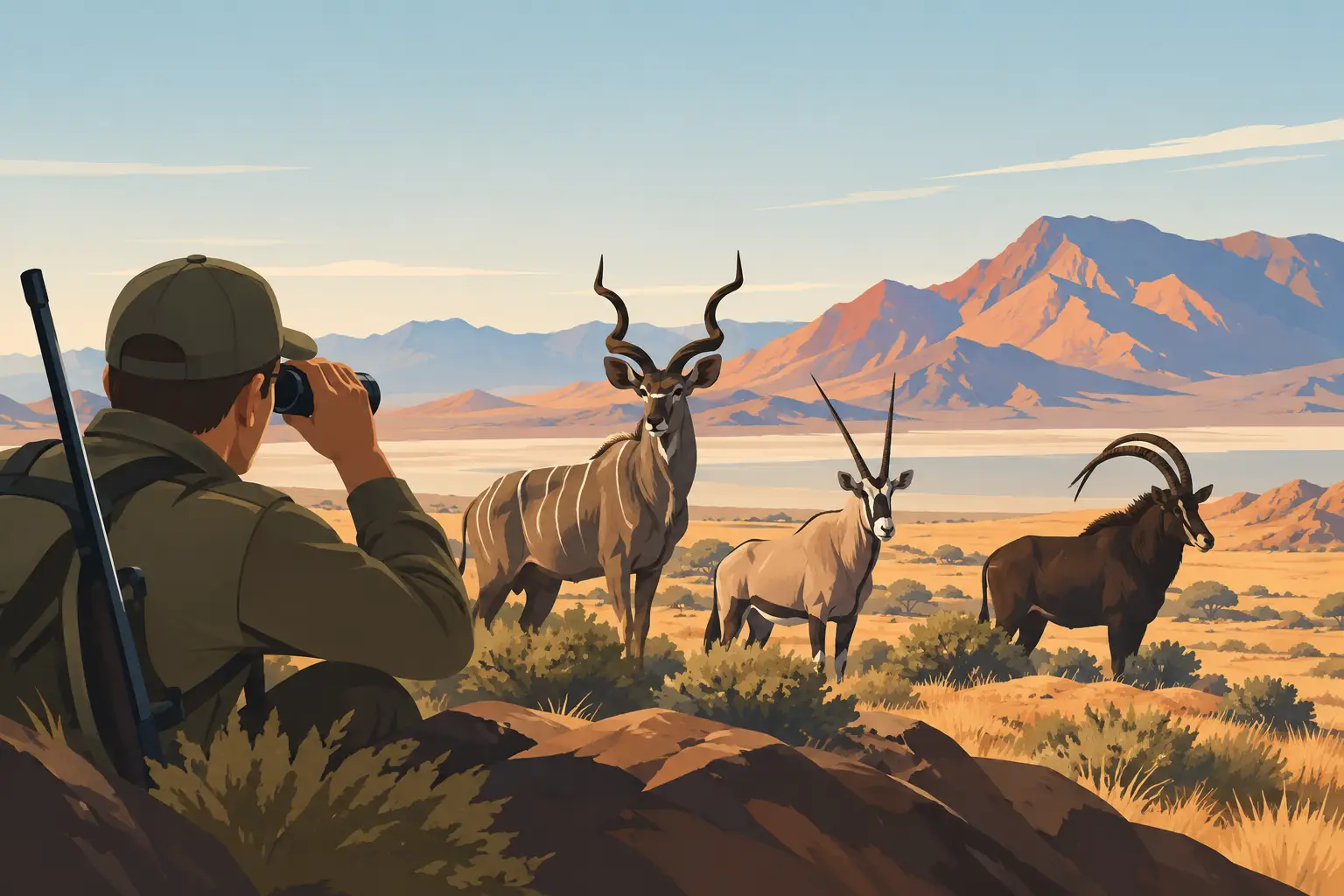
A mature kudu bull can vanish into thornveld that looks far too open to hide anything larger than a jackal. One moment he is feeding beneath a camelthorn, horns catching the early light. The next, there is only dry grass, a few snapped twigs, and the quiet certainty that he has heard or smelled something he did not like. That is why kudu tracking methods matter. A good kudu hunt is rarely about covering ground quickly. It is about slowing down, reading what the veldt is telling you, and giving an old bull the respect he has earned.
On a fair-chase Namibian hunt, tracking is not a shortcut around the hunt. It is the hunt. The vehicle may help a hunting party reach a promising area or pick up an old road, but the important work happens on foot: checking tracks in dust, feeling the wind on your face, studying where a bull chose to feed, bed, and travel.
Kudu Tracking Methods Start With Fresh Spoor
The first question is not, “How large is the track?” It is, “How old is it?” A large kudu track from yesterday afternoon is interesting, but it will not keep a hunter in front of a bull for long. Fresh spoor gives the party a real chance of catching up before the animal reaches heavy cover, changes country, or joins another group.
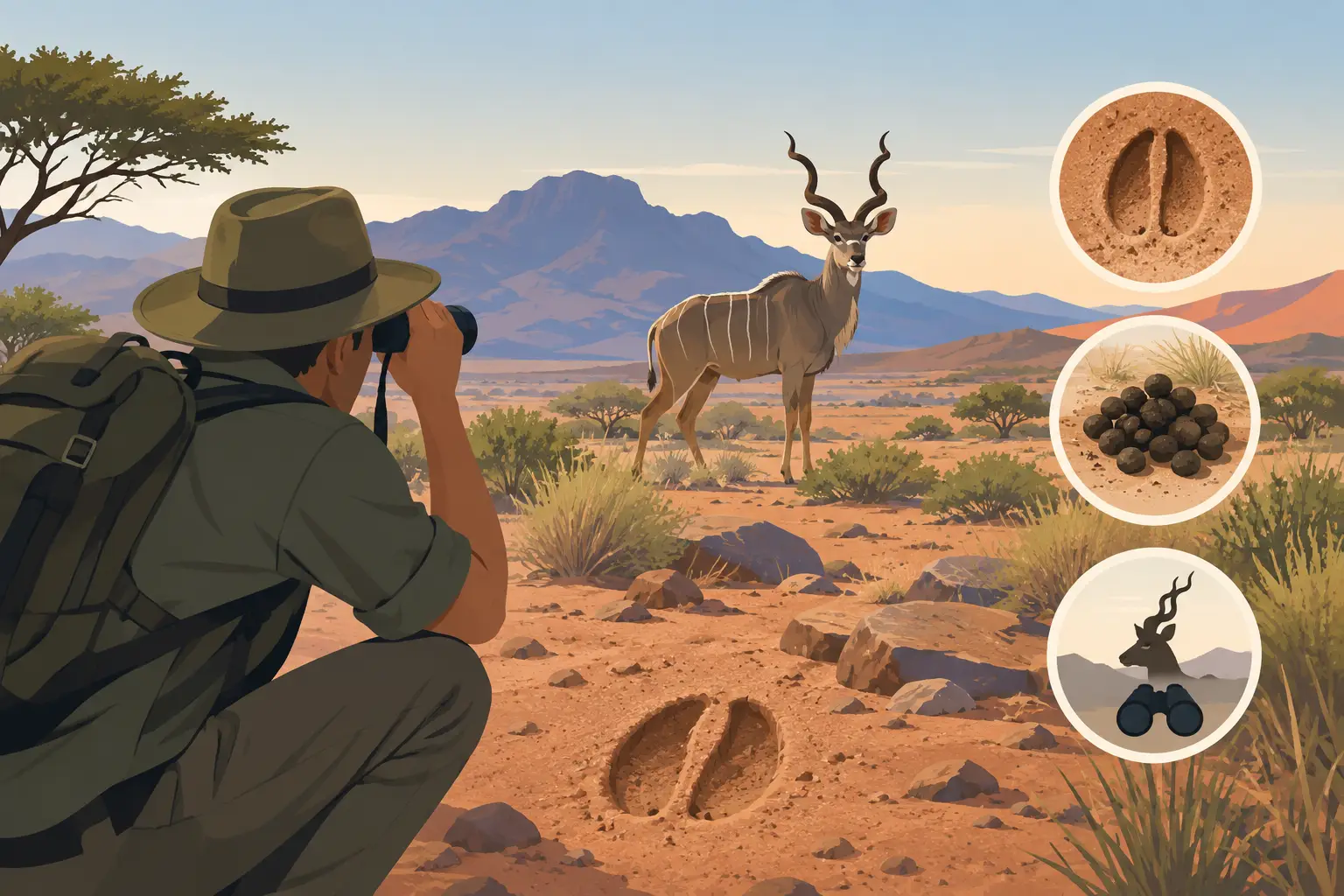
Kudu tracks are cloven, with pointed toes that often register clearly in firm sand or bare soil. A mature bull usually leaves a broader, deeper print than a cow or young animal, particularly where the ground is soft. But tracks alone can fool a hunter. Soil type, moisture, stride, and the way an animal carried its weight all change the impression. Experienced trackers read the whole line of travel rather than making a judgment from one print.
Freshness shows in small details. Crisp edges, loose grains pushed into the track, and undisturbed leaf litter can indicate recent movement. A track that has softened in the sun, collected windblown dust, or been crossed by insects and smaller game needs more caution. In Namibia’s dry country, wind can age spoor quickly. In shaded drainage lines or after a light rain, the same track may hold its shape longer than expected.
San trackers bring a lifetime of practical observation to this work. They do not merely follow hoof marks. They notice a grass stem bent in the direction of travel, a scuff where a bull stepped over a branch, fresh pellets, or browse marks on a preferred shrub. Their skill is especially valuable when a kudu leaves sandy ground and moves through stony terrain where clear tracks disappear.
Read the Bull’s Route, Not Just His Footprints
A kudu does not move through the veldt at random. He makes choices based on feed, water, shade, wind, security, and breeding activity. Reading those choices is what turns a trail into a plan.
Early in the morning, bulls may feed along the edges of thicker cover, often browsing leaves, shoots, and seed pods before the heat rises. As the day warms, they commonly work toward shade, drainage lines, rocky hillsides, or dense thorn thickets. A hard-pressed bull may use the same cover differently from a relaxed one. If he has been disturbed, expect him to angle toward terrain that breaks up visibility and gives him a downwind advantage.
A professional hunter will watch the route for signs of the animal’s mood. A steady feeding line, with regular browsing and an unhurried stride, gives the party time to move carefully. Long strides, scattered tracks, and abrupt turns suggest the kudu is alert or has been bumped. When that happens, pushing harder is usually the wrong answer. The better choice may be to pause, circle wide, and regain the wind before the bull is driven beyond a reasonable stalk.
Kudu often travel in ways that protect them from surprise. They may skirt ridges rather than walk directly over them, use gullies to stay hidden, or stop beneath cover where they can look back along their trail. A trailing party must expect these checks. Walking straight into a bull’s wind or stepping carelessly over a skyline can end a morning that began with excellent spoor.
Wind Decides More Than Distance
A hunter can be 300 yards from a kudu and have no chance if the wind is wrong. He can also be much closer with a solid opportunity if he stays downwind, quiet, and patient. Kudu have sharp eyes, but their nose is often the first warning system to beat the hunter.
Wind in Namibia is rarely simple. It can drift with the sun, curl around a koppie, or fall downhill in a shaded draw before rising again later in the morning. Good tracking teams check it constantly with dust, grass, or fine ash. If the wind turns, they do not hope the bull will ignore it. They adjust.
This is where a long stalk becomes a shared effort. The PH manages the route and shooting opportunity. The tracker stays focused on sign and movement. The hunter follows closely, steps where directed, carries the rifle safely, and resists the urge to look over every bush. A single careless scrape on stone can travel farther than expected in still air.
Use Glass Before You Move
Tracking is not always nose-down work. In open bushveld, a careful glassing stop can save a great deal of walking and prevent a party from bumping the very bull it is following. Kudu are masters of standing motionless in partial cover. Their gray coats blend into bark, grass, and shadow, while their stripes break up the body outline.
Glass likely feeding edges, shaded slopes, water approaches, and openings between thickets. Look for a horizontal back line, the white throat patch, an ear flick, or the curl of a horn rather than expecting to see a full animal. A mature bull may reveal only his face through a gap in the brush.
Glassing also helps with trophy judgment. On an ethical hunt, the goal is to identify the right animal before pressure builds. Length matters, but it is only part of the picture. A PH will consider mass, curl, tip spread, symmetry, age, and the character of the horns. A bull with heavy, weathered horns and a mature body may be the better trophy even if another animal appears longer from one angle.
When to Leave the Track Alone
Not every good track should be followed until dark. Heat, wind, the distance already covered, and the bull’s behavior all matter. If the spoor is old, if the kudu is repeatedly winded, or if the trail is carrying the hunt toward ground where a safe, responsible shot is unlikely, it can be wiser to let him settle and return another time.
That judgment is part of fair chase. The purpose is not to force an outcome at any cost. It is to hunt well, take a clean shot only when the opportunity is right, and leave the country better than it was found. A missed chance can still be a fine day in the veldt when it includes good tracking, honest effort, and a close look at how a mature kudu survives.
At Eldoret Hunting Safaris, the 25,000-acre property gives hunters room to walk, glass, and follow a trail without turning the day into a rushed schedule. One hunting group or family at a time means the camp and the hunt can move at the pace the conditions require. After a long track, the return to camp, a good meal, and talk around the fire are part of the memory as much as the horns on the wall.
Prepare for a Better Tracking Day
A few practical habits make a real difference. Wear broken-in boots with quiet soles, not stiff new footwear that rubs your feet raw on the first long stalk. Carry water, but avoid letting a loose bottle rattle. Choose muted clothing suited to the country, and keep an extra light layer for cool early mornings. Most importantly, be ready to walk slowly for hours and then shoot accurately from an improvised position when the moment comes.
Practice from sticks, kneeling, and standing before the safari. Kudu opportunities often appear through small gaps in brush, not on a broad open range. Your PH will not ask for a shot that is not right, but being calm and capable when a mature bull steps clear is the hunter’s responsibility.
The finest kudu tracking days do not always end with a shot. Sometimes they end with a bull slipping into thick cover after showing you just enough to make you respect him more. Keep your eyes on the wind, trust the people reading the ground, and let the veldt set the pace. That patience is often what brings the old bull back into view.