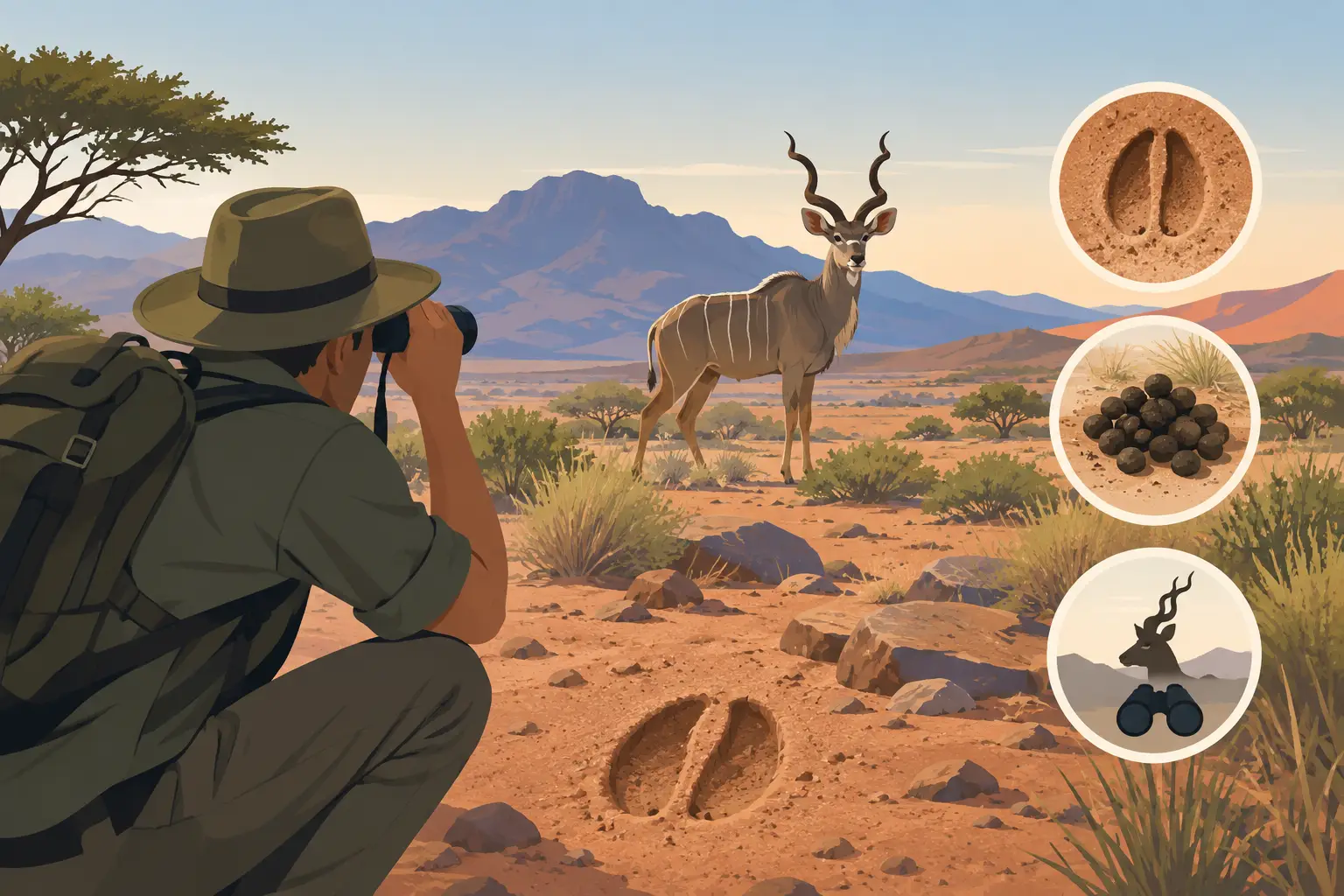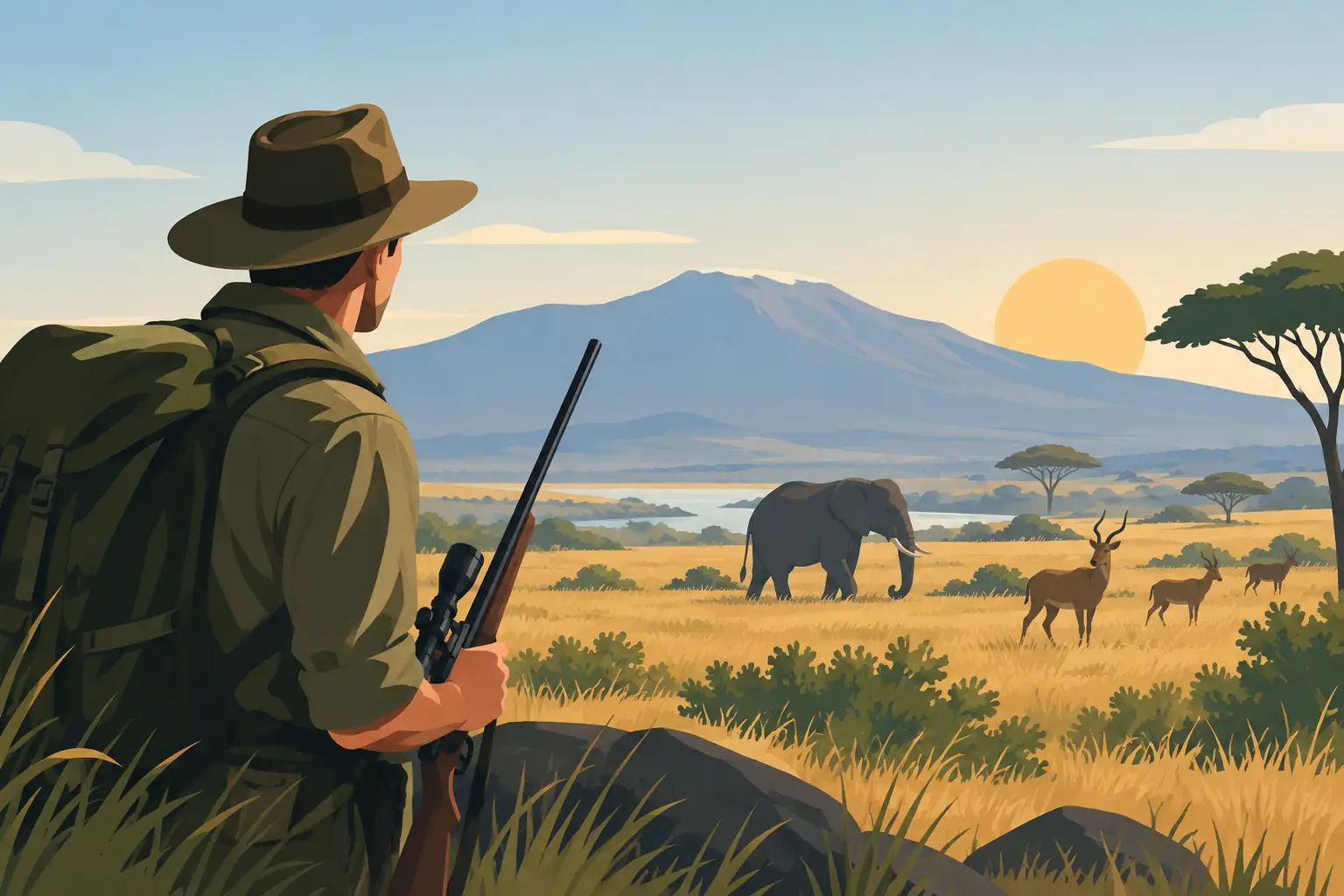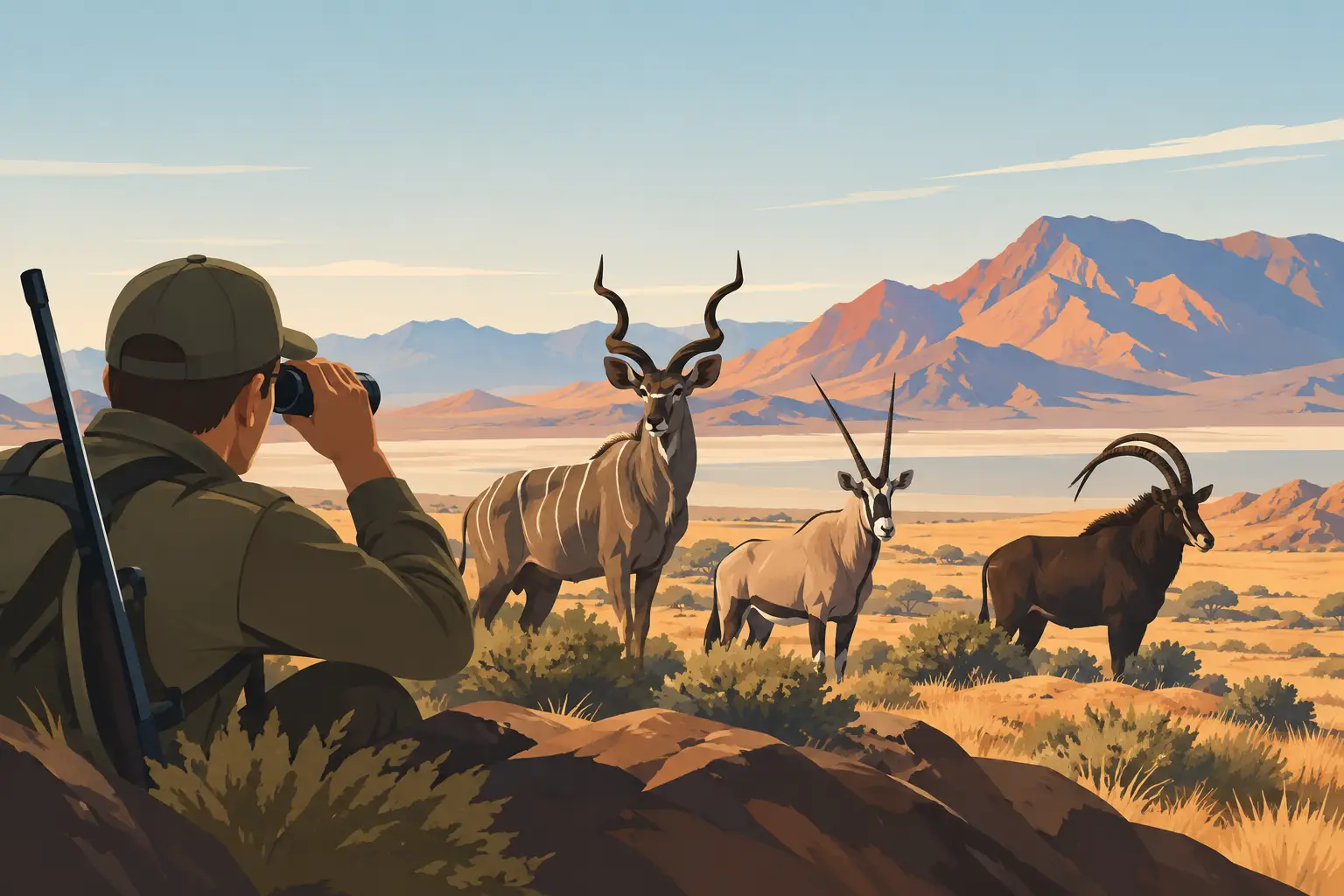
The finest kudu may never give you a clean look until the last hour of the last day. An old eland can leave tracks like dinner plates in soft sand and still vanish into thick brush. That is why knowing how to select trophy species is not simply a matter of studying score charts before you leave home. It is about choosing animals, terrain, and a hunt that fit your goals well enough that you will enjoy every hard mile behind the trackers.
A Namibian safari gives a hunter real variety. You may start a morning glassing a dry hillside for kudu, follow San trackers through thornveld after eland, and see zebra, wildebeest, warthog, and oryx moving across open country before lunch. The right species list keeps that variety exciting without turning the safari into a rushed collection exercise.
Start With the Hunt You Want, Not the Score You Want
Every hunter has a different picture of a successful African safari. For one man, it is a heavy-horned kudu taken after several days of careful stalking. For another, it is a mixed bag of mature plains game and long days in the veldt with his wife, son, or hunting friends. Neither approach is wrong, but they require different planning.
Before choosing species, decide what you want the days to feel like. If tracking, walking, and working for one exceptional animal is the priority, build the safari around one or two main trophies. Kudu, eland, gemsbok, and old blue wildebeest all reward patience and field time. If this is your first African hunt, a broader plains-game list can give you more opportunities and help you learn the rhythm of the country.
Score has a place, especially when a hunter has a record-book goal. But it should not be the only measure. A mature animal with deep mass, worn tips, old scars, and a hard-earned story is often the trophy you remember most. On a true fair-chase hunt, the animal must first be found, judged, approached, and taken cleanly. That is plenty of challenge without making every decision depend on a tape measure.
How to Select Trophy Species by Maturity
Maturity is the foundation of ethical trophy selection. Horn length can be useful, but age shows in more than inches. A professional hunter and experienced tracker look at body shape, behavior, horn character, and the animal’s place in the herd before deciding whether to pursue it.
A mature kudu bull often carries a heavy neck, a deeper chest, and a weathered look around the face. His horns may have strong length, but the bases, curl, and overall character matter as much as the number. An old gemsbok may show thick, balanced horns and a strong, blocky body. With eland, age is often obvious in a massive dewlap, thick shoulders, worn horn tips, and the unhurried confidence of a bull that has survived many seasons.
This is where a local professional hunter earns his keep. From a distance, a young animal can look impressive in good light. A guide who knows the property, sees those animals year after year, and works alongside trackers who read fresh sign in the sand can make a better call than a hunter trying to judge a trophy through binoculars for the first time.
The standard should be simple: take a mature animal you are proud to have hunted, and leave younger breeding animals to carry the herd forward. Good conservation and good hunting belong together.
Match Species to Your Physical Expectations
African hunting is often more physical than first-time visitors expect. Even on level ground, walking through loose sand, thornbush, and heat takes energy. A hunter does not need to be a marathon runner, but honest planning helps everyone.
Kudu, warthog, springbok, and gemsbok can offer excellent hunts at a range of physical levels, depending on where the animals are found and how hard the stalk develops. Eland hunting is different. Following a mature bull can mean covering serious ground, slowly and quietly, while the trackers sort one set of tracks from another. Giraffe also requires patience and good judgment, with long periods of glassing and careful planning for the shot and recovery.
Tell your outfitter plainly about your mobility, shooting comfort, and how you normally hunt at home. There is no need to prove anything in camp. A well-planned hunt can include proper rests, vehicle support where appropriate, and species choices that still provide a fair, memorable pursuit. Hunters who arrive fit enough to walk steadily and shoot confidently from sticks will enjoy more opportunities.
Build a Species List Around Time and Budget
A species list must fit the number of hunting days. Trying to hunt eight animals in five days can turn a safari into a race from one sighting to the next. It may produce trophies, but it can leave little time for the special animal, the missed opportunity, or the weather day that is part of real hunting.
A better approach is to name a primary species, add two or three realistic priorities, and keep a short wish list for exceptional opportunities. On a seven-day plains-game safari, for example, a hunter might focus on kudu and eland, then remain open to a mature gemsbok, zebra, or warthog. That gives the hunt direction while leaving room for the bush to decide part of the story.
Budget deserves the same direct conversation. Trophy fees, daily rates, taxidermy preparation, shipping, travel, gratuities, and any sightseeing extension should be considered before the hunt. Some hunters would rather devote their budget to one outstanding kudu and several days of tracking. Others value a varied collection of classic Namibian plains game. Both are sensible choices when the plan is clear from the beginning.
If dangerous game or predators are part of your dream, discuss them early. Buffalo, elephant, hippo, crocodile, leopard, lion, cheetah, and hyena hunts depend on legal tag allocation, concession availability, timing, and the specific requirements of the hunt. These are not animals to add casually halfway through a trip.
Let the Season Shape Your Choices
Namibia’s hunting conditions change through the season. The dry months can concentrate animals around water and make tracks easier to read in dusty ground. Vegetation is thinner, glassing can improve, and days are often comfortable for walking. Later conditions may bring different cover, animal movements, and weather patterns that affect how a particular species is hunted.
There is no single best date for every animal. Kudu hunters may appreciate cooler mornings and good visibility in the bush. Eland hunters benefit whenever conditions favor fresh tracking and long walks. Zebra, wildebeest, and springbok can be especially enjoyable when the open country allows time to study several animals before making a decision.
The key is to ask what the country is doing, not just what a calendar says. A family-run operation such as Eldoret Hunting Safaris knows its 25,000 acres through the seasons, from water points and feeding areas to the places where mature bulls slip away when pressure or weather changes. That knowledge helps set realistic expectations before you arrive.
Choose Trophies That Belong Together
A good safari list has a natural rhythm. In northeastern Namibia, kudu, gemsbok, eland, zebra, blue wildebeest, springbok, and warthog make a strong plains-game combination because each brings a different kind of hunt. Kudu tests your ability to see into cover. Eland tests patience and legs. Oryx often demands careful judging in open ground. Warthog can surprise you with how quickly an old boar disappears into a hole or a patch of brush.
Consider what you will enjoy looking at years from now. A shoulder mount, European skull mount, flat skin, rug, or full mount each has practical implications for cost, space, and shipping. A hunter who wants several full-body displays may choose fewer species. Someone building a trophy room around skull mounts and hides can reasonably enjoy a wider plains-game selection.
Do not overlook animals that are often treated as add-ons. An old warthog with thick tusks, a mature blue wildebeest bull, or a properly selected zebra can be every bit as satisfying as a more famous species. The best trophy is not always the animal everyone else expected you to take.
Give Yourself Permission to Pass
Passing a young animal is part of hunting well. It can be difficult when you have traveled halfway around the world, spotted a legal-looking bull on the first day, and have no guarantee of seeing a bigger one. Still, patience is usually rewarded on a properly managed property.
Agree with your professional hunter on standards before the first stalk. Be clear about whether you are seeking exceptional length, old age, strong character, or simply a mature representative animal. Then trust the field judgment when an animal is borderline. A passed bull may become a better trophy next year, and that is good for the herd as well as the hunting.
The best plan leaves room for the unexpected: the kudu track that crosses the road after breakfast, the old gemsbok standing alone at last light, the evening around the fire when your legs are tired and supper is on the table. Choose species that give you time to notice those moments. They are part of the trophy too.